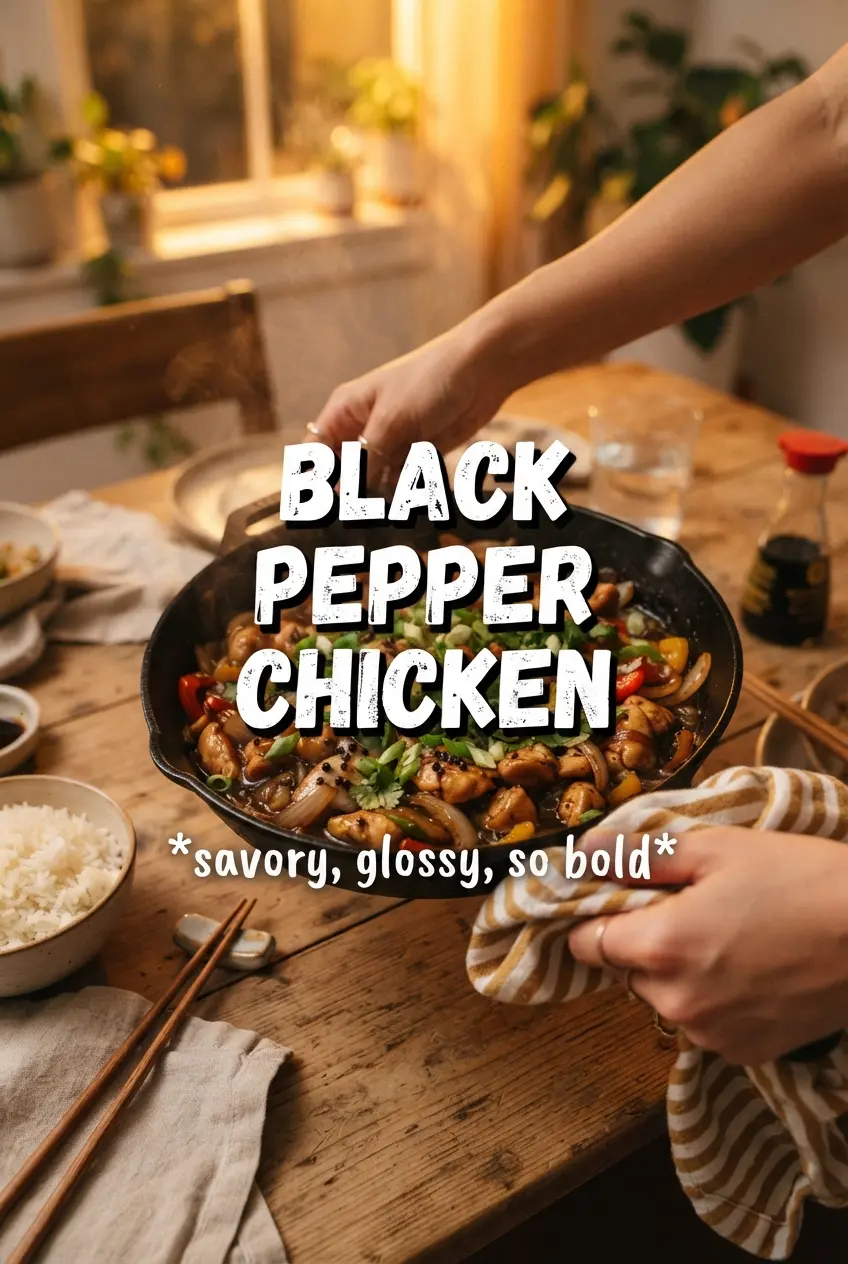
Black pepper chicken hits that sweet spot between takeout comfort and weeknight speed: tender chicken, crisp-tender peppers, and a glossy sauce that clings to every bite instead of pooling at the bottom of the bowl. The cracked pepper gives it a sharp, warm bite that cuts through the soy and oyster sauce, so the whole dish tastes bold without needing a long ingredient list.
The trick is keeping the heat high enough to sear the chicken and soften the vegetables without steaming them. I also like building the sauce separately before it ever touches the pan. That tiny step keeps the cornstarch from clumping and lets you control the thickness at the very end, which is where a lot of stir-fries go from good to heavy.
Below, I’ll walk through the one part that matters most in a dish like this: how to keep the sauce glossy and the chicken juicy. There’s also a simple way to adjust the pepper level if you want the dish a little sharper or a little more mellow.
The sauce thickened up right away and coated the chicken instead of turning watery like other stir-fries I’ve made. My husband kept saying it tasted better than our usual takeout.
Save this black pepper chicken for the nights when you want glossy takeout-style sauce, tender chicken, and dinner on the table fast.
The Secret to Keeping the Sauce Glossy Instead of Gloopy
Black pepper chicken can go wrong in one very specific way: the sauce thickens too early, clings in clumps, or turns heavy before the chicken and vegetables are coated. That usually happens when the pan isn’t hot enough or the cornstarch slurry sits in the sauce too long before it hits the heat. Here, the sauce stays separate until the last minute, then thickens on contact with the hot pan juices.
High heat matters because stir-fry needs quick evaporation. If the pan is crowded, the chicken steams and leaves behind too much liquid, which waters down the sauce and dulls the pepper. Cooking the chicken in batches gives you better browning, and those browned bits add depth to the final sauce instead of a flat salty finish.
What Each Ingredient Is Actually Doing in This Dish

- Chicken breast — Sliced thin, it cooks quickly and stays tender if you keep the heat high and stop as soon as it turns opaque. Chicken thighs also work and give you a little more forgiveness, but breast is the closer match to classic takeout-style black pepper chicken.
- Freshly cracked black pepper — This is the point of the dish, so use a generous hand. Pre-ground pepper tastes dusty here; cracked pepper gives the sharp bite and aroma that blooms in the hot sauce.
- Dark soy sauce — This adds color and a deeper, slightly molasses-like edge. If you don’t have it, use more regular soy sauce and accept a lighter, less glossy sauce.
- Oyster sauce — It gives the sauce body and that round, savory restaurant flavor. There isn’t a perfect substitute, but hoisin works in a pinch if you want something sweet-salty, though the result will taste a little softer and sweeter.
- Cornstarch slurry — This is what turns the sauce from thin and salty into something that actually coats the chicken. Mix it with cold water right before you use it so it stays smooth and doesn’t sink into a gummy paste.
- Ginger and garlic — They go in late because they burn fast over high heat. A quick minute is enough to wake them up without turning bitter.
The Fast Stir-Fry Sequence That Keeps Everything Crisp
Whisk the Sauce Before the Pan Gets Hot
Stir the soy sauce, oyster sauce, dark soy sauce, brown sugar, black pepper, cornstarch, and water together until the cornstarch dissolves. The mixture should look smooth and dark, with no white streaks at the bottom of the bowl. If you leave the slurry sitting for too long, give it another stir right before you pour it in, because the cornstarch settles fast.
Sear the Chicken in Batches
Heat the oil until it shimmers, then add the chicken in a single layer. Let it sit long enough to pick up color before stirring, and remove it as soon as the pieces are cooked through and lightly golden. If the pan looks wet, you packed in too much chicken at once, and the meat will steam instead of sear.
Cook the Vegetables Just Until They Lose Their Raw Edge
Add the bell pepper and onion and stir-fry for about 3 minutes, until the onion starts to turn translucent at the edges and the pepper softens but still has some bite. Garlic and ginger go in only for the last minute. If they go in too early, they’ll scorch before the sauce is ready.
Finish in the Sauce, Not Before It
Return the chicken to the pan, pour in the sauce, and toss constantly as it bubbles and tightens. You’re looking for a glossy coating that clings to the chicken and vegetables without looking sticky or pasty. Pull it off the heat once the sauce has thickened enough to leave a trail in the pan for a second or two after you stir.
How to Adapt This for Different Kitchens and Different Cravings
Use Chicken Thighs for a Richer, Juicier Result
Chicken thighs hold up even better to high heat and stay juicy if you get distracted for a minute. The flavor is a little richer, and the finished dish feels closer to restaurant takeout, though the sauce may cling a touch more because of the extra fat.
Make It Gluten-Free with Tamari and a GF Oyster Sauce
Swap the soy sauce for tamari and use a gluten-free oyster sauce if you can find one. The texture stays the same, and the pepper still comes through clearly, but the exact salt balance may shift a little, so taste the sauce before you add extra soy at the end.
Add More Vegetables Without Breaking the Sauce
Broccoli florets, snap peas, or sliced mushrooms all work here, but keep the total amount moderate so the pan doesn’t flood. If you add watery vegetables, cook them first and pull off the excess moisture before the sauce goes in.
Turn the Pepper Down Without Losing the Point of the Dish
If you want a milder version, reduce the cracked pepper in the sauce and finish with just a small pinch at the end. You’ll lose some of the sharp bite, but the soy-oyster base still gives you that classic savory stir-fry flavor.
Storage and Reheating
- Refrigerator: Store in an airtight container for up to 4 days. The sauce will thicken a bit more in the fridge, and the peppers soften slightly.
- Freezer: It freezes reasonably well for up to 2 months, though the vegetables will lose some crispness. Freeze in portions and let it thaw overnight before reheating for the best texture.
- Reheating: Warm it in a skillet over medium-low heat with a splash of water to loosen the sauce. The common mistake is blasting it over high heat, which tightens the sauce too fast and dries out the chicken.
Questions I Get Asked About This Recipe
Black Pepper Chicken
Ingredients
Equipment
Method
- Whisk soy sauce, oyster sauce, dark soy sauce, brown sugar, and freshly cracked black pepper together in a bowl, then set aside.
- Whisk cornstarch with water until smooth, then set aside to add later for thickening.
- Heat vegetable oil in a wok or large skillet over high heat until shimmering.
- Stir-fry the sliced chicken in batches until golden, then remove to a plate.
- Stir-fry bell pepper and onion for 3 minutes, then add garlic and grated ginger and cook for 1 minute.
- Return the chicken to the pan, pour the sauce over, and toss until everything is coated.
- Cook for 2-3 minutes over high heat until the sauce thickens and clings to the chicken and vegetables, then season with extra cracked black pepper.
- Serve the black pepper chicken over steamed rice.