Golden coconut broth, tender chicken, and slippery rice noodles make this soup the kind of bowl that disappears fast. The red curry paste brings heat and depth, but it stays rounded out by coconut milk instead of turning sharp or thin. Every spoonful gets a hit of lime, herbs, and just enough salt from fish sauce to keep the broth lively.
What makes this version work is the order: the curry paste blooms in oil first, then the garlic, lemongrass, and ginger get a quick turn before the liquid goes in. That short sauté wakes up the aromatics and keeps the broth from tasting flat. Rice noodles go in at the end so they stay springy instead of bloated, and the chicken simmers gently in the broth instead of being boiled into strings.
Below, I’ll walk through the little details that matter most, including how to keep the coconut broth smooth, how to handle the noodles so they don’t overcook, and a few swaps if you need to work with what’s in the pantry.
The broth was silky and the rice noodles stayed perfectly separate, not mushy. I used chicken thighs and the lime at the end made the whole bowl taste fresh instead of heavy.
Save this Thai Chicken Noodle Soup for the nights when you want a silky coconut-curry broth, tender chicken, and rice noodles that stay just right.
The Trick to Keeping Coconut Curry Broth Bright, Not Heavy
Thai-inspired soups can go dull fast when the broth gets treated like a regular chicken soup. Coconut milk needs the curry paste and aromatics to wake it up, and it needs acid at the end to keep the whole bowl from tasting sleepy. If you add the lime too early, a lot of that brightness cooks off before dinner even hits the table.
The other common problem is heat. A hard boil can make coconut milk look greasy or separated, especially once the chicken goes in. Keep the simmer gentle and steady. You want the broth moving lazily at the edges, not bubbling hard across the whole pot.
That balance is what gives you a soup that tastes layered instead of one-note: fragrant, a little spicy, a little sweet, and clean at the finish.
What Each Ingredient Is Actually Doing in This Soup
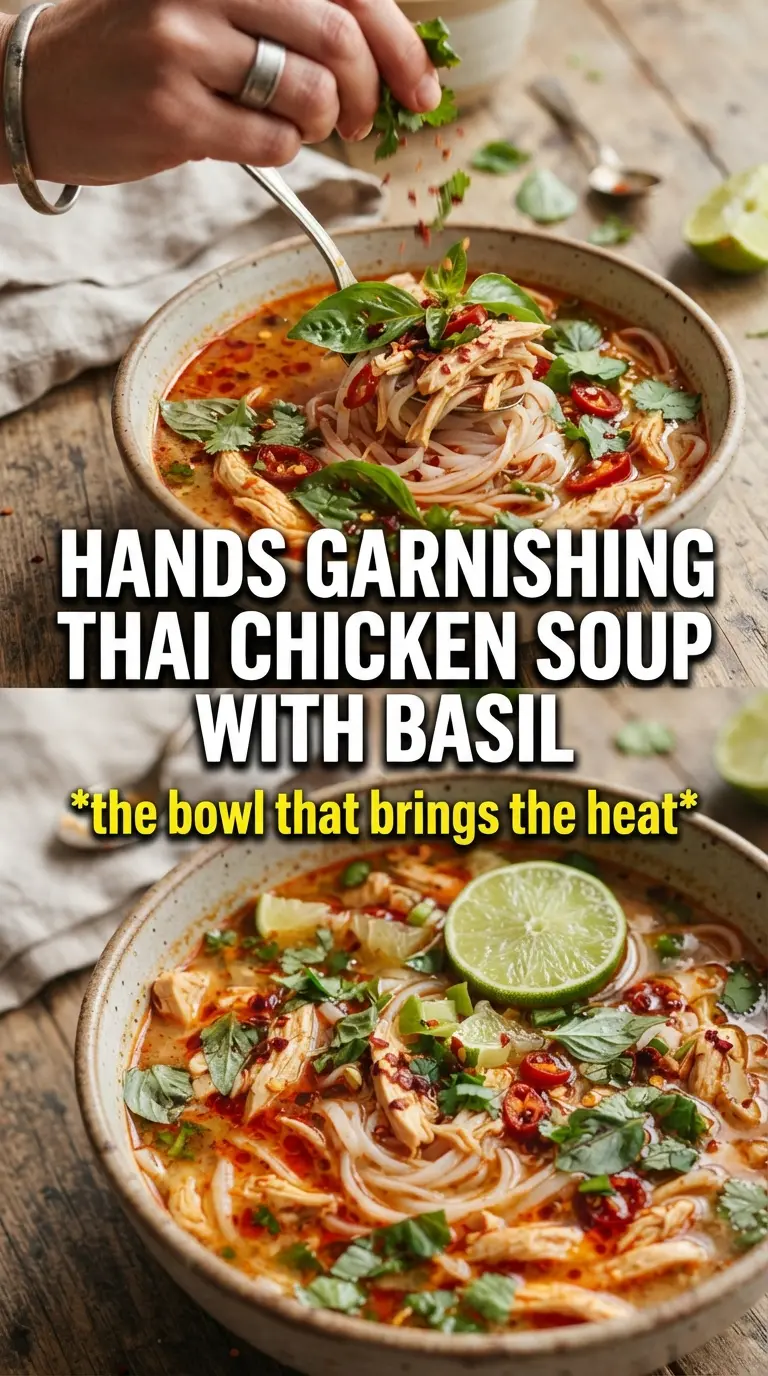
- Red curry paste — This is the backbone of the broth. It brings heat, spice, and color in one ingredient, and it needs that brief fry in oil to taste full instead of raw. Different brands vary a lot, so if yours is especially salty or spicy, start with a little less and taste the finished broth before adding more.
- Coconut milk — Full-fat coconut milk gives the soup its silkiness and keeps the curry from tasting sharp. Light coconut milk works in a pinch, but the broth will be thinner and less rounded. Shake the can well before opening so the cream and liquid blend cleanly.
- Fish sauce — This adds the savory depth that salt alone can’t give you. It doesn’t make the soup taste fishy when used in the right amount; it just makes the broth taste finished. If you need a substitute, use soy sauce, but expect a slightly different, less briny result.
- Lemongrass, galangal, and ginger — These are the aromatic layers that make the soup smell like it’s been simmering much longer than it has. Lemongrass and galangal are worth using if you can find them, but ginger can carry the recipe well on its own. Bruise the lemongrass so it releases flavor, then remove it before serving because it stays woody.
- Rice noodles — These soak up broth fast, which is why they’re added at the very end. If they sit too long in the pot, they turn soft and gummy. Soak them separately first, then warm them through in the soup just until tender.
- Chicken breast or thighs — Thighs stay juicier and forgive a little extra simmer time, while breast cooks a bit leaner and faster. Slice it thin so it cooks through gently without turning stringy. If you’re using pre-cooked chicken, stir it in at the end just long enough to heat it through.
Building the Broth in the Right Order
Blooming the Curry Paste
Heat the oil in a large pot and cook the red curry paste for 1 to 2 minutes until it smells deep and fragrant. It should darken slightly and look glossy, not dry or clumpy. If the paste still tastes sharp later, this step was too short. Let the oil do the work here.
Waking Up the Aromatics
Add the garlic, bruised lemongrass, and galangal or ginger and cook just until fragrant, about 1 minute. You’re not trying to brown them. You’re building a base that will flavor the broth from the inside out. If the garlic starts to color too fast, lower the heat before it turns bitter.
Simmering the Chicken Gently
Pour in the coconut milk and broth, then add the fish sauce, lime juice, and brown sugar. Bring the pot to a gentle simmer and add the chicken. The broth should never boil hard; that’s how coconut milk gets oily and the chicken tightens up. Cook until the chicken is just done and no longer pink in the center, then pull out the lemongrass and galangal so nobody bites into a fibrous piece.
Finishing With Noodles and Fresh Garnishes
Add the drained rice noodles and warm them through for 2 to 3 minutes. Taste the broth before serving and adjust with a little more lime or fish sauce if it needs brightness or salt. Ladle into bowls and top with bean sprouts, green onions, basil, cilantro, lime wedges, and sliced chili. That fresh finish is what keeps the soup from feeling heavy.
How to Adapt This for Pantry Swaps, Dairy-Free Needs, and Leftovers
Make it with chicken thighs for richer broth
Thighs bring a little more richness and stay tender even if the soup simmers a minute longer than planned. They’re the better choice if you want the most forgiving texture. Chicken breast works too, but it needs gentler heat and closer timing.
Make it dairy-free without changing a thing
This soup is naturally dairy-free as written, which is one reason it feels so silky without cream. The coconut milk gives you all the body you need. Just check your curry paste and broth labels if you’re cooking for someone with allergies.
Use ginger when you can’t find galangal
Galangal has a sharper, piney edge, but fresh ginger still gives the broth a clean aromatic lift. Use the same amount and keep the rest of the recipe unchanged. The flavor will be a little warmer and less citrusy, but still excellent.
Storage and Reheating
- Refrigerator: Store the broth, chicken, and noodles in separate containers for up to 4 days. The noodles soften the longer they sit in liquid.
- Freezer: Freeze the broth and chicken without the noodles for up to 3 months. Coconut broth freezes well, but the noodles don’t keep their texture after thawing.
- Reheating: Warm the soup gently on the stove over medium-low heat until steaming, then add fresh noodles if you have them. The common mistake is boiling it to hurry things along, which can split the coconut milk and overcook the chicken.
Answers to the Questions Worth Asking
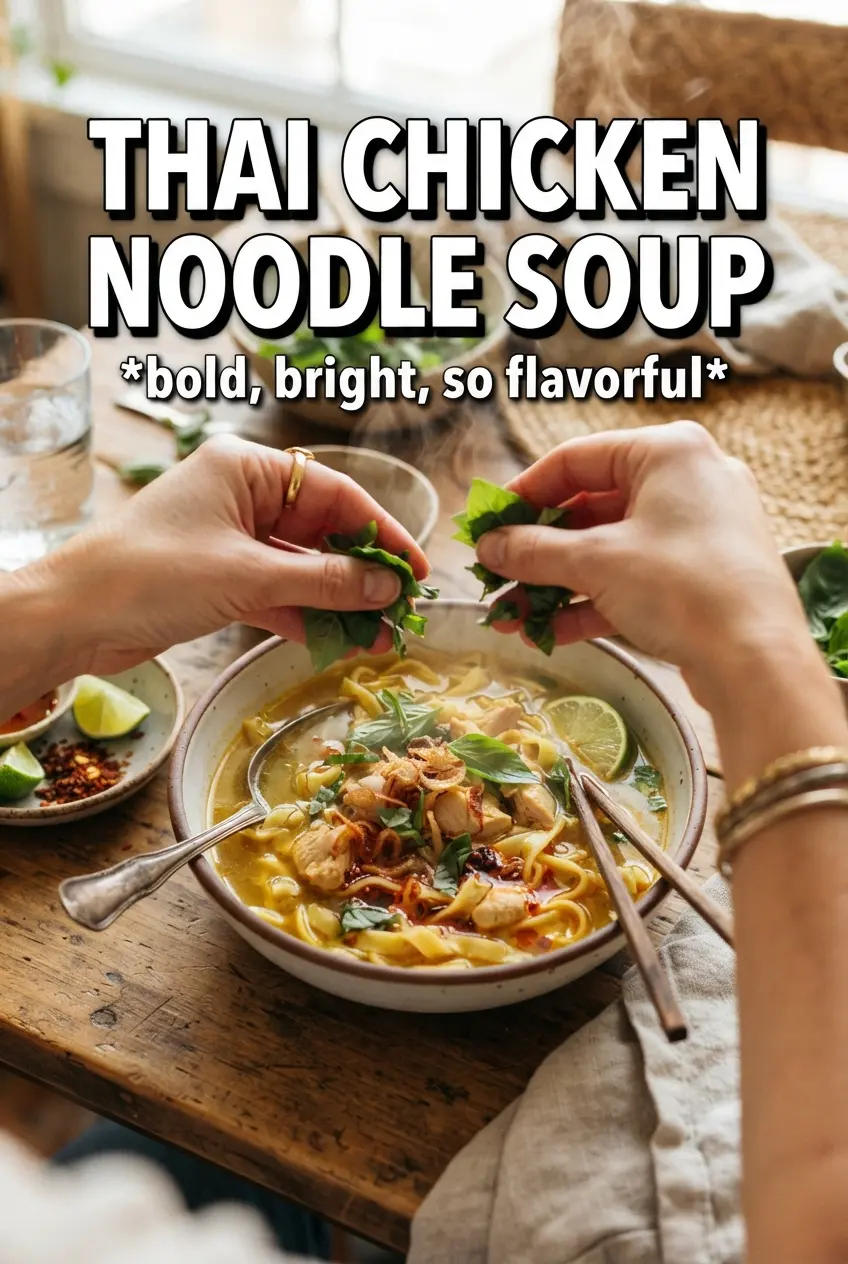
Thai Chicken Noodle Soup
Ingredients
Equipment
Method
- Soak the rice noodles in warm water for 15 minutes, then drain and set aside while you cook the soup.
- Thinly slice the chicken breast or thighs and mince the garlic so everything is ready when the broth starts simmering.
- Heat 1 tbsp oil in a large pot, then cook the red curry paste for 1-2 minutes until fragrant.
- Add the garlic, lemongrass, and galangal/ginger, and cook for 1 minute to bloom the aromatics.
- Pour in the coconut milk and chicken broth, then stir in the fish sauce, lime juice, and brown sugar.
- Simmer the broth for 10 minutes, keeping it at a steady simmer.
- Add the sliced chicken and cook for 8-10 minutes until cooked through.
- Remove the lemongrass and galangal/ginger, then add the drained rice noodles and heat through for 2-3 minutes.
- Ladle into bowls and top with bean sprouts, green onions, Thai basil, cilantro, lime wedges, and sliced red chili.