Stuffed peppers soup delivers the same cozy, savory comfort as classic stuffed peppers, but in a bowl that’s easier to make on a busy night and easier to love at the table. The broth turns rich and tomato-forward, the peppers stay tender with just enough bite, and the rice soaks up all that beefy, seasoned flavor without going mushy when you cook it the right way.
What makes this version work is the balance. Browning the beef first builds a deeper base, then the tomato paste gets cooked with the onions and peppers so it loses that raw, tinny edge. The rice goes in uncooked near the end, which lets it finish in the broth and pull in flavor instead of tasting like an afterthought stirred in from the pantry.
Below, I’ll walk you through the part that matters most: how to keep the rice tender, the broth hearty, and the peppers from disappearing into the pot. There’s also a few simple swaps if you want to stretch it, lighten it up, or make it work with what you’ve got on hand.
The rice cooked right in the soup and stayed tender, and the broth had that real stuffed-pepper taste without me having to fuss with filling peppers. My husband went back for a second bowl before I even sat down.
Save this stuffed peppers soup for a hearty one-pot dinner with tender rice, beefy tomato broth, and melted cheddar on top.
The Trick to Keeping the Rice Tender Instead of Bloated
The biggest mistake in stuffed peppers soup is letting the rice overcook while the broth keeps simmering. White rice only needs enough time to turn tender and absorb flavor; after that, it starts swelling, softening, and turning the whole pot thick and pasty. That’s why this soup works best when you add the rice after the broth comes to a boil, then simmer just until the grains are cooked through.
The other detail that matters is the order of the vegetables. Onion and peppers need a few minutes in the pot before the liquid goes in so they soften and release their sweetness. If you dump everything together at once, the peppers stay a little harsh and the tomato base never really develops.
What Each Ingredient Is Doing in the Pot
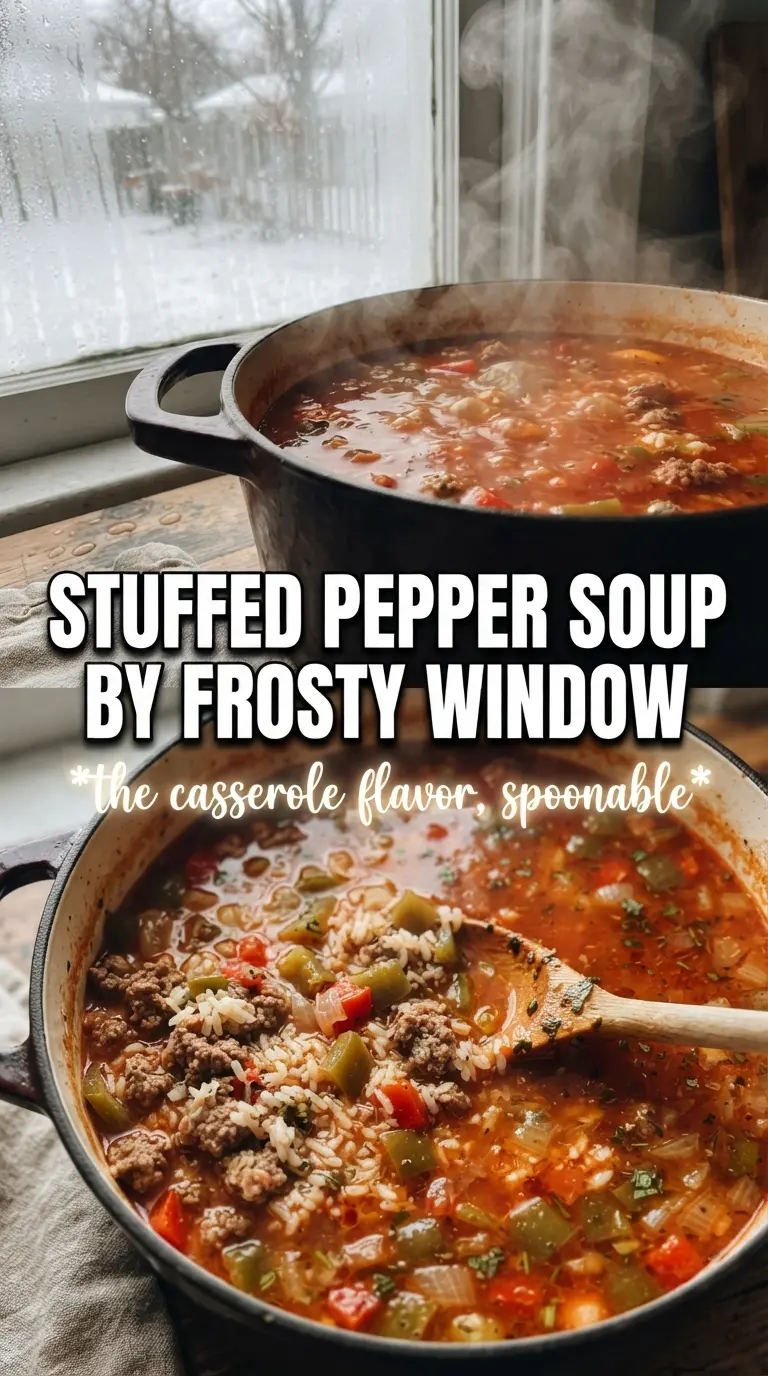
- Ground beef — This gives the soup its savory backbone. Use an 80/20 or 85/15 blend if you can, because there’s enough fat for flavor without leaving the broth greasy after you drain the excess.
- Bell peppers — Green peppers bring that classic stuffed-pepper bite, while the red pepper adds a little sweetness to round it out. Dicing them small helps them soften evenly and keeps every spoonful balanced.
- Tomato paste — Don’t skip the short cook with the onions and peppers. That minute or two deepens the tomato flavor and keeps the soup from tasting thin or sharp.
- Crushed and diced tomatoes — The crushed tomatoes build the broth, and the diced tomatoes give you some texture so the soup still feels hearty. If you only have one type, use what you’ve got, but the mix gives the best balance.
- Long grain white rice — This is the starch that makes the soup eat like stuffed peppers. Long grain rice holds its shape better than short-grain rice, which is more likely to turn sticky.
- Beef broth — This matters more than water because it carries the beef and tomato flavor through the whole pot. If you need to lighten the sodium, use low-sodium broth and season at the end.
- Cheddar and parsley — The cheddar melts into the hot soup and adds a creamy, salty finish, while the parsley gives the bowl a fresh note right before serving. It’s the difference between a good pot of soup and one that tastes finished.
Building the Soup So the Flavor Lands Right
Brown the Beef First
Start by cooking the ground beef in a large pot until it’s no longer pink and you’ve got some browned bits on the bottom. Those bits are flavor, so don’t rush this part. Drain the excess fat once the beef is cooked, but leave enough behind to keep the base rich. If the meat steams instead of browns, the pot is too crowded; let it sit undisturbed for a minute at a time so it can actually color.
Soften the Peppers and Wake Up the Tomato Paste
Add the onion and diced peppers and cook them for 4 to 5 minutes, just until they start to soften and the onion turns translucent at the edges. Stir in the garlic and tomato paste and let them cook for 2 minutes. The tomato paste should darken slightly and smell less raw. If you move on too fast here, the soup tastes flat instead of layered.
Simmer the Broth and Finish the Rice
Pour in the crushed tomatoes, diced tomatoes, broth, Italian seasoning, garlic powder, and smoked paprika, then bring everything to a boil. Add the rice, cover the pot, and drop the heat to a steady simmer for 18 to 20 minutes. The rice is done when it’s tender but still holds its shape; if you keep cooking after that, it will drink up too much liquid and turn the soup thick.
Season and Serve Hot
Taste the soup before you ladle it out and add salt and pepper until the tomato flavor pops. Then finish each bowl with shredded cheddar and a shower of parsley. The cheese should melt into little ribbons on contact with the hot broth, not sit in a cold clump on top.
How to Adapt It When You Want a Different Bowl
Make It Dairy-Free
Skip the cheddar on top or use a dairy-free shredded cheese that melts well. The soup itself is already dairy-free, so this swap only changes the finish. You’ll lose the creamy salty pop from the cheese, but the broth still stands on its own.
Use Ground Turkey Instead of Beef
Ground turkey works well if you want a lighter soup, but it needs a little help. Use a tablespoon of olive oil when browning and season it well, because turkey brings less built-in richness than beef. The soup will still be hearty, just a little cleaner tasting.
Swap the Rice for Cauliflower Rice
If you want a lower-carb version, stir in cauliflower rice during the last 5 minutes instead of using uncooked white rice. It won’t thicken the soup the same way, and it stays a little lighter in the bowl, but it gives you the same stuffed-pepper idea with fewer carbs. Add it late so it doesn’t turn watery and soft.
Stretch It for a Bigger Crowd
This soup scales up cleanly, and it’s one of those dishes that tastes even better the next day. Add an extra cup of broth if you want it looser after reheating, because the rice keeps absorbing liquid as it sits. That’s the easiest way to keep the texture spoonable instead of dense.
Storage and Reheating
- Refrigerator: Store in an airtight container for up to 4 days. The rice will continue soaking up broth, so expect it to thicken.
- Freezer: It freezes well, but the rice gets softer after thawing. For the best texture, freeze in portions and add a splash of broth when reheating.
- Reheating: Warm gently on the stove over medium-low heat or in the microwave in short bursts, stirring between rounds. Add broth as needed so the soup loosens back up before it gets too thick.
Answers to the Questions Worth Asking

Stuffed Peppers Soup
Ingredients
Equipment
Method
- Brown ground beef in a large pot over medium-high heat, then drain fat so the soup is not greasy.
- Continue in the same pot and keep the heat on medium while you start the vegetables.
- Sauté onion and both bell peppers for 4-5 minutes until slightly softened.
- Add garlic and tomato paste and cook 2 minutes, stirring constantly until fragrant and thick.
- Add crushed tomatoes, diced tomatoes, beef broth, Italian seasoning, garlic powder, and smoked paprika, then bring to a boil.
- Add uncooked long grain white rice, cover, and simmer 18-20 minutes until the rice is cooked and tender.
- Season with salt and pepper to taste, then serve hot with shredded cheddar and fresh parsley on top.