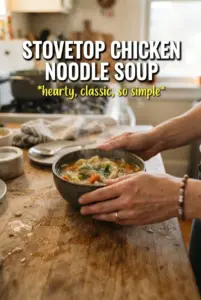
Gluten-free chicken noodle soup should still taste like the bowl you want when you’re tired, cold, or coming down with something: clear golden broth, tender shreds of chicken, soft carrots and celery, and noodles that hold their shape instead of turning to mush. The best versions don’t announce themselves as gluten-free. They just eat like the classic you remember.
The trick is in the noodles and the timing. Certified gluten-free broth keeps the flavor clean, but the real make-or-break detail is adding the pasta at the end and watching it closely. Gluten-free noodles keep cooking after you turn off the heat, so if you let them go until they’re fully tender in the pot, they’ll be soft by the time the soup hits the table. This version also builds flavor in layers: the vegetables soften first, the garlic goes in just long enough to smell sweet, and the chicken poaches right in the broth so nothing tastes flat.
Below, I’ll walk through the little details that keep the broth bright and the pasta from falling apart. There’s also a note on the best noodle choices, because that one decision changes the whole bowl.
The broth had such a clean, homemade taste and the rice noodles stayed perfect because I pulled the pot off the heat right when they were tender. My daughter said it tasted like the chicken noodle soup we used to get at our favorite deli.
Love a bowl of gluten-free chicken noodle soup with tender noodles and a clear, cozy broth? Save this one to Pinterest for the nights when you want comfort food without the gluten.
The Mistake That Makes Gluten-Free Noodles Turn to Mush
The broth can be perfect and the soup can still fall apart if the noodles go in too early. Gluten-free pasta doesn’t have the same structure as wheat pasta, so it softens fast and keeps softening even after the heat is off. That’s why the pot should be simmering gently when the noodles go in, not boiling hard.
Brown rice rotini or GF egg noodles hold up best here. Rice noodles work too, but they’re the most fragile, so the soup needs to be served soon after cooking. If you’re making this ahead, cook the noodles separately and add them to each bowl when you reheat the soup.
What Each Ingredient Is Doing in This Bowl
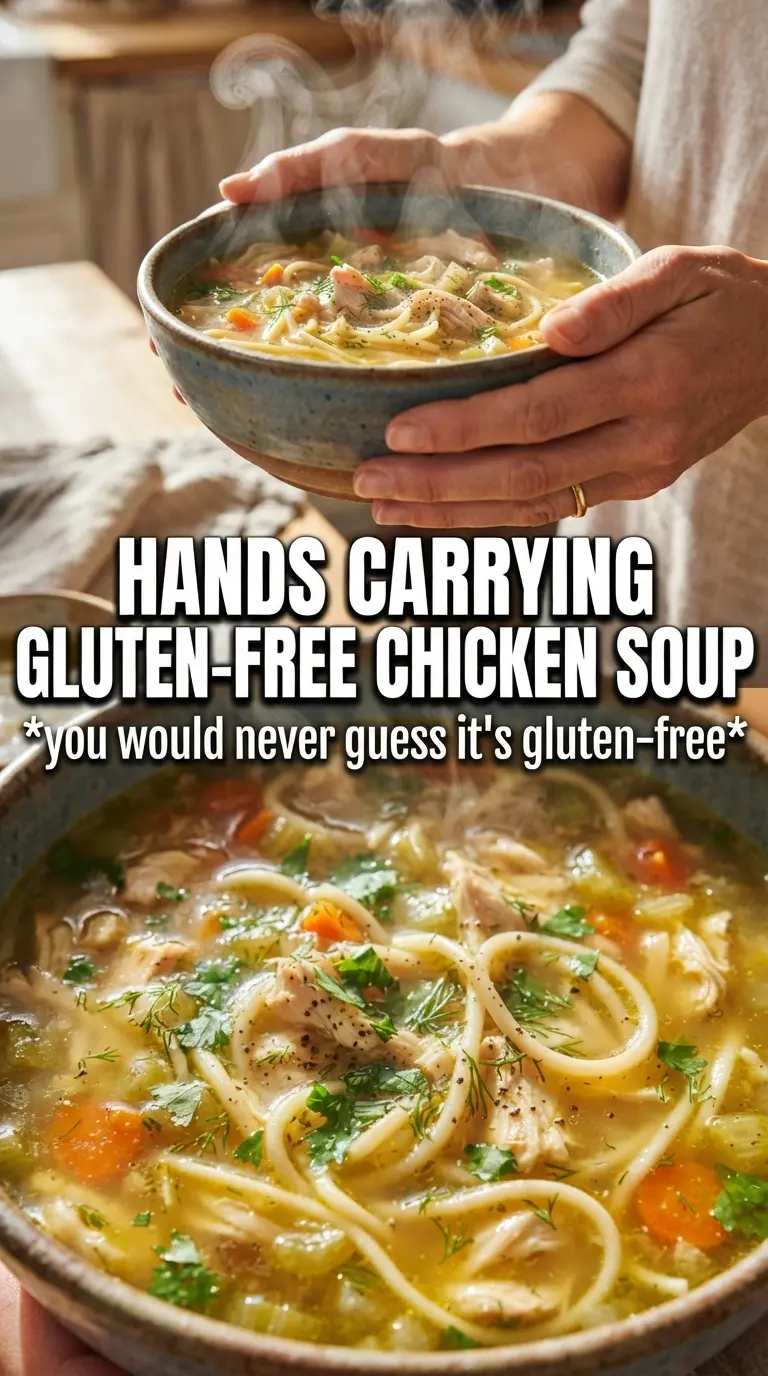
- Chicken breast — It poaches directly in the broth, which keeps it tender and seasons the soup at the same time. If you want to use rotisserie chicken, stir it in after the vegetables are tender and reduce the simmer time.
- Certified gluten-free chicken broth — This is where the soup gets its backbone, so use a broth you like the taste of on its own. If you’re using stock concentrate or bouillon, check the label carefully; hidden gluten shows up there often.
- Carrots, celery, and onion — This is the base that gives the soup its classic flavor and a little sweetness. Dice the onion small and slice the carrots and celery evenly so they soften at the same pace.
- Gluten-free pasta — This is the part that changes the whole texture, so choose a shape that can stay intact in broth. Brown rice pasta and GF egg noodles usually hold better than delicate rice noodles, which can break down if they sit too long.
- Thyme, parsley, and garlic powder — These keep the broth tasting like chicken noodle soup instead of plain chicken and vegetables. Fresh garlic goes in early, but dried herbs bloom in the hot broth and give the soup its familiar savory edge.
Building the Soup in the Right Order
Softening the Vegetables First
Start with olive oil, onion, carrots, and celery in a large pot over medium heat. You’re looking for the onions to turn translucent and the carrots to take on a little gloss, not to brown. If the heat is too high, the onions will color before the carrots soften, and the broth won’t taste as balanced.
Simmering the Chicken in the Broth
Add the garlic for just a minute, then pour in the broth and seasonings and slide in the chicken. Bring the pot to a boil only long enough to get everything moving, then drop it down to a steady simmer. A hard boil makes the chicken stringy and can make the broth cloudy, so keep the bubbles gentle.
Shredding, Then Adding the Noodles Last
When the chicken reaches 165°F and feels firm but not dry, pull it out and shred it with two forks. Return it to the pot, then add the gluten-free pasta and cook just until it’s barely tender. Turn off the heat as soon as the noodles are done; the carryover heat finishes the job, and that’s what keeps them from turning gummy.
Swap the Chicken Thighs for a Richer Broth
Boneless, skinless thighs make the soup a little richer and keep their texture even if the simmer runs long. The broth will taste deeper, but the soup will be slightly less lean and a touch more golden. Use the same amount and simmer until the meat shreds easily.
Make It Dairy-Free and Still Comforting
This soup is naturally dairy-free as written, so there’s nothing to replace. If you want extra richness without cream, add a splash of olive oil at the end or use a broth with a little more body. That keeps the soup light but not thin.
Use Rotisserie Chicken for a Faster Shortcut
If you already have cooked chicken, skip the simmering step and add the shredded meat after the vegetables are tender. You’ll lose a little depth from poaching the chicken in the broth, but the soup comes together faster and still tastes homemade. This works best when the broth is well seasoned from the start.
Hold the Noodles Separately for Leftovers
If you know you’ll have leftovers, cook the pasta in a separate pot and add it to each bowl when serving. The soup base stays clear and the noodles keep their texture instead of soaking up all the broth overnight. This is the best move if you’re using rice noodles, which soften faster than other gluten-free shapes.
Storage and Reheating
- Refrigerator: Store for up to 4 days. The noodles will keep absorbing broth, so expect the soup to thicken a bit.
- Freezer: Freeze the broth, chicken, and vegetables without the noodles for best results. Gluten-free pasta can turn soft and grainy after freezing and thawing.
- Reheating: Warm gently on the stove over medium-low heat until steaming. If the soup has thickened, add a splash of broth or water before reheating so the noodles don’t overcook in a tight pot.
Questions I Get Asked About This Recipe
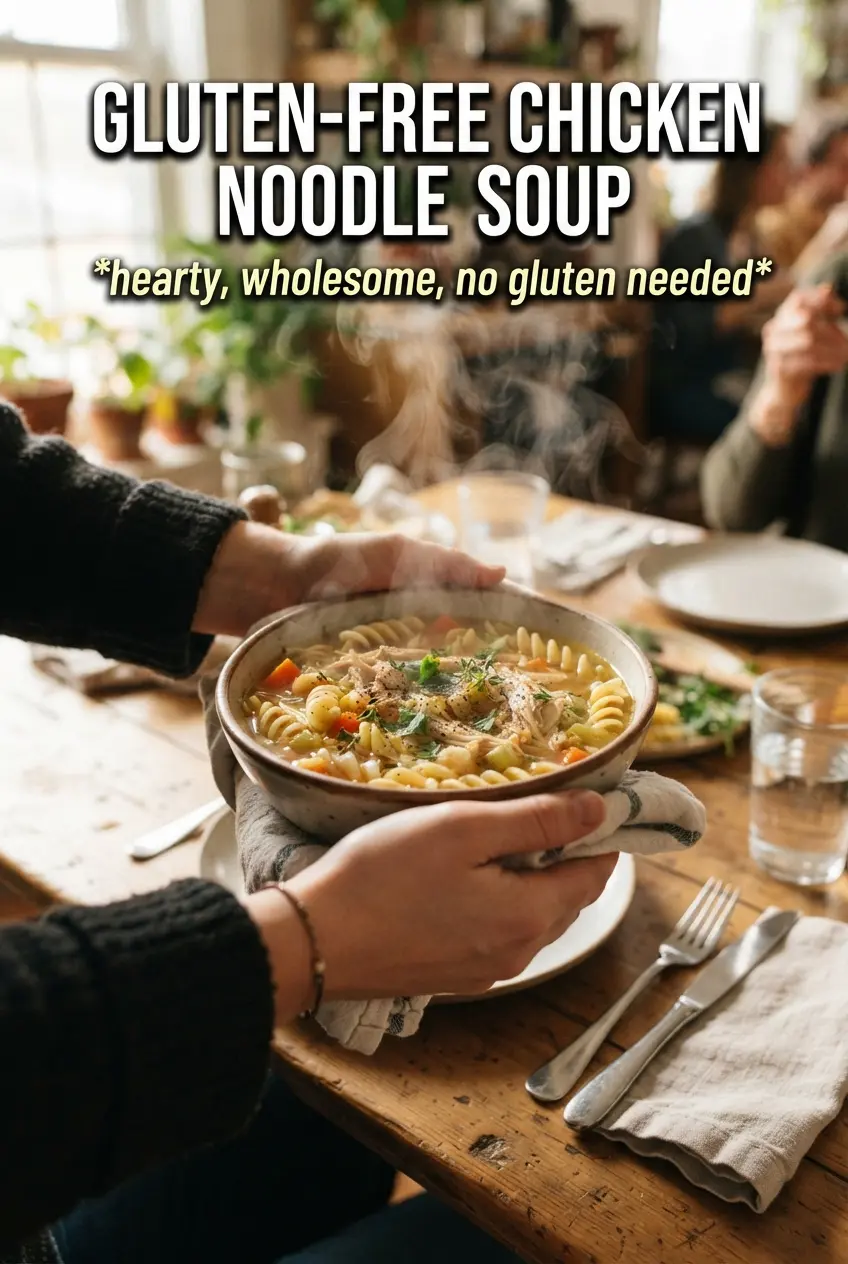
Gluten-Free Chicken Noodle Soup
Ingredients
Equipment
Method
- Heat 2 tablespoons olive oil in a large pot over medium heat until shimmering. Add onion, carrots, and celery and sauté for 5 minutes, stirring occasionally until slightly softened and fragrant.
- Add minced garlic and cook for 1 minute, stirring constantly so it doesn’t brown. Keep the heat at medium so the aromatics stay fragrant.
- Pour in 8 cups certified GF chicken broth, then add dried thyme, dried parsley, garlic powder, and chicken breast. Increase to a boil, then immediately reduce to a simmer for 18-20 minutes to cook the chicken through.
- Remove the chicken from the pot and place it on a plate to rest briefly. Shred the chicken, then return the shredded chicken to the simmering broth.
- Add the gluten-free pasta to the pot and cook according to the package instructions. Check frequently because gluten-free pasta can overcook and turn soft.
- Season the soup generously with salt and pepper to taste, tasting after the noodles are done. Ladle into bowls and garnish with fresh parsley before serving.