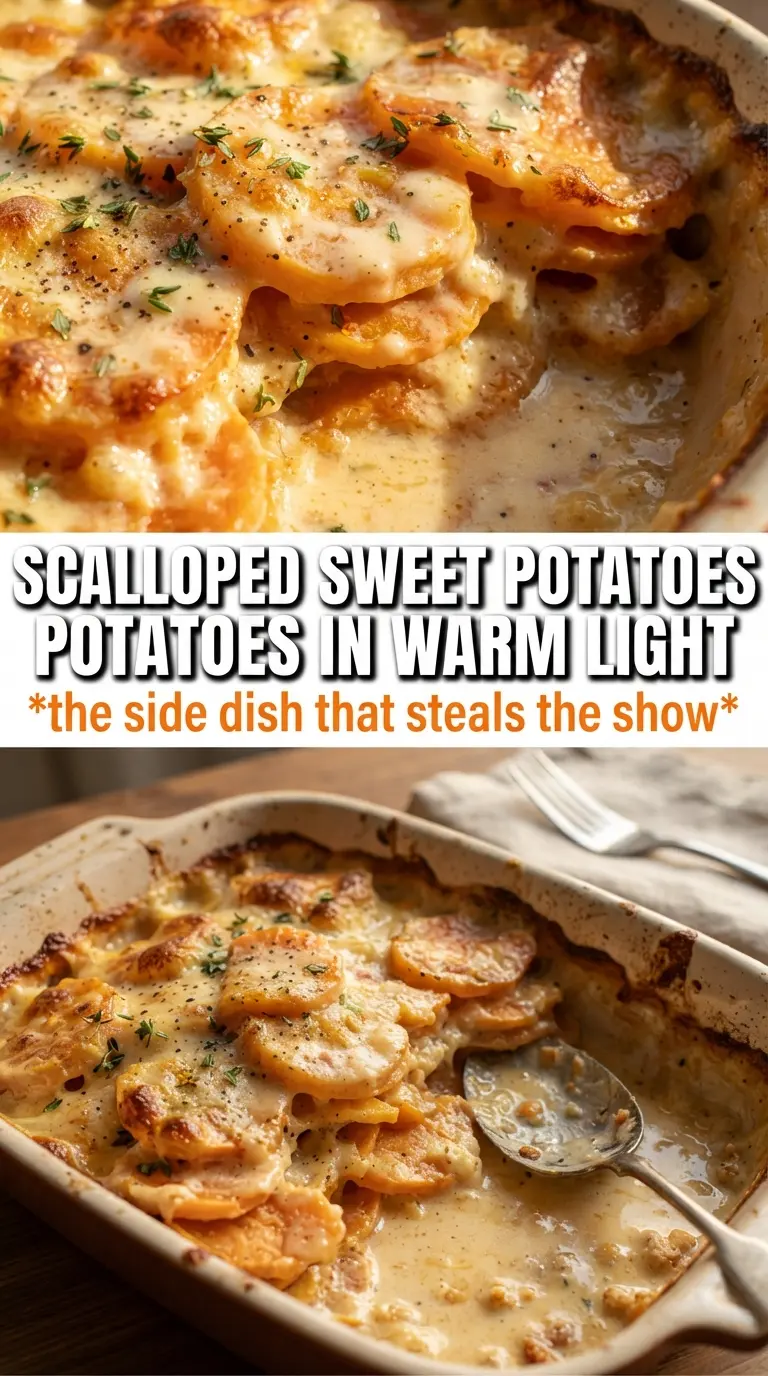
Scalloped sweet potatoes turn soft, silky, and a little luxurious in the oven, with sweet potato slices that hold their shape just enough to stack neatly but melt at the edges where the cream and cheese get underneath. The top finishes with a golden Gruyere-and-parmesan crust, and the maple syrup pulls the whole dish toward caramelized instead of overly sweet. It’s the kind of side that lands on the table looking calm and elegant, then disappears fast once people take the first bite.
What makes this version work is the balance. Sweet potatoes can turn heavy if you drown them in cream, so the mix here uses both heavy cream and whole milk for richness without turning greasy. Garlic, thyme, cinnamon, and nutmeg give the dish warmth, but the seasoning stays restrained so the cheese and sweet potato still taste like themselves. The biggest detail is the slicing: thin, even rounds cook at the same pace, which keeps you from ending up with a dish that’s half-soft and half-firm.
Below, I’ll walk through the layering trick that helps the cream reach every bite, the cue I watch for before adding the cheese, and a few swaps that still keep the casserole creamy and structured.
The cream mixture soaked into every layer and the top browned beautifully without the potatoes falling apart. I added the cheese after the first bake like you said, and it came out perfectly tender with those caramelized edges everyone fought over.
Love these scalloped sweet potatoes? Save the golden Gruyere crust and maple-glazed edges to Pinterest for your next holiday side dish.
The Slice Thickness That Decides Whether This Casserole Cooks Evenly
Scalloped sweet potatoes can look perfect on top and still come out uneven in the center if the slices vary too much. Thick rounds need far more time to soften than thin ones, and by the time the middle is tender, the edges can start breaking down into mush. Aim for thin, even slices that overlap neatly; that structure lets the cream move between the layers and helps everything cook at the same pace.
The first bake does the heavy lifting here. Covered foil traps steam, which softens the potatoes before the cheese goes on, so the topping doesn’t overbrown while the center stays firm. If your dish is still resistant after the covered bake, it usually means the slices were cut too thick or packed too tightly. Give it the full time, then test by sliding a knife through the center — it should go in without much resistance.
What Each Ingredient Is Actually Doing in This Dish
- Sweet potatoes — These are the structure and the sweetness of the dish. Choose potatoes that feel firm and slice them as evenly as you can so they finish at the same time.
- Heavy cream and whole milk — The cream gives body, while the milk keeps the sauce from feeling too dense. Using all cream makes the casserole heavier and can mute the maple and spice.
- Maple syrup — This doesn’t make the dish taste like dessert; it nudges the sweet potatoes toward caramelized, browned edges. Honey works in a pinch, but it tastes sharper and less round.
- Gruyere and parmesan — Gruyere melts into that stretchy, nutty top layer, and parmesan brings salt and a crisp finish. If you swap in a milder cheese, you lose a lot of the savory contrast that keeps the dish balanced.
- Fresh thyme, cinnamon, and nutmeg — These are subtle background notes, not dominant spices. Fresh thyme keeps the dish from leaning too sweet, and the warm spices read more like depth than pumpkin-pie flavor.
- Garlic — It cuts through the richness and keeps the cream from tasting flat. Mince it finely so it disperses through the liquid instead of landing in one sharp bite.
Building the Layers So the Cream Reaches Every Bite
Whisk the liquid until the garlic disappears into it
Stir the cream, milk, garlic, maple syrup, thyme, cinnamon, nutmeg, salt, and pepper together before anything touches the dish. The garlic needs to be distributed evenly or it can clump in one corner and taste harsh there. You want the mixture fragrant and smooth, not streaky.
Overlap the slices like shingles, not stacked coins
Lay the sweet potato slices in overlapping rows so the cream can slide down between them. If you pile them randomly, the center turns dense and the top dries out before the lower layers soften. Pour the liquid over slowly so it settles into the dish instead of pooling on top.
Cover first, then brown at the end
Bake tightly covered for the first 40 minutes. That trapped steam is what makes the potatoes tender without scorching the top. Uncover, add the Gruyere and parmesan, then finish baking until the top is bubbling and deep golden at the edges. Let it rest for 10 minutes before serving so the sauce thickens enough to spoon cleanly.
What to Change When You Want a Different Finish
Make it dairy-free with full-fat coconut milk
Use canned full-fat coconut milk in place of the cream and milk. The dish will still be rich, but it will taste a little more coconut-forward and less like classic scalloped potatoes. Skip the parmesan, use a dairy-free melting cheese if you want a topping, and expect a softer set.
Swap the Gruyere for sharp white cheddar
Sharp cheddar gives you a louder, more familiar flavor and a slightly less silky melt. It browns well, but it won’t have the same nutty depth as Gruyere. This is the best swap if you want a more traditional holiday casserole feel.
Make it ahead for a crowd
You can assemble the dish up to a day ahead, cover it, and refrigerate it before baking. Bring it closer to room temperature while the oven preheats, or add a few extra minutes to the covered bake since a cold dish slows everything down. Add the cheese only near the end so the top doesn’t overcook before the center is tender.
Cut the sweetness back for a more savory result
Leave the maple syrup out and add a little extra black pepper plus another pinch of salt. The spices and cheese will stand out more, and the sweet potatoes will taste earthier. This is the version I’d serve next to ham or roast chicken when I want the side dish to stay on the savory side.
Storage and Reheating
- Refrigerator: Store leftovers covered for up to 4 days. The sauce will thicken as it chills.
- Freezer: It freezes, but the texture softens a bit after thawing because of the dairy. Freeze in portions, wrapped tightly, and thaw in the refrigerator before reheating.
- Reheating: Warm covered in a 325F oven until hot in the center. The biggest mistake is blasting it at high heat, which can dry out the top before the middle warms through.
Questions I Get Asked About This Recipe

Scalloped Sweet Potatoes
Ingredients
Equipment
Method
- Preheat oven to 375F and butter a 9x13 baking dish. This ensures the scalloped layers release cleanly after baking.
- Whisk heavy cream, whole milk, garlic, maple syrup, fresh thyme, cinnamon, nutmeg, salt, and pepper until smooth. The mixture should look evenly speckled with herbs and spices.
- Layer sweet potato slices in overlapping rows inside the prepared dish. Pack them snugly so the cream mixture can soak through evenly.
- Pour the cream mixture over the sweet potatoes evenly. Make sure most slices are covered so they bake tender.
- Cover tightly with foil and bake 40 minutes at 375F. You should see the edges start to soften as steam builds under the foil.
- Uncover and scatter Gruyere cheese and parmesan over the top. The surface should be thickly covered so it turns golden and bubbly.
- Bake 20-25 more minutes at 375F until sweet potatoes are completely tender and the topping is golden and bubbly. The crust should look set with browned spots at the edges.
- Rest 10 minutes before serving. This helps the creamy layer thicken so the slices hold together.