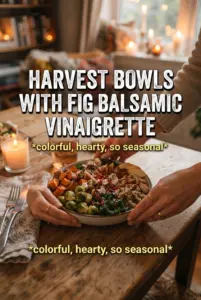
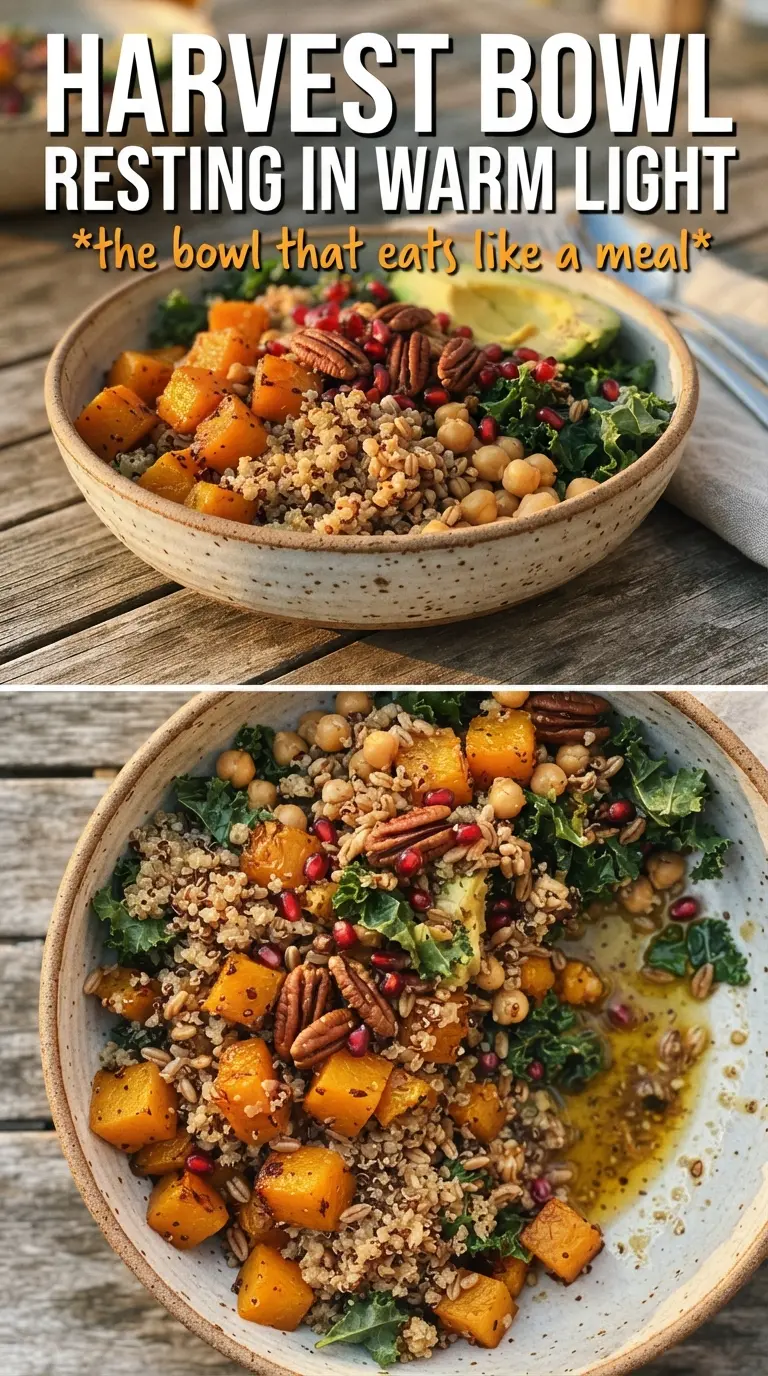
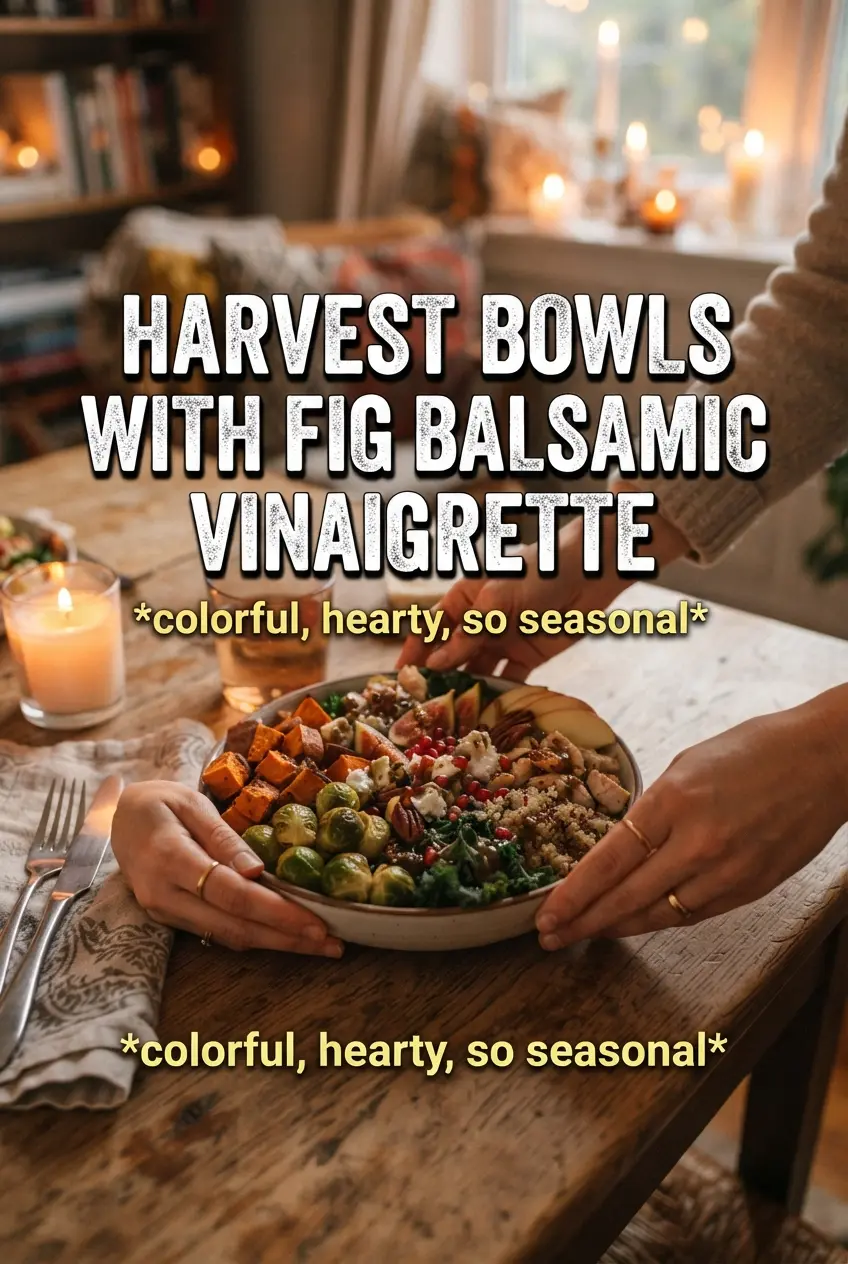
Roasted sweet potatoes, crisp chickpeas, crunchy Brussels sprouts, jewel-like pomegranate seeds, and a glossy fig balsamic drizzle make these harvest bowls feel complete in a way most grain bowls don’t. Every bite has contrast: soft against crisp, sweet against tangy, creamy against sharp. The goat cheese pulls the whole bowl together, and the candied pecans give it that one last bit of crunch that keeps you going back for another forkful.
What makes this version work is the layering. The sweet potatoes and chickpeas roast separately, which matters because they brown at different rates and need different levels of space on the pan. The vinaigrette leans on fig jam for body, so it clings instead of sliding off the bowl, while Dijon and balsamic keep it from tasting syrupy. Shaving the Brussels sprouts raw keeps them fresh and snappy, which balances the richer ingredients.
Below, I’m walking through the little details that make the bowl taste balanced instead of piled together. A few small choices change this from a decent grain bowl into one you’ll actually want on repeat.
The roasted chickpeas stayed crisp even after I assembled the bowls, and the fig balsamic tied everything together without making it soggy. I used quinoa, and it soaked up just enough dressing to taste great in every bite.
Save these harvest bowls with fig balsamic vinaigrette for a colorful dinner that brings roasted sweet potatoes, crispy chickpeas, and tangy goat cheese together in one bowl.
The Reason This Bowl Tastes Balanced Instead of Overloaded
A grain bowl can go flat fast if every component leans soft or sweet. What keeps this one interesting is the contrast built into each layer. The farro or quinoa gives you a sturdy base, the roasted sweet potatoes add warmth, and the chickpeas bring a crisp edge if you roast them long enough to dry out the outside. The raw Brussels sprouts keep the bowl from feeling heavy, which is what happens when every vegetable gets roasted and mellowed.
The dressing matters more than it looks like it should. Fig jam gives it thickness and gentle sweetness, but balsamic vinegar and Dijon keep it sharp enough to cut through goat cheese and pecans. If the vinaigrette tastes flat, it usually needs salt, not more jam. Sweet dressings can hide that missing brightness for a minute, then the whole bowl tastes dull.
- Farro or quinoa — Farro gives you a chewy, nutty base. Quinoa keeps the bowl lighter and makes it naturally gluten-free. Cook either one a little on the drier side so it doesn’t collapse under the dressing.
- Sweet potatoes — Roast them until the edges darken and the centers are tender. If you cut them too small, they’ll soften before they caramelize.
- Chickpeas — Dry them well before roasting. Any extra moisture on the surface turns them from crisp to leathery, and that texture is what makes them worth adding.
- Fig jam — This is what gives the vinaigrette its body. If you substitute honey or maple syrup, the dressing will taste thinner and less complex, though it will still work in a pinch.
- Goat cheese — Use the real thing if you can. Its tang is what keeps the bowl from tasting like a pile of roasted vegetables with dressing on top.
What Each Ingredient Is Actually Doing in This Recipe
- Primary ingredient (the star) — Quality matters most. Choose the best you can find.
- Cooking medium (oil, butter, or broth) — This carries flavors and prevents dryness.
- Seasonings (salt, pepper, spices, herbs) — Layer flavors so nothing overpowers. Build depth gradually.
- Aromatics (garlic, onion, herbs) — Cook with fat to bloom flavors. Become the foundation.
- Supporting ingredients — Complement the main ingredient without overpowering it.
- Sauce or liquid (if applicable) — Brings flavors together. Balance richness with acid.
- Acid (lemon, vinegar, wine, or other) — Brightens and prevents flat-tasting results.
- Final finish (garnish, glaze, or sauce) — Prevents one-dimensional taste and adds visual appeal.
Roasting and Assembly: The Parts That Decide the Texture
Roast the Sweet Potatoes Until the Edges Color
Spread the sweet potato cubes on a baking sheet in a single layer and roast them at 425°F until the edges look bronzed and the centers are soft when pierced. Crowding the pan traps steam, and steam is the enemy of those caramelized edges. If the potatoes look pale at 25 minutes, give them a few more minutes rather than pulling them early.
Dry and Crisp the Chickpeas Separately
Pat the chickpeas dry before they go into the oven. That step matters more than the seasoning because moisture is what keeps them from crisping. Roast them until they feel firm outside and light when you shake the pan. If they go in wet, they’ll soften instead of crackling.
Whisk the Dressing Until It Looks Glossy
Combine the fig jam, balsamic vinegar, olive oil, Dijon, and garlic until the dressing turns smooth and shiny. If the jam clumps, keep whisking; it needs enough agitation to dissolve into the vinegar. Taste it before serving. The vinaigrette should be tangy first, then sweet, with enough salt to sharpen the finish.
Build the Bowl in Layers, Not Piles
Start with the grain, then add the warm vegetables, then the raw Brussels sprouts, pomegranate seeds, pecans, and goat cheese. That order keeps the greens from getting buried and lets the dressing reach every bite without soaking the whole bowl. Drizzle right before serving so the pecans stay crunchy and the cheese stays distinct.
Three Ways to Make These Harvest Bowls Fit What You Have
Swap quinoa for a gluten-free base
Quinoa works cleanly here if you need the bowl to stay gluten-free. It’s lighter than farro and absorbs the dressing a little faster, so keep it fluffy rather than overcooking it. The bowl will taste a touch fresher and less chewy, which is a good trade if you want a lighter finish.
Make it dairy-free without losing contrast
Skip the goat cheese and add avocado slices or a dairy-free feta-style crumble. You’ll lose the sharp tang of goat cheese, so add an extra pinch of salt to the dressing or a few more pomegranate seeds to keep the bowl bright.
Use toasted walnuts instead of candied pecans
Walnuts give you a deeper, earthier crunch if you don’t want the extra sweetness from candied pecans. Toast them in a dry skillet until fragrant, then cool them before adding them to the bowl. The result is less dessert-like and more savory.
Storage and Reheating
- Refrigerator: Store the grains, roasted vegetables, chickpeas, and dressing separately for up to 4 days. The Brussels sprouts will soften once dressed, so keep them undressed until serving.
- Freezer: The roasted sweet potatoes and grains freeze well, but the assembled bowls don’t. Freeze the components in airtight containers, then thaw in the fridge before building fresh bowls.
- Reheating: Warm the grains, sweet potatoes, and chickpeas in the oven or a skillet until hot. Don’t microwave the chickpeas if you want them crisp; they’ll steam and lose the texture that makes them work here.
Answers to the Questions Worth Asking
Harvest Bowls With Fig Balsamic Vinaigrette
Ingredients
Equipment
Method
- Heat oven to 425F and arrange cubed sweet potatoes on a sheet pan in an even layer for roasting.
- Roast the sweet potatoes at 425F for 25 minutes, turning once for browning, until tender and edges caramelize.
- Place drained chickpeas on a separate sheet pan and roast at 425F for 20-25 minutes, shaking once, until crispy.
- In a bowl, whisk together fig jam, balsamic vinegar, olive oil, Dijon mustard, minced garlic, and salt and pepper until smooth.
- Spoon the cooked farro or quinoa into 4 bowls as the base.
- Top each bowl with roasted sweet potatoes, crispy chickpeas, and shaved Brussels sprouts.
- Scatter pomegranate seeds and candied pecans over each bowl for crunch.
- Crumble goat cheese over each bowl and drizzle generously with fig balsamic vinaigrette.