Gluten free crockpot lasagna soup gives you all the comfort of lasagna without the layering, oven babysitting, or cleanup. The broth turns rich and tomatoey as it slow-simmers with sausage, onion, garlic, and Italian seasoning, and the gluten-free pasta softens just enough to feel like a proper bowl of lasagna in spoonable form. The best part is the cheese dollop melting into the hot soup and turning each bite creamy, salty, and a little stretchy.
This version works because the pasta goes in at the end, not at the beginning. Gluten-free noodles can turn mushy fast in a slow cooker, so the soup base gets time to develop first, then the pasta is added just long enough to cook through. Browning the sausage before it goes in matters too. You want that savory depth in the pot from the start, not a pale, steamed flavor that never quite catches up.
Below, I’ll walk you through the timing that keeps the pasta from overcooking and the cheese topping from going grainy. If you’ve had trouble with gluten-free soups turning thick, soggy, or bland, this version fixes those problems without making dinner more complicated.
The broth got rich and savory, and the gluten-free noodles held up better than I expected because I added them at the end like you said. The ricotta topping melted into the bowl and tasted just like lasagna without all the work.
Save this crockpot lasagna soup for a hands-off dinner with tender gluten-free pasta and a creamy ricotta-mozzarella finish.
The Trick to Keeping Gluten-Free Pasta From Turning to Mush
The biggest mistake with crockpot pasta soups is adding the noodles too early and walking away. Gluten-free pasta needs a shorter window than regular pasta, and slow cookers hold heat long enough to push it from tender to swollen and soft fast. The soup base can go for hours; the pasta cannot.
That’s why the broth, sausage, tomatoes, and seasonings build flavor first, then the noodles go in near the end once the soup has already developed body. If you’re using broken lasagna noodles, keep the pieces on the larger side so they don’t vanish into tiny shards. If your slow cooker runs hot, check the pasta a few minutes early and pull it as soon as it’s tender with a little bite left.
What Each Ingredient Is Actually Doing in This Soup
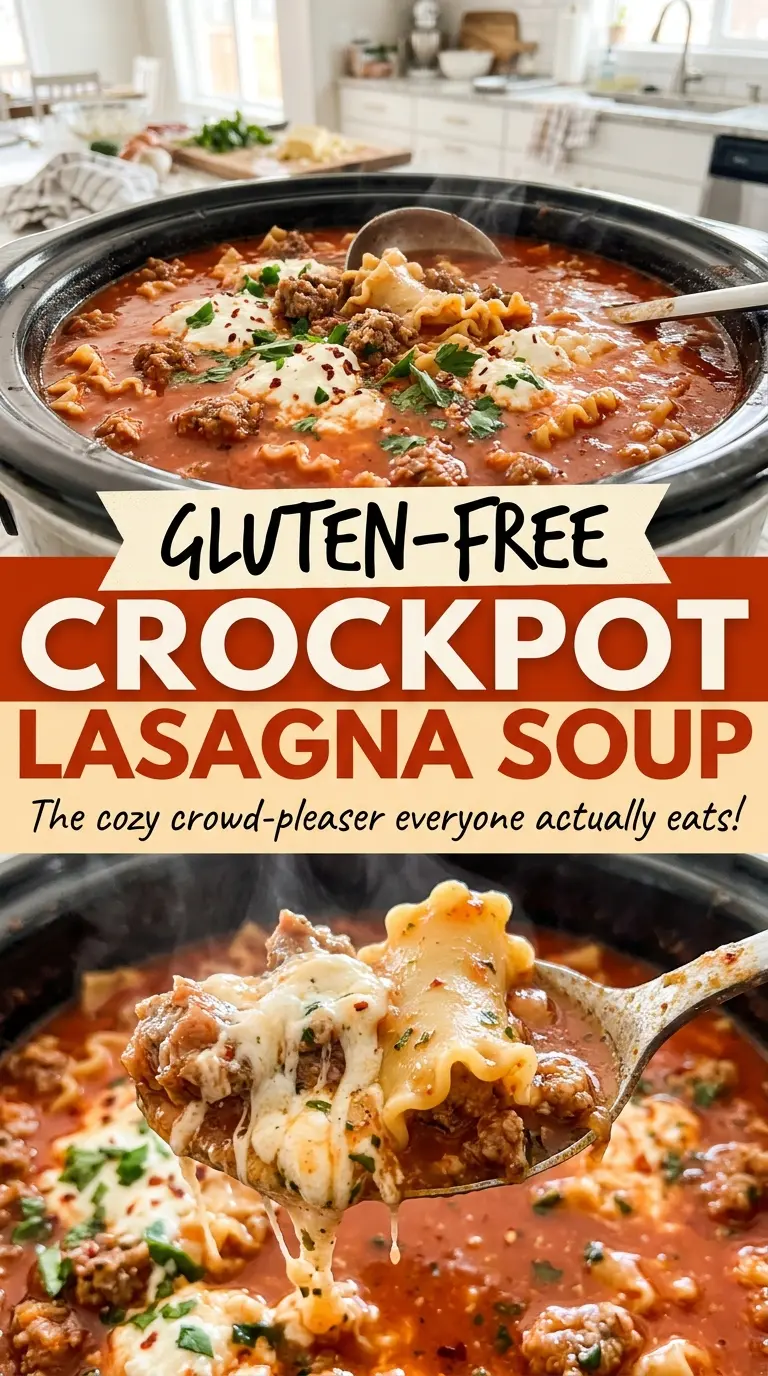
The sausage does more than add protein. It seasons the whole pot and gives the broth the savory backbone that makes this taste like lasagna instead of plain tomato soup. If you want a milder version, use sweet Italian sausage. If you want more heat, hot Italian sausage does the job without needing extra fuss.
- Crushed tomatoes — These create the body of the broth and melt down into a spoonable base. Crushed tomatoes work better than tomato sauce here because they still leave some texture and keep the soup from tasting flat.
- Diced tomatoes — These give the soup little bursts of tomato and keep the texture from going completely smooth. Drain them only if they’re packed in a lot of extra liquid; most of the time, the juice belongs in the pot.
- Tomato paste — This is the deep, cooked tomato flavor that gives the soup more weight. Stir it in well so it doesn’t sit in one spot and taste sharp.
- Certified gluten-free broth — Broth is one place where labels matter. Some brands use wheat-based additives or processing shortcuts, so choose one that’s clearly certified if you’re cooking for someone with celiac disease or strict gluten avoidance.
- Gluten-free lasagna noodles or penne — The pasta choice changes the final texture. Broken lasagna noodles give you the closest lasagna feel, while penne is sturdier and a little easier to serve. Either way, add it late and watch it closely.
- Ricotta, mozzarella, and parmesan — This is the lasagna part people remember. Ricotta gives you that creamy dollop, mozzarella brings stretch, and parmesan adds the salty finish that keeps the topping from tasting one-note.
How to Build the Soup Without Overcooking the Pasta
Brown the sausage first
Cook the sausage until it’s deeply browned and no pink remains, then drain off the excess fat if there’s a lot in the pan. That browning step builds flavor you can’t get from dumping raw meat straight into the slow cooker. If you skip it, the soup tastes flatter and the sausage can end up grainy instead of savory.
Let the base simmer before the noodles go in
Add the sausage, onion, garlic, tomatoes, broth, tomato paste, and seasonings to the crockpot and cook until the broth has turned dark and fragrant. At that point the onions should be soft and the tomato paste should be fully dissolved. If you rush this part, the soup tastes thin no matter how long the pasta cooks.
Add the gluten-free pasta at the end
Stir in the broken noodles during the last 30 to 35 minutes and check them early. Gluten-free pasta can move from firm to oversoft in a short stretch, especially in a hot slow cooker. If the soup has cooled down from opening the lid, turn the heat up to High for that last stretch so the noodles cook evenly.
Finish with the cheese dollop
Mix the ricotta, mozzarella, parmesan, and basil in a small bowl and spoon it over each serving while the soup is piping hot. The dollop should loosen into the broth instead of disappearing completely. If you add it to the whole pot, the cheese can clump or turn stringy; in the bowl, it stays creamy and gives each person a better bite.
Three Ways to Adjust This for Different Pans, Diets, and Tastes
Make it dairy-free
Skip the ricotta-mozzarella-parmesan topping and use a dairy-free ricotta or a spoonful of unsweetened cashew cream instead. The soup itself already carries the tomato and sausage flavor, so you won’t lose the main structure, but you will lose the classic lasagna finish. A little fresh basil on top helps bring back some of that layered feel.
Use ground turkey or chicken sausage
If you want a lighter pot, swap the pork sausage for turkey or chicken sausage and add a little extra olive oil when browning if the pan looks dry. The soup will taste leaner and a little cleaner, so you may want a pinch more salt at the end. A touch of extra parmesan helps bring the savory edge back.
Use penne instead of broken lasagna noodles
Gluten-free penne is sturdier and a little less fussy than lasagna noodles, which makes it a smart choice if your slow cooker runs hot or you’ve had GF noodles break apart on you before. The texture is slightly less lasagna-like, but the soup is easier to serve and holds up better for leftovers. Keep the same end-of-cook timing and check for tenderness early.
Storage and Reheating
- Refrigerator: Store in an airtight container for up to 4 days. The pasta will continue softening a bit, so the soup is best when eaten sooner rather than later.
- Freezer: The soup base freezes well, but gluten-free pasta can get softer after thawing. For the best texture, freeze the soup before adding noodles, then cook fresh pasta when you reheat it.
- Reheating: Warm it gently on the stove over medium-low heat or in the microwave at half power. If it thickens too much, add a splash of broth. High heat can push the gluten-free pasta from tender to bloated fast.
Answers to the Questions Worth Asking

Gluten Free Crockpot Lasagna Soup
Ingredients
Equipment
Method
- Brown the Italian sausage in a Dutch oven until cooked through, then drain excess fat and add the sausage to the Crockpot.
- Add the diced onion and minced garlic to the Crockpot with the browned sausage.
- Pour in the crushed tomatoes, diced tomatoes, and chicken broth, then stir in the tomato paste until combined.
- Add Italian seasoning, dried basil, and red pepper flakes, then stir to evenly distribute.
- Cook on Low for 5–7 hours (or High for 2.5–3 hours) until the flavors meld.
- In the last 30–35 minutes, add the broken gluten-free lasagna noodles (or GF penne) and increase to High if needed.
- Cook until the GF pasta is tender, checking frequently because gluten-free pasta can overcook.
- Season the soup with salt and pepper to taste.
- Mix the ricotta, shredded mozzarella, and parmesan until a thick dollop mixture forms.
- Serve the soup in bowls with a generous cheese dollop, and top with fresh basil.