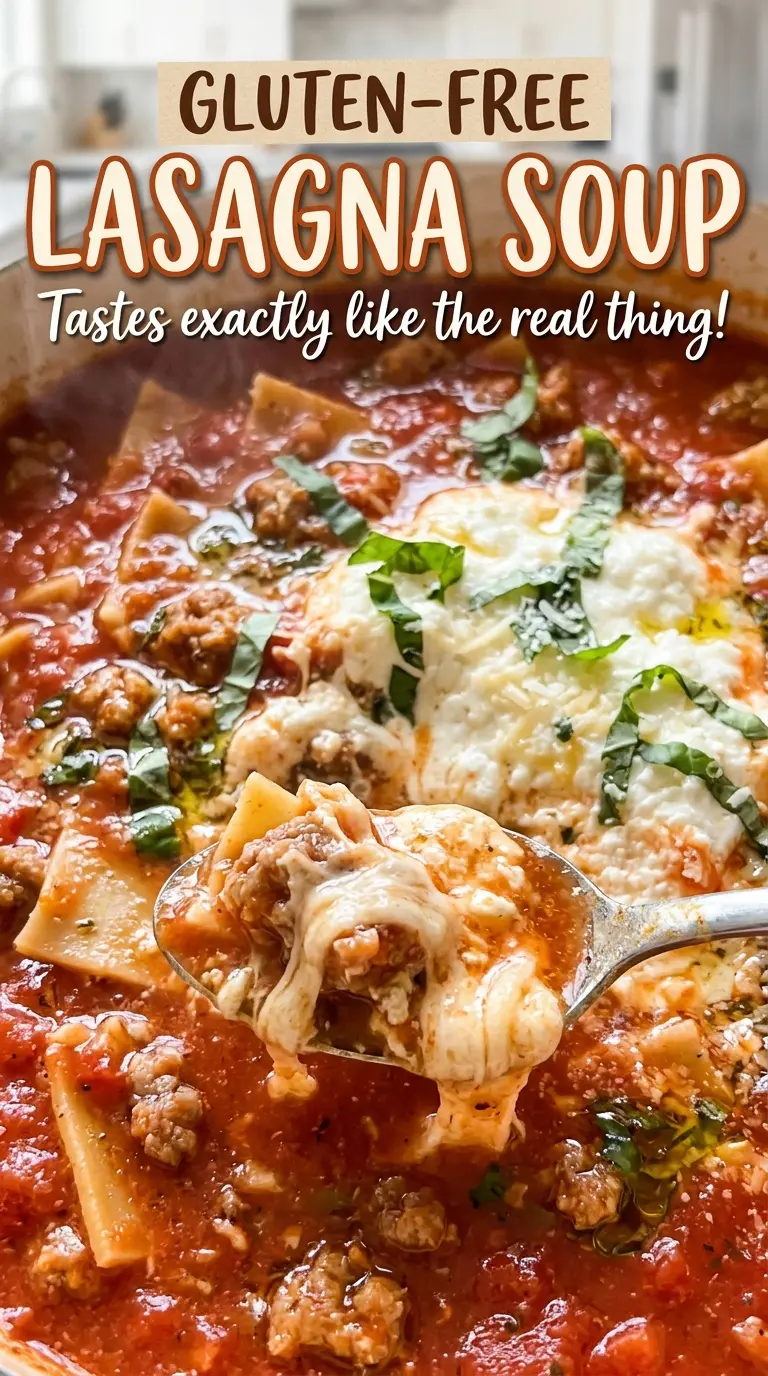
Gluten free lasagna soup delivers all the comfort of a baked pan of lasagna without the layering, waiting, or cleanup. You get a rich tomato broth, browned Italian sausage, tender gluten-free pasta, and a creamy cheese dollop that melts into the bowl as soon as it hits the hot soup. The best part is the balance: it eats like a full dinner, but it still feels light enough for a weeknight.
What makes this version work is the order. The sausage browns first so the pot starts with real flavor, then the tomato paste cooks long enough to lose its raw edge before the broth goes in. That step matters more than it looks on paper. Gluten-free pasta also needs a gentler hand than regular pasta, so it goes in near the end and simmers just until tender instead of turning soft and cloudy.
Below, I’ll walk through the small choices that keep the broth bold, the pasta intact, and the cheese topping creamy instead of gluey. If you’ve had gluten-free soups go mushy or bland before, this one fixes both problems.
The broth had a deep tomato flavor and the gluten-free noodles held up all the way through dinner. The ricotta-mozzarella topping melted into the soup instead of clumping, which is exactly what I was hoping for.
Creamy, cheesy gluten free lasagna soup for nights when you want the lasagna flavors without assembling a pan.
The Trick to Keeping Gluten-Free Pasta from Going Soft
Gluten-free pasta behaves differently in soup than wheat pasta. It keeps cooking after the heat is off, and it can turn gummy if it sits in boiling broth too long. That’s why this recipe adds the pasta near the end and keeps the simmer controlled. You want the noodles tender with a little structure left in the center, not swollen and breaking apart in the spoon.
The other key is not letting the soup sit at a hard boil after the pasta goes in. A lively simmer is enough. Once the noodles are close, taste one before you call it done. If it’s cooked through but still has a little bite, stop there — the residual heat will finish the job in the bowl.
What Each Ingredient Is Actually Doing in This Dish
- Italian sausage — This is the backbone of the soup. It seasons the broth as it browns, so you get built-in depth without needing a long simmer. If you want a milder bowl, use sweet Italian sausage. For more heat, use hot sausage or add a pinch more red pepper flakes.
- Tomato paste — Don’t skip the brief cooking time here. It needs a minute or two in the hot pot to lose the tinny edge and turn brick-red and fragrant. That small step gives the broth a fuller, rounder tomato flavor.
- Crushed tomatoes and diced tomatoes — The crushed tomatoes build the body of the broth, while the diced tomatoes leave you with small bites of tomato throughout the soup. If all you have is crushed tomatoes, use them for both cans and accept a smoother soup.
- Chicken broth — This stretches the tomato base into an actual soup and carries the seasoning through the whole pot. Homemade or low-sodium broth both work well here, but if yours is already salty, hold back on adding extra salt until the end.
- Gluten-free pasta — Brown rice lasagna noodles hold up well, but gluten-free penne is the easiest fallback if that’s what you have. Break lasagna sheets into rough pieces if you want the soup to look more like lasagna in a bowl. Just don’t overcook them, since GF pasta can go from tender to mushy fast.
- Ricotta, mozzarella, parmesan, and basil — This topping is what gives the soup its lasagna finish. Stir them together right before serving so the cheeses stay soft and fresh instead of drying out. The basil cuts through the richness and keeps the bowl from tasting heavy.
The 20 Minutes That Actually Matter
Browning the sausage
Start by cooking the sausage in a large pot until it’s deeply browned in spots and no longer pink. Those browned bits on the bottom are flavor, not mess, so don’t rush past them. If the sausage releases a lot of fat, drain off the excess before moving on; too much fat can make the broth greasy instead of rich.
Building the tomato base
Add the onion to the same pot and cook it until it turns soft and translucent, then stir in the garlic for just a minute. Garlic burns quickly, so it should smell fragrant, not toasted. Add the tomato paste and cook it until it darkens slightly and clings to the pot, which is the sign that the raw taste has cooked off.
Simmering the soup
Pour in the tomatoes, broth, and seasonings, then bring the pot to a boil before reducing it to a steady simmer. Once the pasta goes in, keep an eye on the texture. Gluten-free pasta can thicken the soup as it cooks, so stir it a few times to keep it from sticking to the bottom and taste early instead of waiting for the full package time if the noodles are thin.
Finishing with the cheese dollop
Mix the ricotta, mozzarella, parmesan, and basil in a small bowl right before serving. The cheese should be thick enough to hold its shape for a second, then melt into the hot soup. Spoon it over each bowl instead of stirring it into the pot; that way you get creamy pockets instead of a grainy, fully blended finish.
Three Ways to Adapt It Without Losing What Makes It Work
Dairy-Free Bowl
Skip the ricotta-mozzarella-parmesan topping and finish each bowl with a spoonful of dairy-free pesto or a drizzle of good olive oil. You’ll lose the creamy lasagna finish, but the soup itself still holds up because the sausage and tomatoes do most of the work.
Vegetarian Version
Use plant-based Italian sausage or replace it with sautéed mushrooms and a little fennel seed for that savory, sausage-like note. Swap the chicken broth for vegetable broth. The soup will be a little lighter, but the tomato base still carries plenty of flavor.
Lower-Carb Approach
Leave out the pasta and add more sausage or extra vegetables such as zucchini or spinach near the end. The broth stays deeply satisfying, and you still get the lasagna-style flavor without the starch. It won’t be traditional, but it does keep the spirit of the dish intact.
Storage and Reheating
- Refrigerator: 3 to 4 days. The pasta will absorb broth as it sits, so expect a thicker soup the next day.
- Freezer: Freeze the broth and sausage base without the pasta for the best texture. Gluten-free pasta tends to get soft after thawing, so cook a fresh batch when you reheat.
- Reheating: Warm it slowly on the stove over medium-low heat with a splash of broth or water to loosen it. The common mistake is boiling it hard, which makes the pasta fall apart and can tighten the cheese if you’ve already stirred it in.
Answers to the Questions Worth Asking

Gluten Free Lasagna Soup
Ingredients
Equipment
Method
- Brown the Italian sausage in a large pot; drain excess fat and set the sausage aside.
- Sauté the diced onion for 4 minutes in the same pot, then add the minced garlic and cook for 1 minute.
- Stir in the tomato paste and cook for 1-2 minutes, until it darkens slightly.
- Add the crushed tomatoes, diced tomatoes, chicken broth, Italian seasoning, dried basil, and red pepper flakes; bring the mixture to a boil.
- Add the gluten-free pasta and return the sausage to the pot, then simmer according to the pasta package instructions (usually 8-12 minutes) until tender.
- Season the soup with salt and pepper to taste.
- Mix the ricotta, shredded mozzarella, parmesan, and fresh basil until combined.
- Serve the soup topped with a generous spoonful of the cheese dollop, letting it melt into the hot tomato broth.