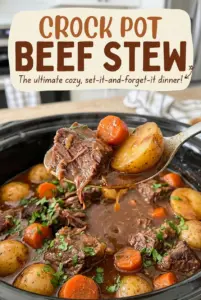
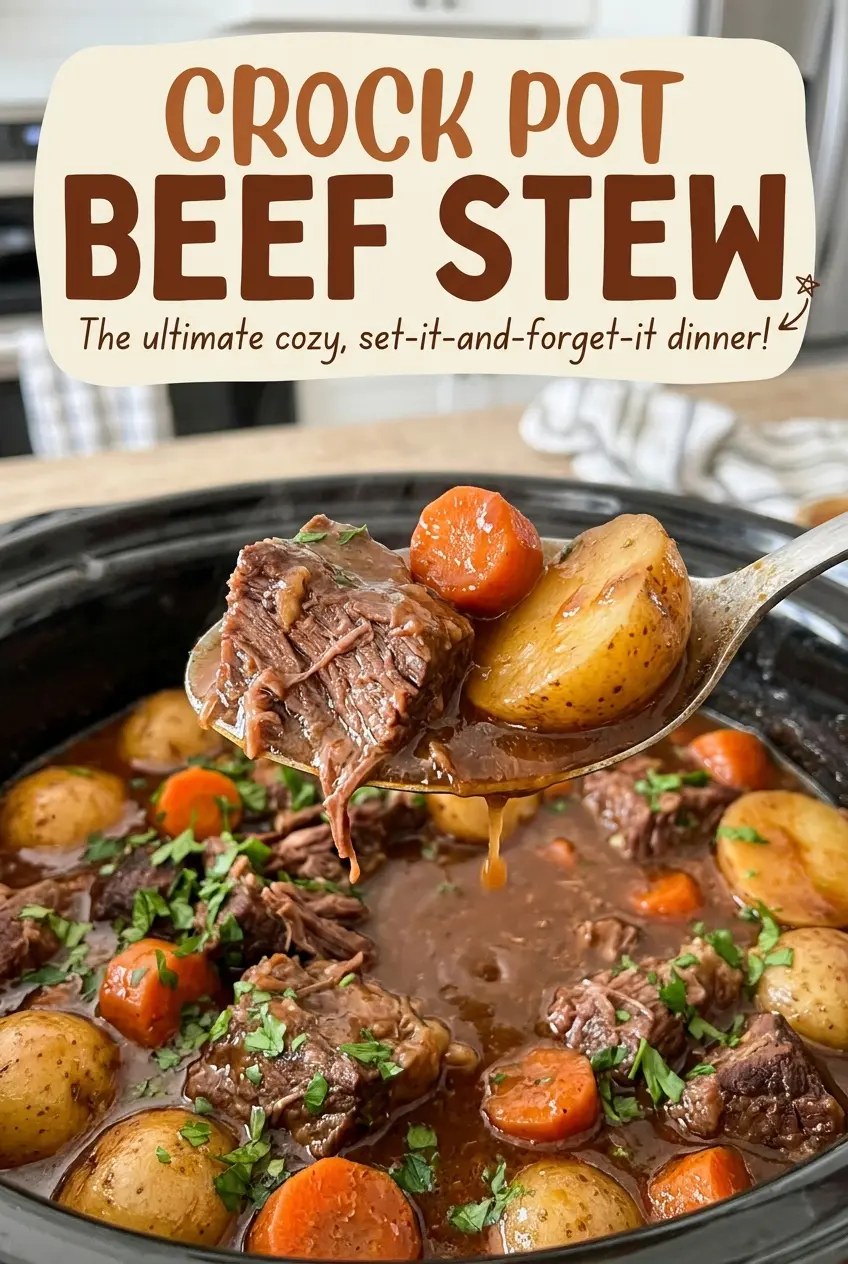
Deep, mahogany beef stew with fall-apart chuck, tender potatoes, and a broth that tastes like it cooked all day because it did. The slow cooker handles the heavy lifting here, but the order of the ingredients matters more than most people think. Layering the vegetables underneath keeps them submerged and tender instead of drying out at the top, and finishing with a cornstarch slurry gives the broth that glossy, spoon-coating body people expect from a proper stew.
Red wine adds depth, but it isn’t there to make the stew taste boozy. It gives the broth a darker, rounder edge that beef broth alone can’t quite match. If you skip it, use more broth and don’t shortchange the tomato paste or Worcestershire sauce, because those are doing the work of building the base flavor.
Below, you’ll find the small details that keep the beef tender, the vegetables intact, and the gravy from ending up thin and flat. The timing on the thickener matters, and the last few minutes are where the texture comes together.
The beef turned out fork-tender and the broth thickened up beautifully after the slurry went in. I loved that the potatoes stayed intact and didn’t turn to mush, and the whole pot tasted even better the next day.
Save this Crock Pot Beef Stew for the nights when you want fall-apart beef, tender vegetables, and a rich broth without hovering over the stove.
The Part That Keeps the Beef Tender Instead of Tough
The biggest mistake with slow cooker stew is treating it like a braise that needs constant browning and stirring. Chuck has enough connective tissue to turn silky over time, but it still needs space to relax. If the pot runs too dry, the meat can tighten up before it ever gets tender. If the vegetables sit on the bottom without enough liquid, they can go soft in a dull, waterlogged way instead of soaking up flavor.
This recipe uses the vegetables as a built-in trivet. They sit under the beef and help keep it lifted while the broth, tomatoes, and wine move through the pot and do their work. The final slurry goes in only after the beef is already tender, because cornstarch added too early can leave the broth pasty instead of rich.
What Each Ingredient Is Actually Doing in This Stew

- Beef chuck — This is the cut that earns its keep. It has enough connective tissue to turn spoon-tender during the long cook, while leaner cuts would dry out or turn stringy. Cut it into large pieces so it holds together instead of breaking apart before the stew is done.
- Baby potatoes — Waxy potatoes hold their shape better than russets here. If you use larger potatoes, cut them into sturdy chunks so they cook at the same pace as the beef. Tiny cubes will disappear into the broth.
- Red wine — Wine gives the broth a deeper, more layered taste. If you don’t cook with wine, replace it with more beef broth, but expect a flatter finish unless the tomato paste and Worcestershire are doing enough work for you.
- Tomato paste and diced tomatoes — The paste brings concentrated body and color, while the diced tomatoes add acidity to keep the stew from tasting heavy. Don’t skip the paste. It helps the broth taste cooked, not thin.
- Worcestershire sauce — This is the quiet ingredient that makes the broth taste beefier and more complete. A splash goes a long way, and there’s no clean substitute that does exactly the same thing.
How to Build the Stew So the Broth Stays Rich
Start with the vegetables underneath
Spread the potatoes, carrots, celery, and onion across the bottom of the slow cooker first. That layer helps protect the meat from sitting directly on the hot base of the insert, and it keeps the vegetables in the broth where they can soften evenly. If you pile everything on top in random order, the vegetables can overcook around the edges while the beef still needs time.
Season the beef before it goes in
Salt and pepper on the beef before it enters the pot gives the meat a better head start. You don’t need to sear it for this version, but you do need enough seasoning that the broth doesn’t taste bland by the end. The slow cooker mutes seasoning a little, so the beef should look generously coated before it gets tucked in.
Let the long cook do the real work
Cook on low until the beef gives easily when pressed with a spoon. The broth will look loose for most of the cook, and that’s normal. If you lift the lid too often, you add time to the process and can end up with meat that’s tender but not quite melting.
Thicken at the end, not before
Stir the cornstarch slurry in after the bay leaves come out and the beef is already tender. At that point, the stew only needs a short burst of heat to turn glossy and lightly thickened. If you add the slurry too early, the stew can taste starchy and the vegetables will soften past the point of keeping their shape.
Three Ways to Adjust This Stew Without Losing What Makes It Good
Dairy-Free and Naturally Gluten-Free
This stew already fits both of those needs as written, as long as your Worcestershire sauce is gluten-free. Cornstarch thickens the broth cleanly without flour, and there’s no dairy in the base. Check the label on the broth too if you need to keep it strict.
Skip the Wine Without Losing Depth
Use extra beef broth in place of the wine, but keep the tomato paste and Worcestershire sauce exactly as written. The wine adds complexity, not volume, so the stew still works without it. The final flavor will be a little rounder and less dark, which is fine as long as the broth is seasoned well at the end.
Add Mushrooms or Peas for Extra Vegetables
Mushrooms can go in with the vegetables at the start if you like a deeper, earthier stew. Frozen peas belong at the very end, after thickening, so they stay bright instead of turning drab. Both additions work best when the base stew is already balanced and seasoned.
Storage and Reheating
- Refrigerator: Store in an airtight container for up to 4 days. The broth thickens as it chills, and the flavor gets even better the next day.
- Freezer: It freezes well for up to 3 months. Cool completely first, then pack into freezer-safe containers with a little headspace so the broth can expand.
- Reheating: Reheat gently on the stove over medium-low heat or in the microwave in short bursts, stirring between rounds. If it looks too thick after chilling, loosen it with a splash of broth or water. Boiling it hard can push the beef from tender to dry.
Answers to the Questions Worth Asking
Crock Pot Beef Stew
Ingredients
Equipment
Method
- Season the beef generously with salt and pepper to ensure every chunk tastes well seasoned.
- Add the potatoes, carrots, celery, and onion to the bottom of the slow cooker in an even layer.
- Nestle the beef on top, then scatter in the garlic, beef broth, red wine, diced tomatoes, tomato paste, Worcestershire sauce, dried thyme, dried rosemary, and bay leaves.
- Cook on Low for 8-10 hours, until the beef is fall-apart tender and the vegetables are cooked through.
- Remove the bay leaves, then stir the cornstarch slurry (cornstarch mixed with water) into the stew.
- Cook on High for 20-30 minutes until the broth thickens to a hearty consistency.
- Season with additional salt and pepper to taste, then serve hot.