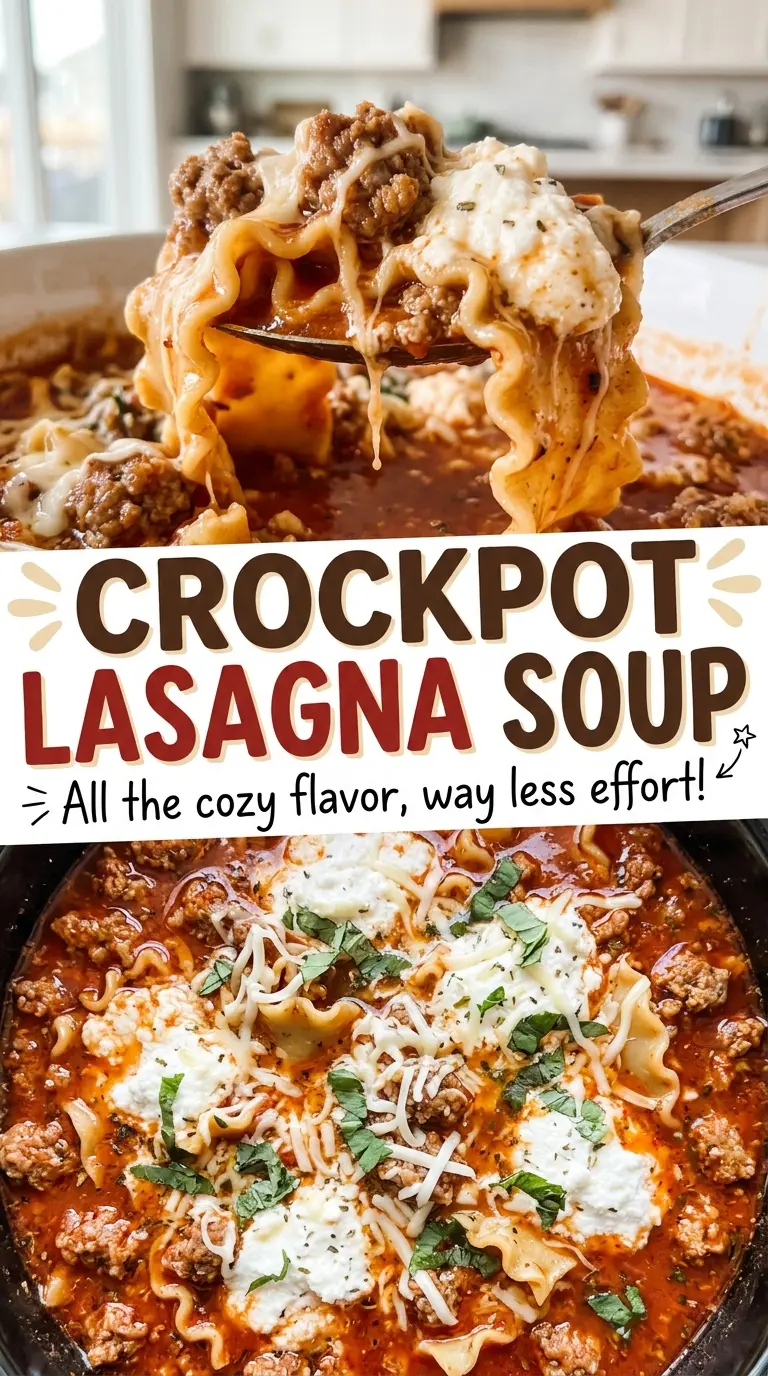
Crockpot lasagna soup gives you all the deep, slow-simmered comfort of lasagna without the layering, the baking dish, or the long wait for dinner. The broth turns rich and tomato-forward, the sausage seasons the whole pot from the start, and the broken noodles cook right in the soup so every bowl feels hearty and finished, not like a shortcut. The best part is the cheese dollop on top. It melts into the hot broth in little creamy pockets, which is exactly what you want from a lasagna-inspired bowl.
What makes this version work is timing. The noodles go in at the end, not at the beginning, so they stay tender instead of bloating into mush. Browning the sausage first matters too, because the slow cooker won’t build the same savory base from raw meat. The tomato paste adds depth, while the ricotta-mozzarella-parmesan mixture gives you that classic lasagna richness without needing to fuss with a casserole.
The noodles held their shape and the soup tasted like lasagna in a bowl. I added the ricotta mix at the table and it melted into the broth perfectly without getting grainy.
Save this crockpot lasagna soup for a no-fuss dinner with tender noodles and a creamy ricotta topping.
The Part That Keeps the Noodles from Turning to Mush
Lasagna noodles are the line between soup that feels hearty and soup that feels overcooked. If they go in at the beginning, they keep absorbing liquid for hours and the pot turns thick and starchy. That’s why the noodles only join the slow cooker near the end, when there’s enough heat left to soften them without letting them fall apart.
The other thing people get wrong is expecting the slow cooker to do all the flavor building. It won’t brown sausage, and it won’t reduce tomatoes the way a stovetop does. That is why the sausage gets cooked first and the tomato paste goes in with the rest of the base — those two details carry the broth.
What Each Ingredient Is Actually Doing in This Soup
- Italian sausage — This is the backbone of the soup. Browning it first gives you a savory base that the slow cooker can’t create on its own. Mild or hot both work; hot sausage gives the bowl more edge without needing extra spice.
- Crushed tomatoes and diced tomatoes — The crushed tomatoes build the body of the broth, while the diced tomatoes leave you with little soft chunks that keep the soup from tasting one-note. Use good canned tomatoes here if you can. The difference shows up in the final bowl.
- Tomato paste — A couple tablespoons deepen the tomato flavor and make the broth taste cooked, not flat. If you skip it, the soup still works, but it loses some of that lasagna-like richness.
- Ricotta, mozzarella, and parmesan — This is the lasagna part. Ricotta keeps the topping creamy, mozzarella melts into stretchy pockets, and parmesan sharpens the whole thing. Stir them together right before serving so the mixture stays fluffy instead of sinking into a stiff block.
- Broken lasagna noodles — Break them into irregular pieces so the soup feels rustic and the noodles don’t clump into one heavy layer. Add them late and stir once or twice as they cook so they don’t stick together at the bottom.
Building the Soup Base in the Slow Cooker
Start with the browned sausage
Add the browned sausage to the Crockpot first so it can season the liquid from the inside out. If there’s excess grease in the pan, drain it before it goes in or the finished soup can feel oily on top. The sausage should be cooked through and crumbly, not in big dense chunks.
Layer the tomatoes, broth, and seasoning
Pour in the tomatoes, broth, tomato paste, and spices, then stir until the tomato paste disappears into the liquid. If you leave it in a clump, it stays concentrated and can taste harsh in one bite while the rest of the pot tastes flat. The broth should look deep red and loose at this point, because the noodles will thicken it later.
Cook until the base tastes round and settled
Let the soup go on Low for 5 to 7 hours, or High if you need it sooner. You’re looking for a broth that smells mellow and integrated, not sharp and tomato-bright like it did at the start. If it tastes a little thin before the noodles go in, don’t worry. The long simmer is doing the work that turns this from a meat sauce into soup.
Add the noodles at the end
Stir in the broken lasagna noodles during the last 30 minutes and cook just until tender. On Low, switch to High for that last stretch if needed so the noodles come up to temperature fast enough to soften evenly. If they sit in the hot broth for too long, they’ll go past tender and start soaking up more liquid than the soup can spare.
Finish with seasoning and the cheese dollop
Taste the soup before serving and add salt and pepper until the tomato flavor pops. Then mix the ricotta, mozzarella, parmesan, and basil, and place a generous spoonful on top of each bowl. The heat from the soup should soften the cheese mixture around the edges while leaving the center creamy.
Three Ways to Adapt It Without Losing What Makes It Work
Make it lighter with turkey or chicken sausage
Swap the pork sausage for turkey or chicken sausage if you want a leaner bowl. You’ll lose a little richness, so use a good tomato paste and don’t skip the parmesan in the topping. The soup will still taste full, but the broth will be a bit cleaner and less heavy.
Make it gluten-free without changing the base flavor
Use gluten-free lasagna noodles and add them only at the end, just like the regular version. Gluten-free pasta can break down faster, so start checking it a few minutes early and stop when it’s tender with a little bite left. Everything else in the soup stays the same.
Make it creamier with extra ricotta on top
If you like a richer bowl, add an extra spoonful of ricotta to each serving and loosen it with a little hot soup before topping the bowl. That gives you a softer, silkier finish instead of a dense cheese mound. It’s a good move when you want the soup to eat more like a baked pasta.
Storage and Reheating
- Refrigerator: Store the soup for up to 4 days. The noodles will keep absorbing liquid, so expect a thicker texture the next day.
- Freezer: Freeze the soup without the noodles for best results. Pasta turns soft after thawing, so cook fresh noodles when you reheat if you want the best texture.
- Reheating: Warm it gently on the stove or in the microwave with a splash of broth to loosen it. Don’t boil it hard, or the noodles will split and the cheese topping will lose its creamy texture.
Answers to the Questions Worth Asking

Crockpot Lasagna Soup
Ingredients
Equipment
Method
- Brown the Italian sausage in a skillet, breaking it up as it cooks, until no longer pink; drain excess fat. Add the browned sausage to the Crockpot and spread it out for even heating.
- Add the diced onion and minced garlic to the Crockpot, then pour in the crushed tomatoes, diced tomatoes, and broth. Stir in the tomato paste, Italian seasoning, dried basil, red pepper flakes, and oregano until the mixture looks evenly combined.
- Cook on Low for 5-7 hours until the flavors deepen and the broth looks thickened around the edges. If using High, cook for 3-4 hours until everything is hot and well simmered.
- In the last 30 minutes, add the broken lasagna noodles and increase to High if you cooked on Low. Cook until the noodles are tender and the soup thickens slightly, with noodles visibly softened.
- Season with salt and pepper to taste, then stir and taste again for balance. Serve hot, with a thick, creamy cheese dollop in each bowl.
- Mix the ricotta, shredded mozzarella, and parmesan together, then fold in fresh basil. Spoon a generous dollop into each bowl so it starts melting into the hot tomato broth.