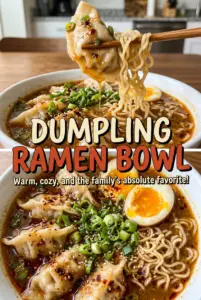
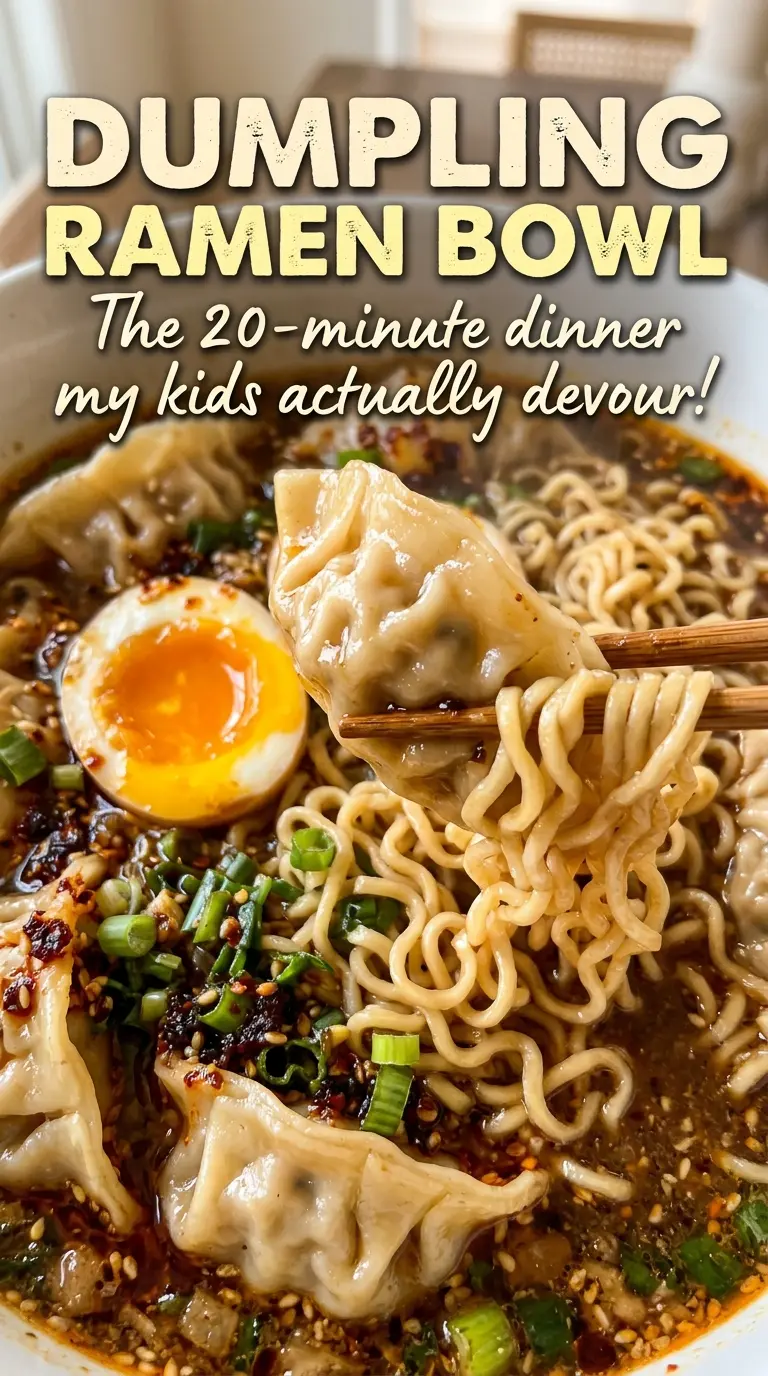
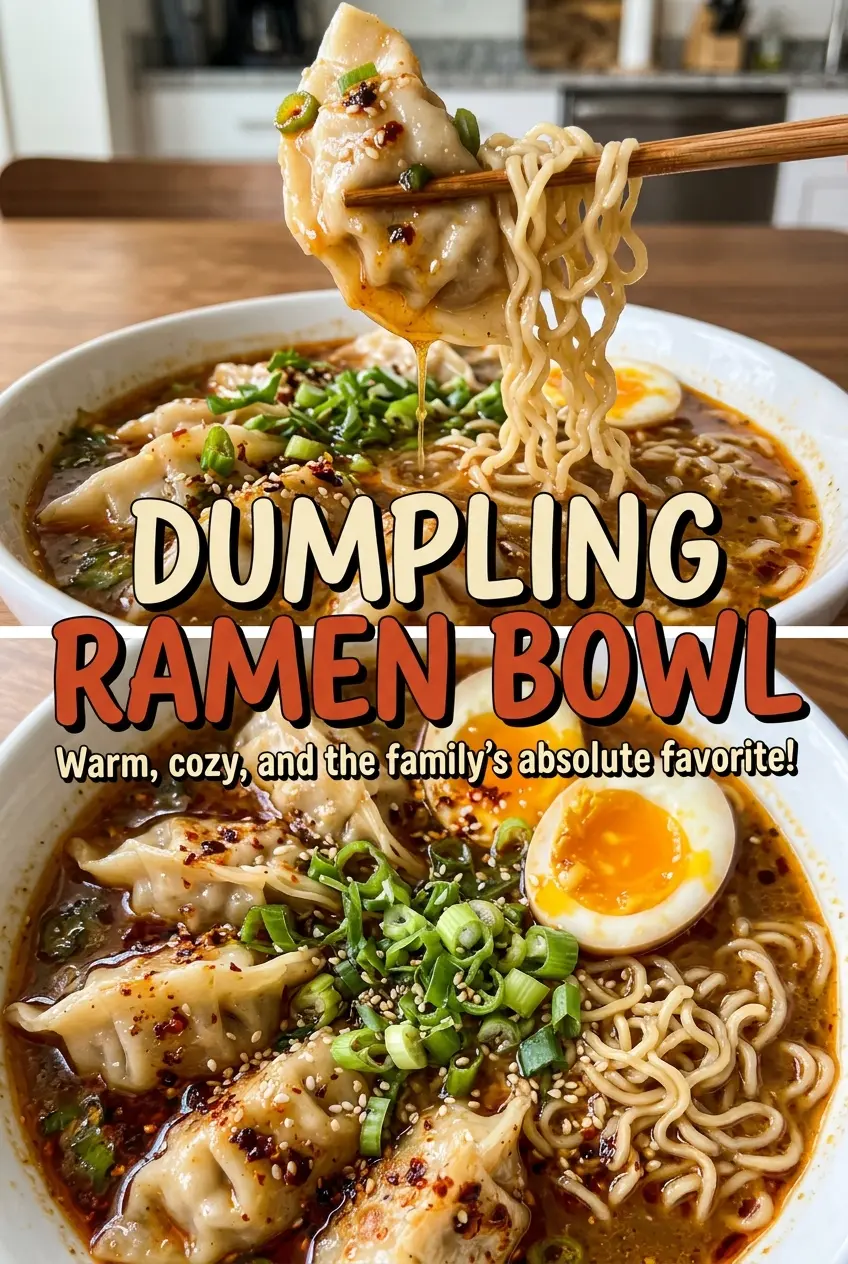
Dumpling ramen bowl hits the table with the kind of comfort that feels layered instead of heavy. The broth is savory and a little sweet, the dumplings stay tender, and the ramen noodles keep their bite long enough to carry everything in one spoonful. Add the soft-boiled egg and a little chili oil, and you get that rich, slurpy, restaurant-style bowl without needing a stockpot full of bones or hours at the stove.
What makes this version work is the way the broth gets built: chicken broth gives you a fast base, then white miso, soy sauce, mirin, and sesame oil round it out with depth and balance. Cooking the dumplings right in the broth lets them season the soup as they warm through, while the noodles stay separate so they don’t turn gluey before you eat. The toppings matter here too. Corn brings sweetness, bok choy adds a clean green bite, and the egg gives you a creamy finish that pulls the bowl together.
Below you’ll find the timing that keeps the noodles springy, the broth from tasting flat, and the dumplings from overcooking. There’s also a few smart swaps if you want to change the protein or make the bowl fit what’s already in your kitchen.
The broth was deeply savory, and the dumplings stayed plump instead of falling apart. I loved that the noodles cooked separately so the leftovers still had a good texture the next day.
Save this dumpling ramen bowl for the night you want a fast broth, springy noodles, and a topping-loaded dinner in one bowl.
The Broth Needs Body Before the Noodles Go In
The biggest mistake in a bowl like this is treating the broth like a background note. It needs to taste complete before the noodles ever hit the pot, because ramen noodles mute seasoning fast and dumplings absorb a surprising amount of salt. If the broth tastes a little flat on its own, it will taste even flatter once the toppings go in.
White miso is doing a lot of work here. It gives the broth roundness and depth without making it heavy, but it shouldn’t be boiled hard or it can lose some of its clean, fermented edge. Keep the broth at a steady simmer, whisk the miso in until it’s fully dissolved, then move straight into the dumplings.
- White miso paste — This is the ingredient that gives the broth its ramen-like depth. A spoonful or two goes a long way, but it needs to be whisked into hot broth, not dumped in a clump, or you’ll end up with little salty pockets.
- Frozen dumplings — Frozen works better than thawed here because they hold their shape in the simmering broth. Pork dumplings bring more richness; chicken dumplings keep the bowl a little lighter.
- Fresh ramen noodles — Fresh noodles cook in minutes and keep the best texture. Dried ramen works in a pinch, but it goes softer fast and can make the bowl feel more brothy and less springy.
- Bok choy and corn — These two toppings balance the savory broth with freshness and sweetness. The bok choy should just wilt; if you cook it too long, it loses its crisp edges and turns dull.
What Each Ingredient Is Actually Doing in This Recipe
- Primary ingredient (the star) — Quality matters most. Choose the best you can find.
- Cooking medium (oil, butter, or broth) — This carries flavors and prevents dryness.
- Seasonings (salt, pepper, spices, herbs) — Layer flavors so nothing overpowers. Build depth gradually.
- Aromatics (garlic, onion, herbs) — Cook with fat to bloom flavors. Become the foundation.
- Supporting ingredients — Complement the main ingredient without overpowering it.
- Sauce or liquid (if applicable) — Brings flavors together. Balance richness with acid.
- Acid (lemon, vinegar, wine, or other) — Brightens and prevents flat-tasting results.
- Final finish (garnish, glaze, or sauce) — Prevents one-dimensional taste and adds visual appeal.
How to Keep the Dumplings Tender and the Noodles Springy
Build the Seasoned Broth First
Bring the chicken broth to a gentle simmer, then whisk in the miso paste, soy sauce, mirin, and sesame oil until the broth looks smooth and slightly opaque. You want steam, not a rolling boil. If the broth boils hard after the miso goes in, it can turn muddy and harsh instead of clean and savory.
Warm the Dumplings Through Without Overcooking Them
Add the frozen dumplings straight into the simmering broth and cook until they float and feel firm at the edges, usually 5 to 7 minutes depending on size. Stir gently so they don’t stick to the bottom or tear. If the wrappers start to split, the heat is too high or the dumplings were crowded too tightly.
Finish the Greens and Noodles at the Last Minute
Add the bok choy for just 2 to 3 minutes, long enough for the stems to lose their raw crunch but still keep some snap. Cook the ramen noodles separately in salted water, then drain them immediately so they don’t keep absorbing moisture. This is the step that keeps the bowl from turning gummy by the time you sit down to eat.
Assemble While Everything Is Hot
Divide the noodles between bowls, ladle the broth and dumplings over the top, then finish with the egg, corn, green onions, nori, sesame seeds, and chili oil. The egg should be halved right before serving so the yolk stays soft and glossy. If the bowl sits too long before serving, the noodles absorb too much broth and the topping balance gets thrown off.
How to Adapt This for Different Kitchens and Diets
Make it vegetarian without losing the savory broth
Use vegetable broth and swap in vegetable dumplings. The broth will be a little lighter, so taste it before serving and add a touch more miso or soy sauce if needed. The egg still works here, or you can skip it and add extra bok choy and corn for more substance.
Make it gluten-free with one label check
Use gluten-free dumplings and gluten-free tamari in place of soy sauce. Fresh rice noodles can replace the ramen noodles, though they won’t have the same chew. The broth still works the same way, but you need to watch the noodles closely because rice noodles go from tender to soft fast.
Use whatever greens you already have
Bok choy is ideal because it stays crisp-tender, but baby spinach, napa cabbage, or thinly sliced kale all work. Spinach needs only a few seconds at the end. Kale takes longer and gives the bowl a heartier texture, though it changes the feel from silky to more rustic.
Storage and Reheating
- Refrigerator: Store broth, dumplings, noodles, and toppings separately for up to 3 days. The noodles soften as they sit, so keeping them apart matters.
- Freezer: The broth and dumplings freeze well for up to 2 months. Freeze the noodles separately only if they are undercooked; fully cooked noodles usually turn too soft after freezing.
- Reheating: Reheat the broth and dumplings gently on the stove until steaming, then add fresh or separately warmed noodles to the bowl. Microwaving everything together is the fastest way to get soggy noodles and rubbery dumplings.
Questions I Get Asked About This Recipe
Dumpling Ramen Bowl
Ingredients
Equipment
Method
- Bring the chicken broth to a simmer in a Dutch oven.
- Whisk in the white miso paste, soy sauce, mirin, and sesame oil until fully combined.
- Add the frozen pork or chicken dumplings to the simmering broth and cook for 5-7 minutes until cooked through.
- Add the halved bok choy to the broth and cook for 2-3 minutes until wilted.
- Cook the fresh ramen noodles separately according to the package instructions, then drain well.
- Divide the drained noodles between 4 bowls and ladle the dumplings and soy-miso broth over top.
- Top each bowl with the halved soft-boiled eggs, corn kernels, sliced green onions, nori, sesame seeds, and chili oil.