Flaky white fish, sweet roasted tomatoes, briny olives, and capers all come out of the oven tangled together in one pan, and that’s what makes this Mediterranean baked fish worth putting on repeat. The fish stays tender because it’s added after the vegetables have already started softening, so it finishes in the gentle steam and juices instead of drying out in a hot oven for too long. The tomatoes collapse into the oil and wine, and the garlic turns mellow instead of sharp.
The trick here is starting the tomato mixture first. Those 10 minutes in the oven give the vegetables a head start, which means they release their juices before the fish goes in. That keeps the fillets nestled in a shallow, saucy bed instead of baking over dry heat. A dry white wine adds brightness, but broth works just fine if that’s what you have.
You’ll also find a few smart swaps and storage notes below, plus the one timing detail that keeps the fish from overcooking. If you’ve ever pulled baked fish out of the oven and found it chalky, this method changes that.
The tomatoes and olives made their own sauce in the pan, and the fish stayed so tender I only needed a fork to break it apart. I used broth instead of wine and it still tasted bright and finished in exactly 15 minutes.
Save this Mediterranean Baked Fish for the nights when you want flaky fish, a bright tomato-olive sauce, and one pan to wash.
The Trick to Keeping the Fish Tender While the Tomatoes Roast
Fish goes dry when it sits too long in a hot oven without enough moisture around it. That’s why this recipe starts with the tomatoes, olives, capers, peppers, garlic, wine, and oil alone. They need time to break down and get juicy first, and that liquid becomes the cooking environment for the fish.
The second piece is thickness. Cod, halibut, and sea bass all work because they’re sturdy enough to hold up to the bake, but the fillets should still be fairly even so they cook at the same rate. If one end is much thinner, tuck it under slightly or place the thicker side toward the outside of the dish where the heat is stronger.
Pull the fish as soon as it flakes at the thickest point. If it cooks until it looks completely opaque all the way through, it’s already heading toward dry.
What Each Ingredient Is Actually Doing in This Dish
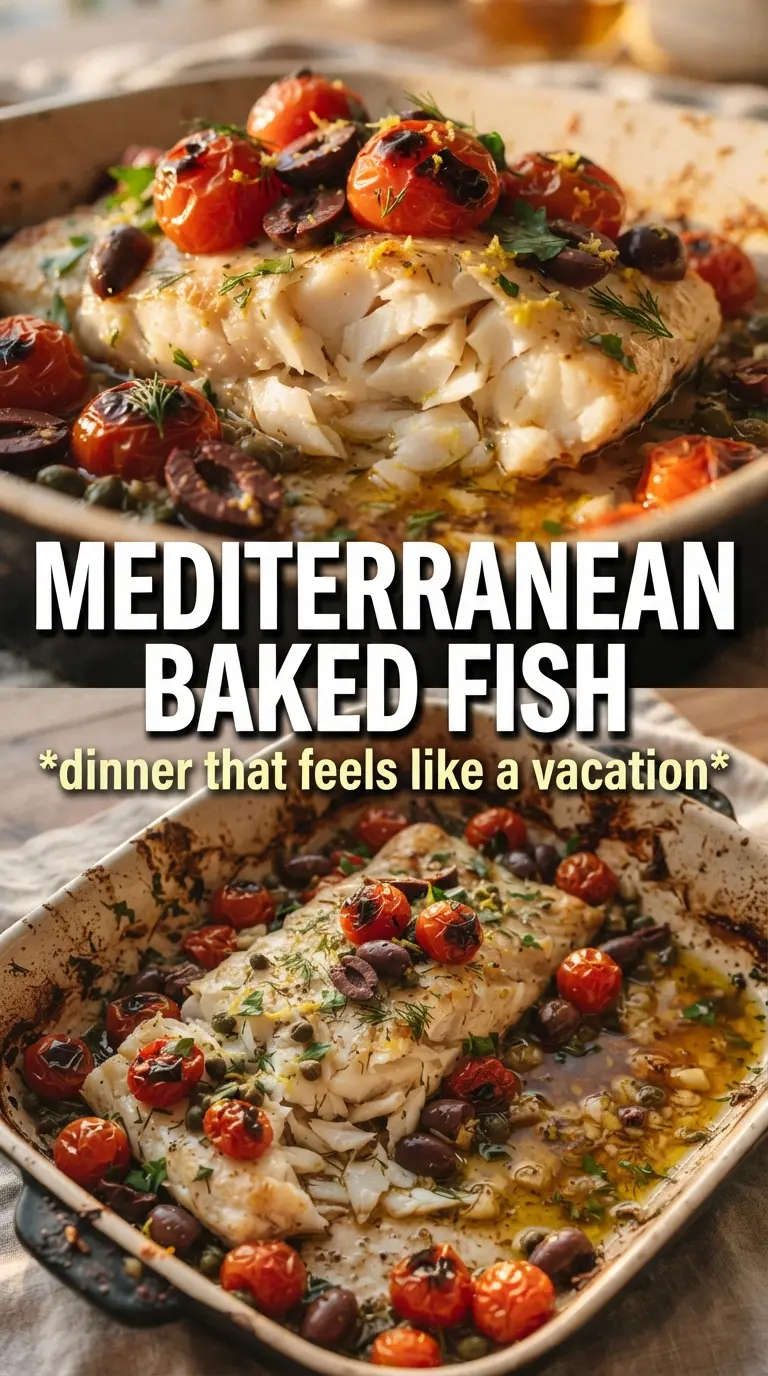
- White fish fillets — Cod gives you the mildest, flakiest result, while halibut and sea bass stay a little firmer and meatier. If you use a thinner fillet, shorten the final bake by a few minutes and start checking early.
- Cherry tomatoes — These soften into a light sauce instead of disappearing completely. Larger tomatoes can work, but they release more water and can make the pan looser and less concentrated.
- Kalamata olives and capers — This is the briny backbone of the dish. They bring salt and depth without needing much extra seasoning, so don’t overdo the added salt until the end.
- Jarred roasted red peppers — They add sweetness and a soft, silky texture that balances the sharp olives and capers. Drain them well so they don’t water down the pan.
- Dry white wine or broth — Wine adds acidity and a cleaner finish; broth makes the dish gentler and a little rounder. Either one works, but use something you’d drink or taste on its own.
- Olive oil and oregano — These carry the Mediterranean character of the whole pan. Use a decent olive oil here because it becomes part of the sauce, not just a cooking fat.
Building the Pan Sauce Before the Fish Goes In
Roast the vegetables until they start to slump
Combine the tomatoes, olives, capers, roasted peppers, garlic, wine, olive oil, oregano, and red pepper flakes in the baking dish, then roast that mixture for 10 minutes. You want the tomatoes to begin blistering and the garlic to soften at the edges, not brown hard. If the pan looks dry before the fish goes in, add another spoonful of olive oil or a splash of broth.
Nestle the fish into the juices, not on top of them
Season the fillets with salt and pepper, then lay them right into the hot vegetable mixture. Press them down gently so they sit partially in the liquid. That contact matters because it keeps the bottoms from drying out while the tops finish cooking in the oven.
Stop the bake the moment the fish flakes
Bake for 12 to 15 minutes more, depending on thickness, and check the center of the thickest fillet with a fork. It should separate in clean, moist layers and still look glossy at the center. If you wait until the fish feels firm all the way through in the oven, it will be overcooked by the time it reaches the table.
Finish with herbs and lemon
Scatter parsley over the top and serve with lemon wedges. The parsley gives freshness after the salty, roasted pan juices, and the lemon cuts through the oil so the dish tastes bright instead of heavy. Squeeze the lemon over each portion right before eating.
How to Adapt This for Different Needs at the Table
Make it dairy-free and naturally gluten-free
This recipe already fits both without any special changes. The sauce gets its body from the tomatoes, olive oil, and pan juices, so you don’t need butter, cream, or flour to make it taste complete.
Use broth instead of wine
Broth keeps the pan moist and still gives you enough liquid for a light sauce. You lose the sharp brightness that wine brings, so add an extra squeeze of lemon at the end to bring that balance back.
Swap in a different firm white fish
Any firm, mild white fish that bakes in about the same time will work. If the fillets are thinner than cod or halibut, start checking at the 10-minute mark so they don’t dry out.
Add more heat without changing the method
Increase the red pepper flakes or add a pinch of Aleppo pepper for a warmer, rounder heat. Keep the amount modest because the olives and capers already bring plenty of punch.
Storage and Reheating
- Refrigerator: Store leftovers in an airtight container for up to 2 days. The fish will firm up a bit after chilling, but the sauce holds up well.
- Freezer: I don’t recommend freezing the cooked fish. The tomatoes and peppers freeze fine, but the fish turns soft and watery after thawing.
- Reheating: Rewarm gently in a covered skillet over low heat with a splash of broth or water, or use a low oven. High heat dries the fish fast, so stop as soon as it’s heated through.
Questions I Get Asked About This Recipe
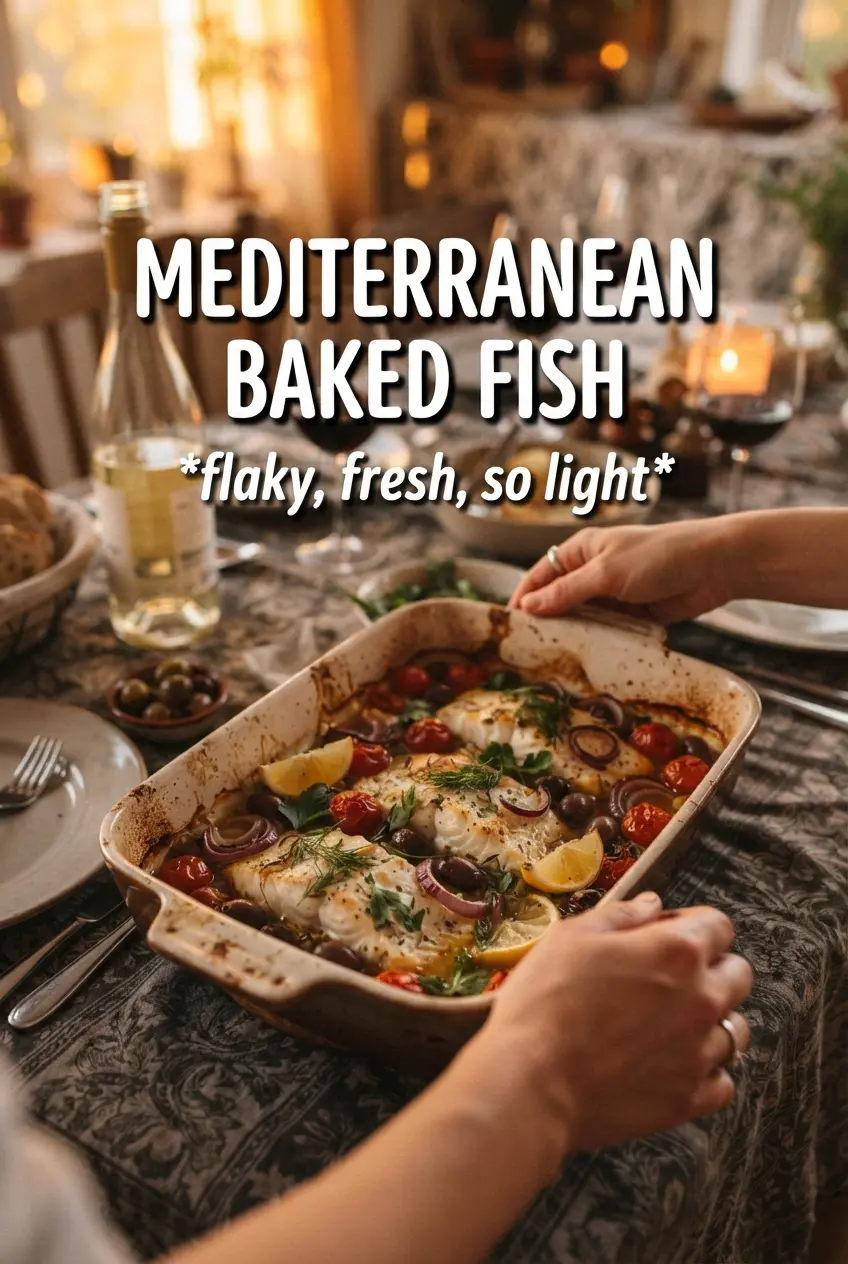
Mediterranean Baked Fish
Ingredients
Equipment
Method
- Preheat the oven to 400°F and grease a 9x13 baking dish to prevent sticking.
- Combine cherry tomatoes, Kalamata olives, capers, roasted red peppers, garlic, dry white wine or broth, olive oil, dried oregano, and red pepper flakes in the baking dish, spreading into an even layer.
- Roast the vegetable mixture for 10 minutes at 400°F, until the garlic is fragrant and the tomatoes begin to soften.
- Season the white fish fillets with salt and pepper, then nestle them into the hot vegetable mixture.
- Bake for 12 to 15 minutes more at 400°F until the fish flakes easily with a fork and looks opaque.
- Garnish with fresh parsley and serve with lemon wedges for bright flavor.