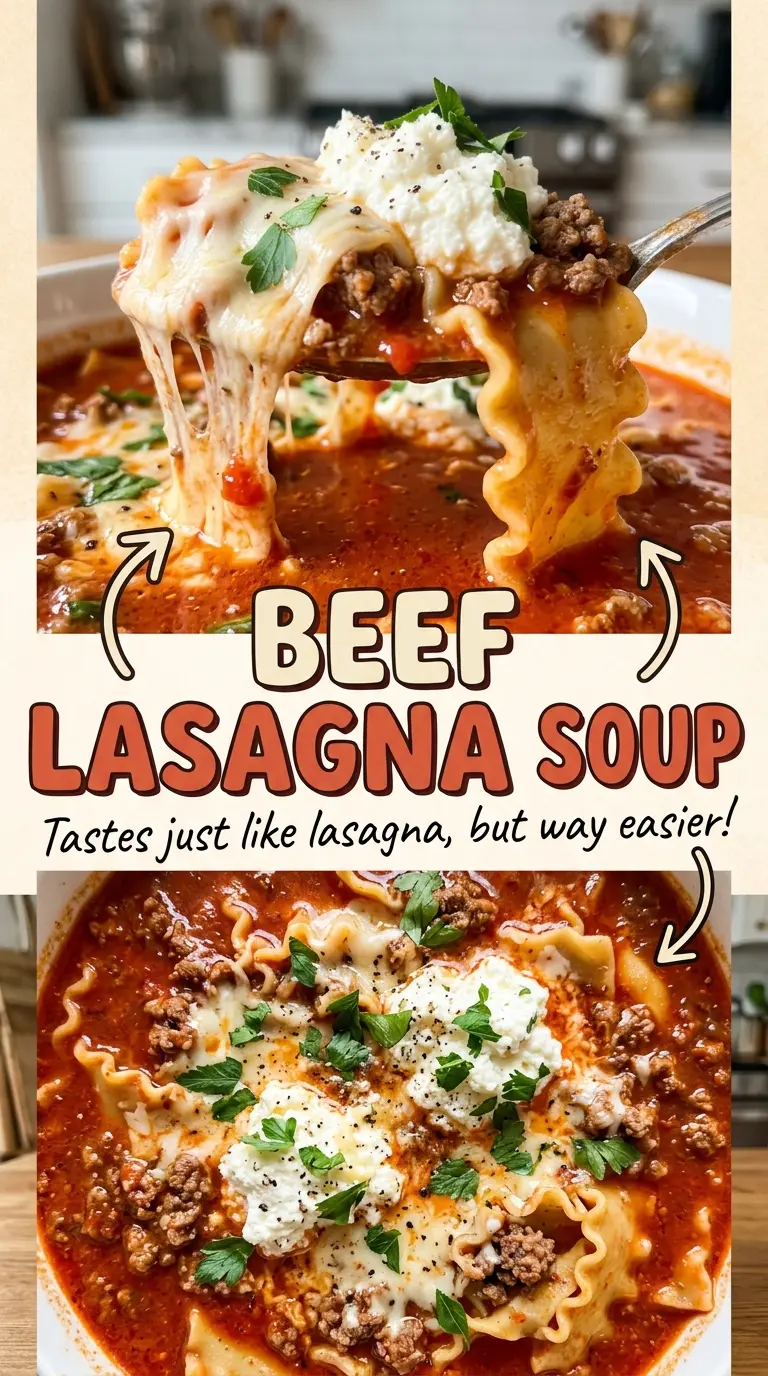
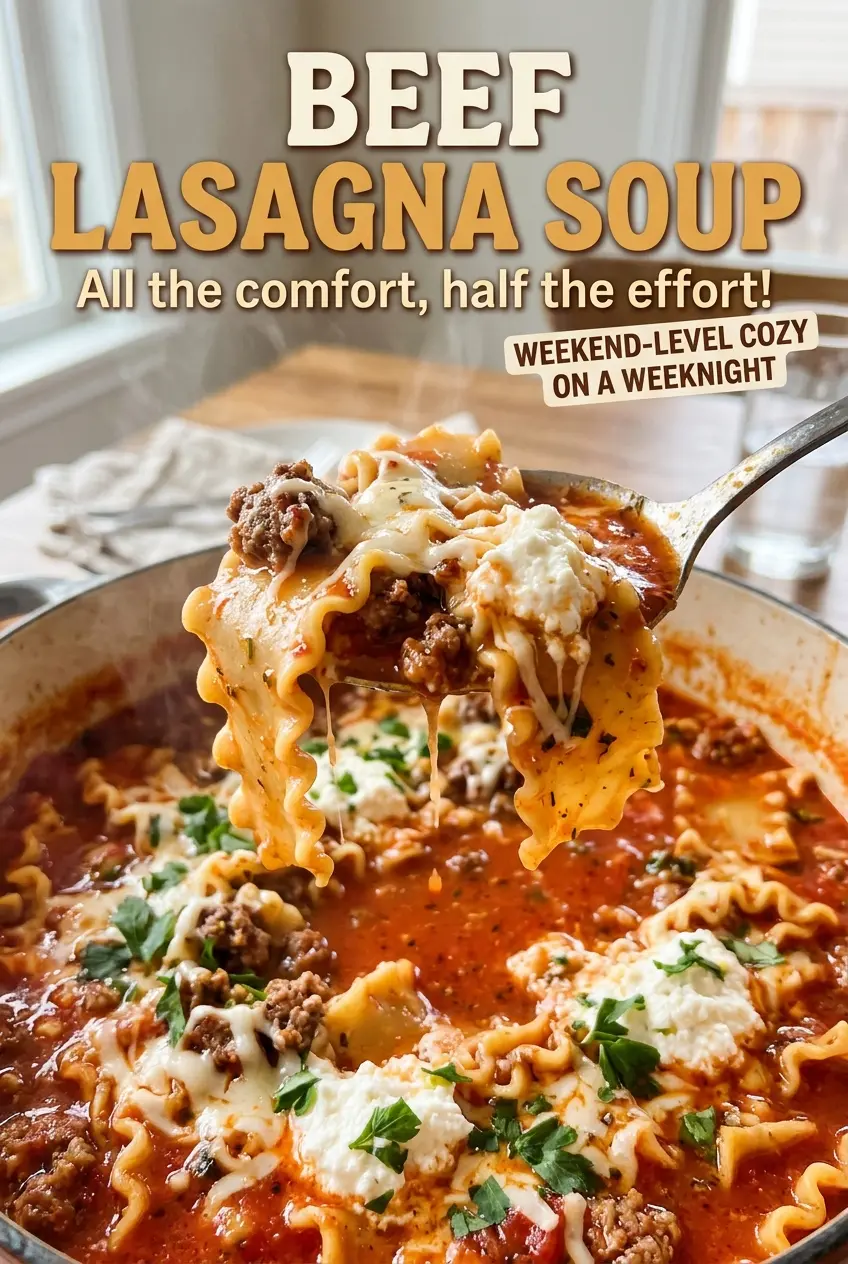
Beef lasagna soup gives you all the comfort of a bubbling pan of lasagna without the layering, waiting, or cleanup. The broth turns rich and tomatoey, the beef stays hearty, and the broken noodles soften into that just-right pasta texture that makes each spoonful taste like the best corner piece. The ricotta-mozzarella dollop on top is what pulls it all together, melting into the soup and giving you the creamy finish people usually hope for when they cut into baked lasagna.
What makes this version work is the order. The beef browns first, then the onion and garlic cook in the same pot so nothing gets wasted. Tomato paste goes in before the liquid, which deepens the base instead of leaving the broth flat. Broken lasagna noodles simmer right in the soup, so they absorb flavor as they cook, but they need a little attention near the end or they’ll stick together on the bottom.
Below, I’m walking through the part that matters most: how to keep the broth bold, the noodles tender, and the cheese topping creamy instead of clumpy. If you’ve ever wanted lasagna on a weeknight without assembling a casserole, this is the version worth keeping.
The broth was rich and the noodles stayed perfectly tender without turning mushy. I loved that the ricotta topping melted into the soup instead of sitting in one cold clump on top.
Save this beef lasagna soup for the nights when you want cozy lasagna flavor, creamy ricotta topping, and a one-pot dinner with almost no cleanup.
The Reason the Noodles Stay Tender Instead of Turning to Mush
Lasagna soup fails when the noodles sit in a rolling boil for too long. Broken lasagna sheets are thicker than ordinary pasta, but they still keep cooking after the heat comes off, so the difference between tender and overcooked is a short window at the end. Simmering the noodles in the broth instead of boiling them hard keeps the texture intact and prevents the starch from thickening the soup into something heavy and gluey.
The other place people go wrong is the tomato base. If you add everything at once, the broth tastes thin and the tomato flavor stays sharp. Cooking the tomato paste with the onion and garlic gives it a chance to darken and lose that raw edge, which is what makes the soup taste like it simmered longer than it did.
What Each Ingredient Is Actually Doing in This Dish
- Lean ground beef — This gives the soup its meaty base and enough richness to stand up to the tomatoes. Lean beef works well here because there’s already plenty of body from the broth and cheese; if you use a fattier grind, drain it well or the soup can turn greasy.
- Tomato paste — This is the ingredient that deepens the broth. Two tablespoons may not look like much, but once it cooks with the onion and garlic, it adds the concentrated savory note that keeps the soup from tasting watered down.
- Crushed tomatoes and diced tomatoes — The crushed tomatoes build the body, while the diced tomatoes give the soup little bursts of tomato texture. If you only have one type, use it, but the combination gives a better balance between smooth and chunky.
- Lasagna noodles — Broken noodles are the whole trick. You want pieces that are large enough to feel like lasagna, not tiny shards that disappear into the broth. Break them into rough thirds so they cook evenly and are easy to eat with a spoon.
- Ricotta, mozzarella, and parmesan — This topping does the job of the creamy cheese layer in baked lasagna. Ricotta keeps it soft, mozzarella melts into the soup, and parmesan sharpens the finish. If your ricotta tastes bland, a pinch of salt in the mix helps a lot.
Building the Soup in the Right Order
Browning the Beef First
Cook the ground beef in a large pot until it’s no longer pink and you see browned bits sticking to the bottom. Those bits matter. Drain off the excess fat before you move on, but leave the pot as it is; the browned residue gives the soup more depth than starting in a clean pan ever would.
Cooking the Aromatics and Tomato Paste
Add the onion to the same pot and cook it until it turns soft and translucent, about 4 minutes. Stir in the garlic and tomato paste and cook for another 2 minutes, just until the paste darkens slightly and smells sweet instead of sharp. If the garlic starts browning hard, the heat is too high and it will turn bitter in the finished soup.
Simmering the Broth
Pour in the crushed tomatoes, diced tomatoes, beef broth, Italian seasoning, basil, oregano, red pepper flakes, and black pepper. Bring the pot to a boil, then drop it down to a steady simmer. You want the surface to move gently, not bubble aggressively, because a hard boil can make the broth taste harsh and reduce it too fast.
Cooking the Noodles in the Soup
Add the broken lasagna noodles and simmer until they’re tender, about 10 to 12 minutes. Stir every few minutes so the pieces don’t settle together or stick to the bottom of the pot. The noodles should be soft with a little bite left in the center; if they go fully soft in the pot, they’ll fall apart as the soup sits.
Finishing with the Cheese Topping
Mix the ricotta, mozzarella, parmesan, and chopped basil in a bowl while the soup finishes. Ladle the soup into bowls and add a generous spoonful on top right before serving. The heat from the broth melts the cheese just enough to create those creamy streaks, which is what makes each bowl taste finished instead of assembled.
Three Ways to Adjust the Soup Without Losing What Makes It Work
Make it gluten-free
Use your favorite gluten-free lasagna-style pasta and cook it just until tender. Gluten-free noodles can break down faster than wheat pasta, so check them a minute or two early and keep the soup at a gentle simmer rather than a hard boil.
Make it lighter without losing richness
Use extra-lean ground beef and hold back a little of the mozzarella in the topping. The soup will still taste hearty because the tomato paste, beef broth, and parmesan carry the flavor, but the finish will feel less heavy.
Use Italian sausage instead of beef
Swap part or all of the ground beef for mild or hot Italian sausage if you want a spicier, more seasoned broth. Sausage adds more fat and salt, so drain it well and taste before adding extra seasoning at the end.
Storage and Reheating
- Refrigerator: Store for up to 4 days in a sealed container. The noodles will keep absorbing broth, so the soup thickens as it sits.
- Freezer: It freezes well, but the noodles soften after thawing. For the best texture, freeze the soup without the noodles if you know you’ll be making it ahead.
- Reheating: Reheat gently on the stove over medium-low heat with a splash of broth or water to loosen it. A hard boil will overcook the noodles and turn the soup pasty.
Answers to the Questions Worth Asking
Beef Lasagna Soup
Ingredients
Equipment
Method
- Brown the lean ground beef in a large pot, then drain the fat to keep the broth from getting greasy.
- Sauté the diced onion in the same pot for 4 minutes until softened.
- Add the minced garlic and tomato paste, then cook for 2 minutes to deepen the flavor.
- Add the crushed tomatoes, diced tomatoes, beef broth, Italian seasoning, dried basil, dried oregano, red pepper flakes, and black pepper, then bring the pot to a boil.
- Add the broken lasagna noodles to the broth, then reduce heat and simmer for 10-12 minutes until the noodles are tender.
- Season with salt to taste and stir occasionally to prevent the noodles from sticking.
- Mix the ricotta, shredded mozzarella, parmesan, and fresh basil to form a dollop that will melt on top.
- Serve the soup in bowls with a very generous spoonful of the cheese dollop.