Clear broth, tender shredded chicken, and egg noodles that stay just soft enough to twirl make this slow cooker chicken noodle soup the kind of dinner that settles everybody down at the table. It tastes like it simmered all afternoon because it did, but the slow cooker does the hard part without asking you to babysit a pot on the stove.
The key is building the soup in the right order. The chicken, vegetables, and herbs go in first so the broth picks up real body and the vegetables have time to turn sweet and mellow. The noodles go in at the very end, which keeps them from going bloopy and overcooked. Bone-in thighs matter here because they give the broth more depth than boneless chicken ever will.
Below, I’ll walk you through the timing that keeps the noodles tender, the little ingredient choices that make the broth taste fuller, and a few ways to adapt the soup without losing that classic chicken-noodle comfort.
The broth had so much more flavor than I expected, and adding the noodles at the end kept them from getting mushy. My husband went back for a second bowl before I even sat down.
Love a bowl of slow cooker chicken noodle soup with tender noodles and a golden broth? Save this one for the nights when you want comfort food without standing over the stove.
The Broth Gets Better When You Start With Bone-In Chicken
A lot of chicken noodle soups taste flat because the chicken and vegetables are treated like separate jobs. Here, the bone-in thighs do both. As they cook low and slow, they season the broth from the inside and stay juicy enough to shred without turning stringy.
The other trap is overcooking the vegetables into dust. Carrots and celery need the long cook, but they still hold their shape better in a slow cooker than they do in a hard boil. You want them soft at the edges, not collapsed. If your soup tastes watery at the end, it usually means the broth started weak or the salt went in too timidly. Slow cookers mute seasoning, so the final salt check matters.
- Bone-in chicken thighs — These give the broth more body than boneless thighs or breasts. Breast meat works in a pinch, but it dries out faster and the soup loses some of that deep, homemade taste.
- Chicken broth — This is the base, so use one you’d actually drink. If yours is low-sodium, that’s fine; it just means you’ll need to season more generously at the end.
- Dried thyme and dried dill — Thyme gives the soup its savory backbone, and dill keeps it tasting like chicken noodle soup instead of plain chicken stew. Fresh dill is best for finishing, but dried dill works well in the cooker.
- Egg noodles — Add them late. They absorb broth fast, and if they sit for hours they turn bloated and soft. Wide egg noodles hold up best, but any egg noodle will work if you keep an eye on the timing.
What Each Ingredient Is Actually Doing in This Recipe
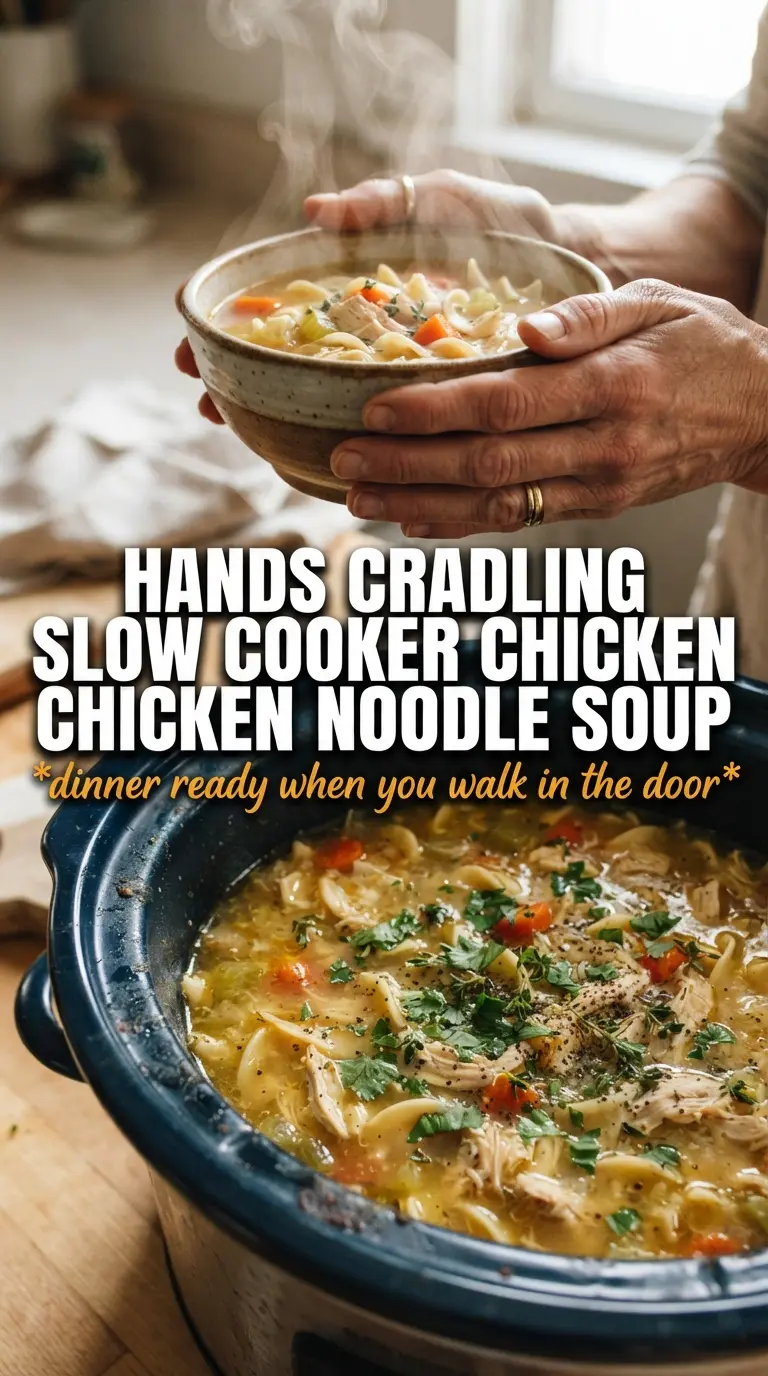
- Primary ingredient (the star) — Quality matters most. Choose the best you can find.
- Cooking medium (oil, butter, or broth) — This carries flavors and prevents dryness.
- Seasonings (salt, pepper, spices, herbs) — Layer flavors so nothing overpowers. Build depth gradually.
- Aromatics (garlic, onion, herbs) — Cook with fat to bloom flavors. Become the foundation.
- Supporting ingredients — Complement the main ingredient without overpowering it.
- Sauce or liquid (if applicable) — Brings flavors together. Balance richness with acid.
- Acid (lemon, vinegar, wine, or other) — Brightens and prevents flat-tasting results.
- Final finish (garnish, glaze, or sauce) — Prevents one-dimensional taste and adds visual appeal.
The Last 30 Minutes Are What Keep the Noodles From Falling Apart
Building the Base
Set the chicken thighs in the bottom of the slow cooker, then scatter the carrots, celery, onion, and garlic over the top. Pour in the broth and herbs so everything is mostly submerged. The goal is even cooking and steady heat, not a pot that needs stirring every hour. If the lid has been on the whole time, resist opening it just to peek; every lift drops the temperature and steals time.
Cooking Until the Chicken Falls Apart
Cook on low until the chicken is tender enough to shred cleanly, with the meat pulling away from the bone and the vegetables softened through. If you cook it on high, the soup still works, but the broth usually tastes a little less developed and the chicken can tighten up. Once the chicken is cooked, lift it out, discard the skin and bones, and shred it while it’s still warm.
Adding the Noodles at the End
Return the shredded chicken to the cooker and add the egg noodles only after the meat is back in. Cook just until the noodles are tender with a little bite at the center. If they overcook, they soak up too much broth and the soup turns thick in a gummy way. This is the stage that decides whether the soup tastes fresh and brothy or heavy.
Seasoning for the Bowl, Not the Pot
Stir in salt and pepper at the end, then taste again after a few minutes. Slow cooker soups often need more seasoning than you expect because the lid traps steam and softens flavor. Finish with dill or parsley right before serving so the top smells bright and the soup tastes clean, not muted.
What to Change When You Need a Lighter Broth or a Different Pantry
Gluten-Free Chicken Noodle Soup
Swap the egg noodles for a gluten-free pasta that holds its shape well, but cook it separately if you can. Gluten-free noodles break down faster in the slow cooker, so adding them directly to the broth can leave you with a cloudy, starchy soup. Stir them into each bowl right before serving for the best texture.
Dairy-Free and Naturally Light
This soup is already dairy-free as written, which is one reason it tastes clean and brothy instead of rich and heavy. If you want it even lighter, use extra carrots and celery and a good-quality broth with lower sodium so the herbs stay front and center.
Chicken Breast Instead of Thighs
You can use bone-in chicken breasts, but shorten the cook a bit and start checking earlier so they don’t dry out. The broth will still be good, just a little leaner and less rich. Thighs give you more forgiveness and a fuller finish.
Storage and Reheating
- Refrigerator: 4 days. The noodles keep absorbing broth, so the soup thickens a bit as it sits.
- Freezer: Freezes well, but the noodles soften after thawing. For the best texture, freeze the soup before adding noodles and cook fresh noodles when you reheat it.
- Reheating: Warm it gently on the stove over medium-low heat or in the microwave in short bursts, adding a splash of broth if needed. If you boil it hard, the noodles can break down and the chicken can turn stringy.
Answers to the Questions Worth Asking
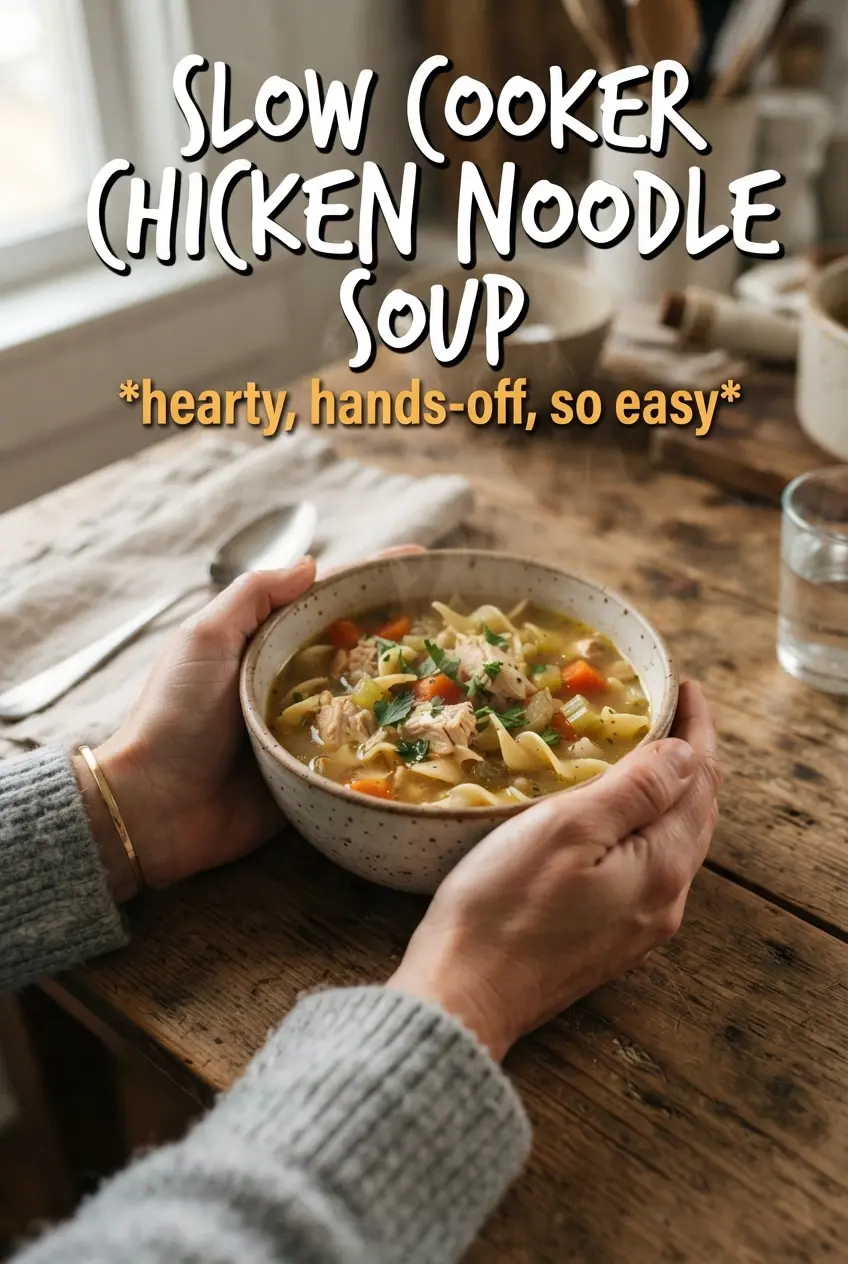
Slow Cooker Chicken Noodle Soup
Ingredients
Equipment
Method
- Add bone-in chicken thighs to the slow cooker and layer in sliced carrots, sliced celery, diced onion, and minced garlic.
- Pour in the chicken broth, then stir in dried thyme, dried dill, bay leaves, garlic powder, and onion powder.
- Cover and cook on Low for 6-8 hours until the chicken is fully cooked and tender (or cook on High for 3-4 hours).
- Remove chicken from the slow cooker, then discard the skin and bones and shred the meat while the soup stays warm.
- Remove bay leaves from the broth, then return the shredded chicken to the slow cooker and keep it covered.
- Add egg noodles and cook on High for 20-30 minutes until tender.
- Season generously with salt and pepper to taste.
- Garnish with fresh dill or parsley, then serve hot with a clear golden broth and visible shredded chicken.