Egg roll soup gives you all the savory, gingery, pork-and-cabbage comfort of the takeout classic without the wrapper to roll, fry, or fuss over. The broth stays light but still tastes full-bodied, with enough soy, sesame, and rice vinegar to hit that familiar egg roll balance of salty, tangy, and warm. Crisp wonton strips on top finish the bowl with the crunch people usually miss most.
What makes this version work is the order. Browning the meat first builds the base, and the garlic and ginger go in just long enough to perfume the oil without turning bitter. The cabbage and carrots simmer only until tender, not limp, so the soup keeps some texture and doesn’t collapse into a soft, muddy bowl. A small hit of rice vinegar at the end wakes everything up and keeps the broth from tasting flat.
Below you’ll find the exact timing that keeps the vegetables from overcooking, plus a few smart swaps if you want to use chicken, make it lower-carb, or stretch it into leftovers that still taste good the next day.
The broth had that exact egg roll taste, and the cabbage stayed a little crisp instead of turning mushy. I used the wonton strips on top and my husband went back for a second bowl before I’d even sat down.
Save this Egg Roll Soup for the nights you want takeout flavor, a fast simmer, and that crispy wonton topping without the wrapper work.
The Trick to Keeping the Broth Bright Instead of Heavy
Egg roll soup can go dull fast if you cook it like a stew. The mistake is letting the cabbage and carrots simmer until they’ve given up all structure, then relying on soy sauce alone to carry the flavor. That creates a broth that’s salty but flat, with vegetables that taste boiled instead of fresh.
The better move is to build a fast, savory base first, then cook the vegetables just until they soften at the edges. Rice vinegar matters here because it lifts the broth without making it sour, and sesame oil goes in before serving so you get the aroma instead of cooking it off. If your soup tastes one-note, it’s usually because it needs either a splash more vinegar or a pinch more salt, not more soy sauce.
What Each Ingredient Is Actually Doing in This Bowl
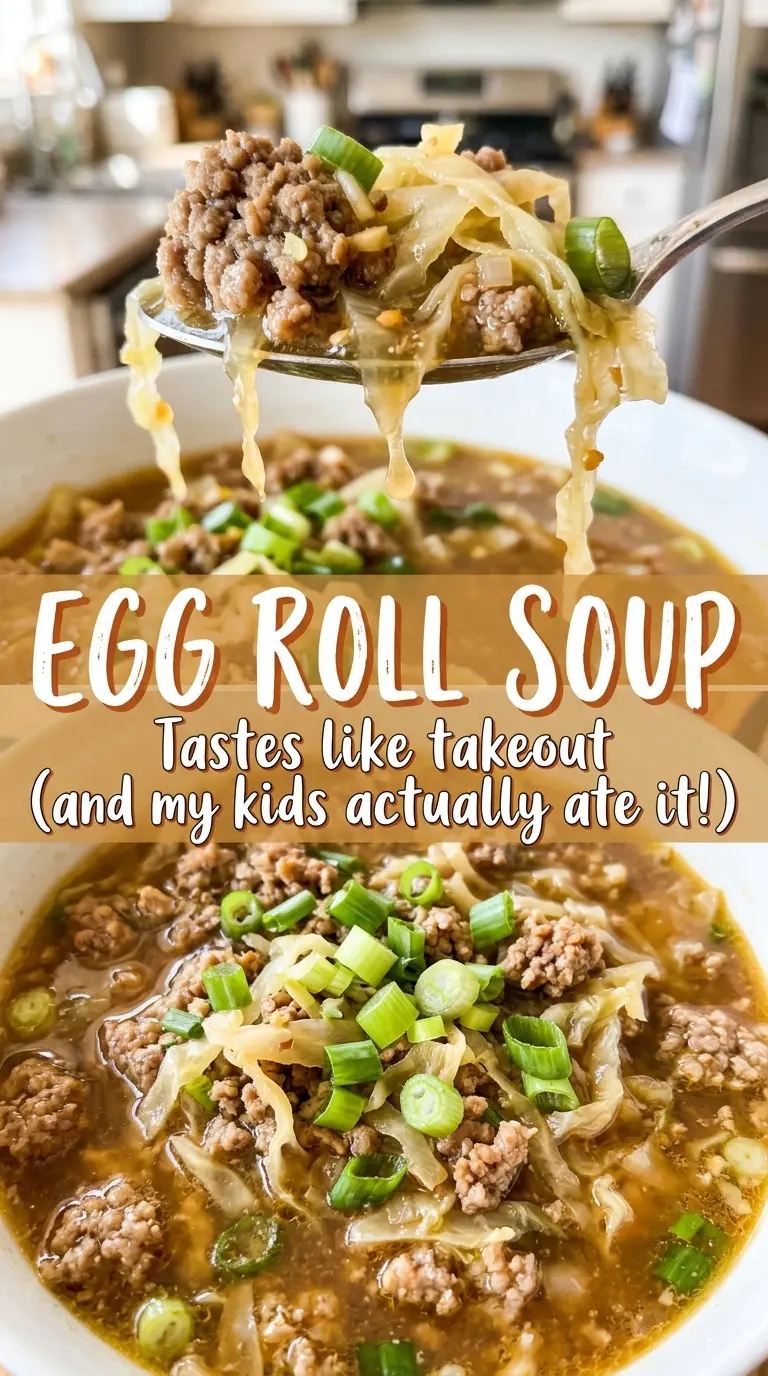
- Ground pork — This gives the soup its classic egg roll flavor because the fat carries the ginger, garlic, and soy. Ground chicken works too, but it needs the sesame oil and broth to keep it from tasting lean and sharp.
- Cabbage — Use thin shreds so it softens in the simmer without turning into ribbons that disappear. Green cabbage stays pleasantly crisp-tender and holds up better than napa if you’re planning leftovers.
- Fresh ginger and garlic — These are not background flavor here. Grating the ginger finely and mincing the garlic keeps them from tasting chunky and raw in the broth.
- Chicken broth — This is the body of the soup, so use one that tastes clean, not muddy. If your broth is low-sodium, you’ll have more control over the soy sauce at the end.
- Rice vinegar — This sharpens the broth and keeps the soup from tasting heavy. Lemon won’t give the same round, mellow tang.
- Crispy wonton strips — They’re the texture that makes the bowl feel like an egg roll instead of just a pork soup. Add them right before serving so they stay crunchy.
Building the Bowl Without Softening the Vegetables Too Far
Browning the Meat
Heat the oil in a large pot and brown the pork over medium-high heat, breaking it into small pieces as it cooks. You want some caramelized bits on the bottom of the pot, because that’s where a lot of the savory flavor comes from. If the meat starts steaming instead of browning, the pot is crowded or the heat is too low. Keep cooking until the pork loses its pink color and the rendered fat looks clear.
Waking Up the Ginger and Garlic
Add the garlic and ginger after the pork is cooked and stir them for just a minute or two. They should smell fragrant and sharp, not dark brown. If they scorch, the soup will taste bitter, so keep them moving and add the broth as soon as they bloom.
Simmering the Broth and Vegetables
Pour in the broth, soy sauce, sesame oil, rice vinegar, and sriracha, then bring the pot to a boil before adding the cabbage and carrots. Once the vegetables go in, reduce the heat and simmer until they are tender but still have a little bite, usually 8 to 10 minutes. The cabbage should look glossy and softened at the edges, not translucent and falling apart. Stir in the green onions at the end so they stay fresh and bright.
How to Adapt This for Different Diets and Leftover Plans
Make It with Ground Chicken Instead of Pork
Ground chicken keeps the soup lighter, but it needs a little extra help from the sesame oil and broth because it doesn’t bring as much built-in richness as pork. Brown it fully so it doesn’t taste pale, and don’t skimp on the ginger and soy sauce.
Low-Carb Egg Roll Soup
Skip the wonton strips and use extra cabbage if you want a lower-carb bowl that still tastes complete. The soup stays satisfying because the pork, sesame oil, and vinegar do the heavy lifting.
Make It Milder for Kids
Leave out the sriracha and cut the rice vinegar back slightly if you want a softer, gentler broth. You can pass the heat and extra vinegar at the table so everyone seasons their own bowl.
Storage and Reheating
- Refrigerator: Store for up to 4 days in an airtight container. The cabbage softens a bit more as it sits, but the flavor deepens overnight.
- Freezer: It freezes well for up to 2 months, though the cabbage will be softer after thawing. Freeze the soup without the wonton strips and add fresh toppings after reheating.
- Reheating: Warm gently on the stovetop over medium-low heat until hot. Don’t boil it hard or the vegetables will go limp and the broth can taste overly reduced.
Answers to the Questions Worth Asking
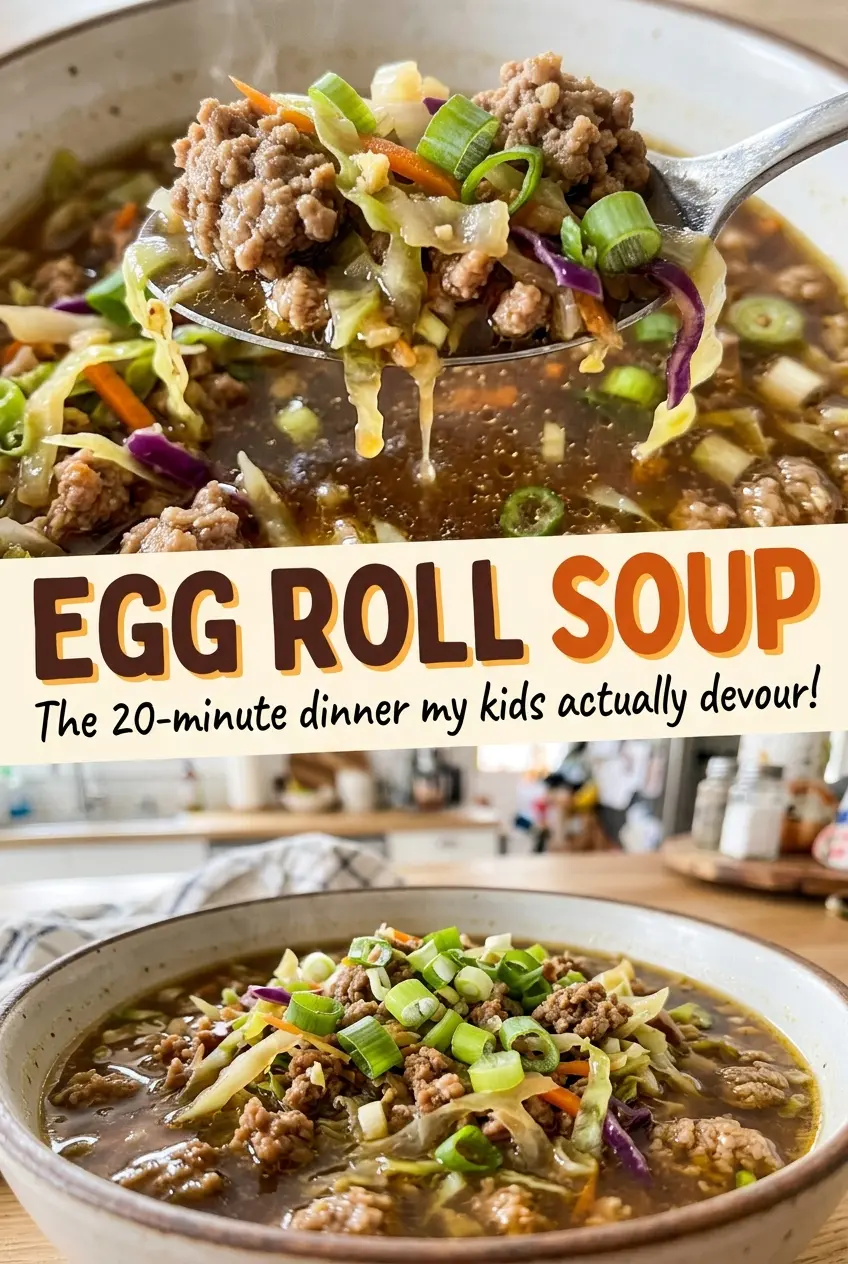
Egg Roll Soup
Ingredients
Equipment
Method
- Heat a large pot over medium-high heat and add the vegetable oil. Brown the ground pork, breaking it up, until cooked through and drain excess fat.
- Add the minced garlic and grated ginger to the pot. Cook for 1-2 minutes until fragrant, stirring constantly.
- Pour in the chicken broth, soy sauce, sesame oil, rice vinegar, and sriracha. Bring the mixture to a boil.
- Add the shredded cabbage and carrots to the boiling broth. Simmer for 8-10 minutes until the vegetables are tender.
- Stir in the sliced green onions. Season with salt and pepper to taste.
- Ladle the soup into bowls. Top each serving with crispy wonton strips and sesame seeds, and add extra green onions if desired.