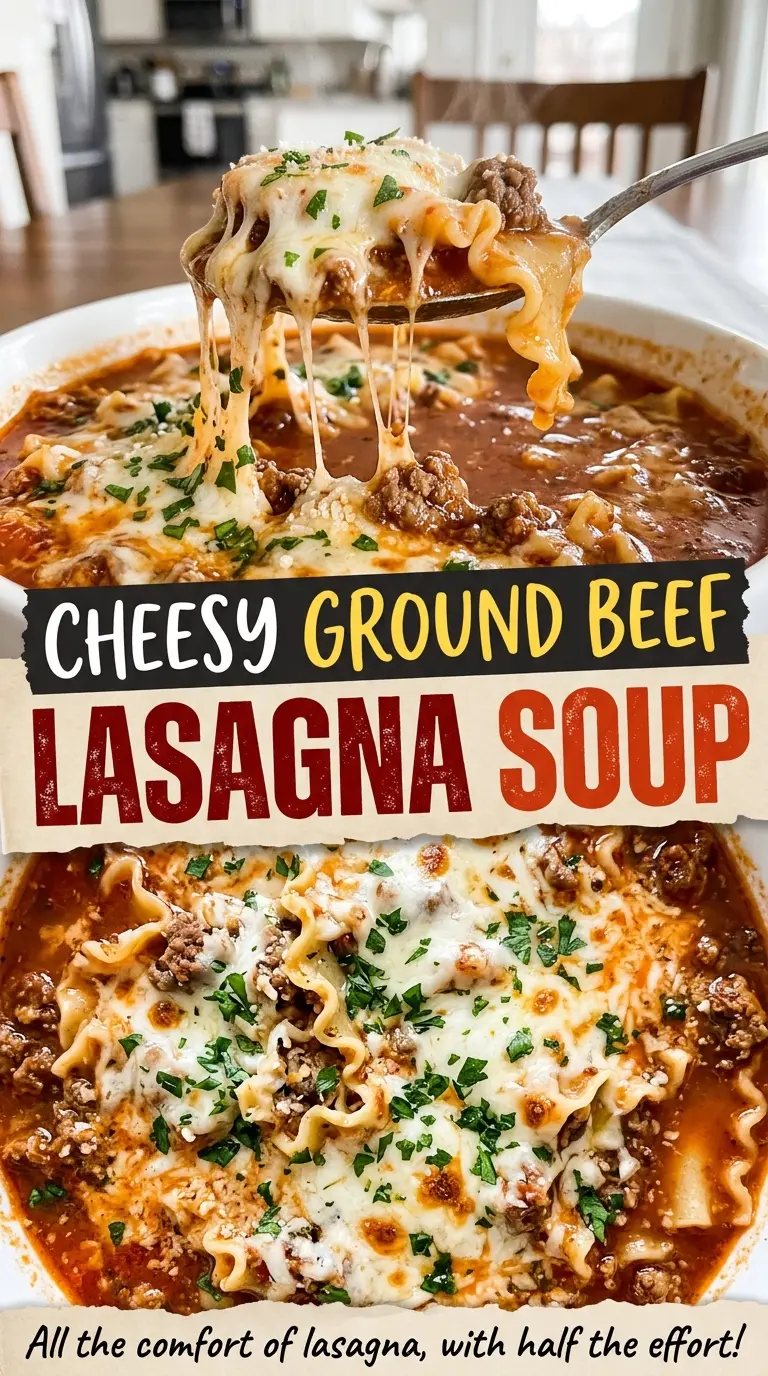
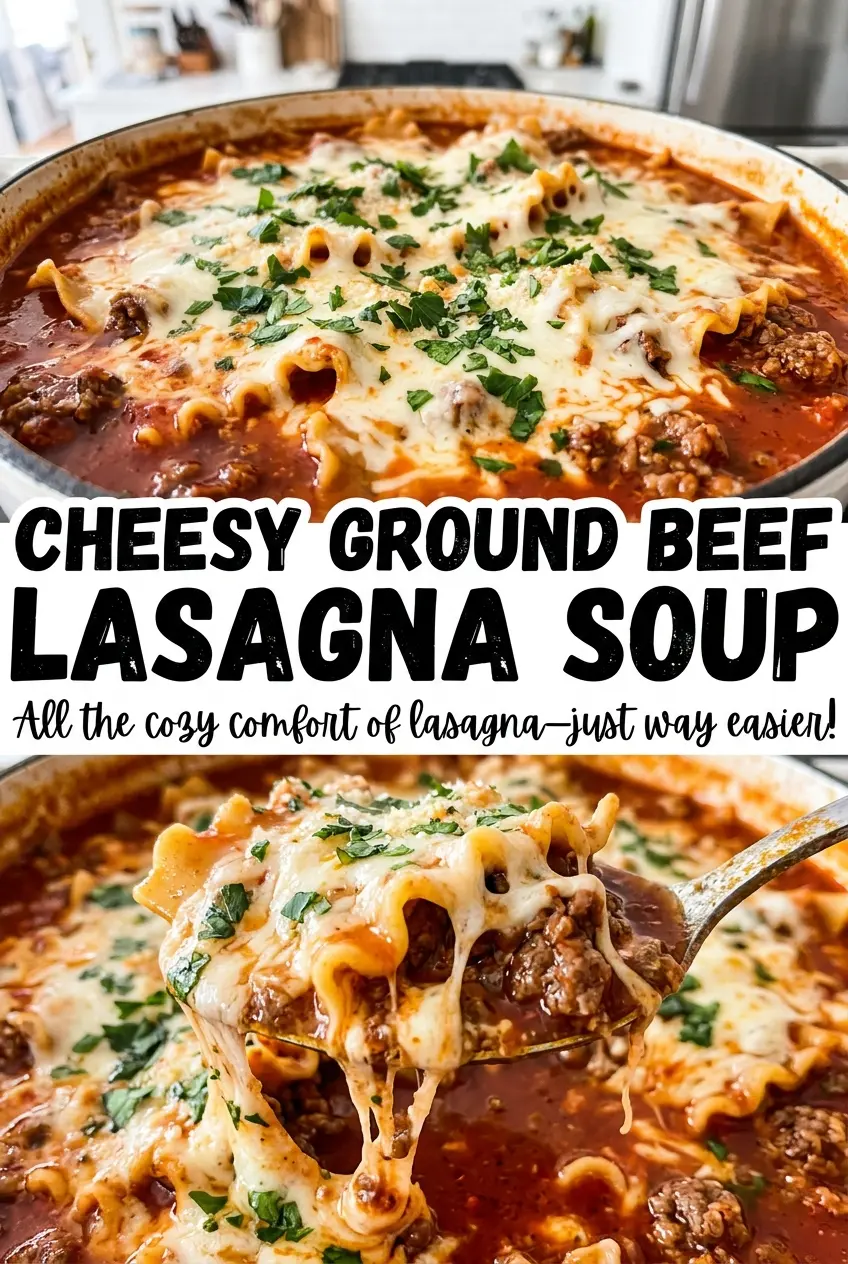
Cheesy ground beef lasagna soup hits the table with the same deep, tomato-rich comfort as a baked pan of lasagna, but without the layering, waiting, or cleanup. The broth turns hearty and savory from the beef and tomatoes, the broken noodles give it that familiar lasagna texture, and the cheese on top melts into the kind of bowl that disappears fast. It’s the kind of dinner that feels like it took more effort than it did.
What makes this version work is the order. Browning the beef first gives you the base flavor, then tomato paste cooks with the onion and garlic long enough to lose that raw edge and turn sweet and concentrated. The noodles simmer directly in the broth, so they pick up flavor instead of tasting like they came from a separate pot. The ricotta topping matters too — it gives you the creamy, lasagna-like finish that keeps the soup from eating like plain tomato beef soup.
Below, I’ll walk through the part that matters most: keeping the noodles tender, not mushy, and getting the cheese to melt into the soup without turning stringy or greasy. Once you’ve made it once, the method sticks.
The noodles stayed tender without falling apart, and the ricotta on top made it taste like lasagna in a bowl. My husband went back for a second serving before I’d even sat down.
Save this cheesy ground beef lasagna soup for the night you want lasagna flavor, broken noodles, and a thick ricotta topping without turning on the oven.
The Reason the Noodles Don’t Turn Mushy in This Bowl
The biggest mistake with lasagna soup is letting the noodles sit in the pot too long. Once they’re tender, they keep drinking broth, and by the time dinner hits the table you’ve got a thick, overcooked stew instead of soup. The fix is simple: simmer just until the pasta gives up its raw center, then stop the heat as soon as the cheese goes in.
The other thing that helps is using enough broth to start. A heavy tomato base can tighten up fast, especially once the noodles go in, so this needs a little extra liquid at the beginning. If it looks loose before the pasta cooks, that’s normal. It settles into the right consistency as it rests for a few minutes.
What Each Ingredient Is Doing in This Dish
- Ground beef — An 80/20 blend gives you enough fat to build flavor without making the soup greasy. If you use a leaner grind, add a splash of olive oil when browning so the onion and tomato paste have something to cook in.
- Tomato paste — This is not just there for color. Cooking it with the onion and garlic for a minute or two deepens the tomato flavor and takes away the tinny edge. Don’t skip that step or the broth will taste flatter.
- Crushed tomatoes and diced tomatoes — The crushed tomatoes thicken the broth, while the diced tomatoes give you body and little bursts of tomato in each spoonful. Using both keeps the soup from tasting one-note.
- Lasagna noodles — Broken noodles are what make the soup feel like lasagna instead of a generic beef pasta soup. Break them into rough pieces, not tiny shards, so they hold shape and give you those familiar layered bites.
- Mozzarella and cheddar or American cheese — Mozzarella brings the stretch, while cheddar or American gives the broth a creamier, more cooked-cheese finish. Add the cheese over low heat so it melts smoothly instead of clumping.
- Ricotta, parmesan, and basil — The ricotta dollop is what makes the bowl read like lasagna at first taste. Parmesan sharpens it, and basil keeps it from feeling heavy.
The Order That Gives You a Thick, Cheesy Soup Without a Broken Finish
Browning the Beef First
Cook the beef in a large pot until the pink is gone and the meat has some browned edges. Drain off excess fat if there’s a lot in the pot, but leave a thin coating behind for the onion and garlic. If you rush this stage, the soup tastes boiled instead of savory, and that ground beef flavor never really develops.
Cooking Down the Onion and Tomato Paste
Add the onion and let it soften until it turns translucent and slightly sweet, about four minutes. Stir in the garlic and tomato paste and cook for two minutes more. The paste should darken a shade and smell sweet, not raw; that’s the point where it starts contributing depth instead of just acidity.
Simmering the Broth and Noodles
Pour in the tomatoes, broth, herbs, and red pepper flakes, then bring everything to a boil before adding the broken noodles. Keep the simmer steady, not aggressive, so the pasta cooks evenly and the broth doesn’t reduce too fast. The noodles are done when they’re tender at the center but still hold their shape when stirred.
Melting the Cheese at the End
Turn the heat down low before adding the mozzarella and cheddar. Stir slowly until the cheese disappears into the soup and the broth turns creamy around the edges. If the pot is too hot here, the cheese can seize or get stringy, so this is the moment to be patient.
Three Ways to Make It Fit Your Kitchen
Gluten-Free Version
Use a gluten-free lasagna noodle that holds up well in soup, and watch the pot closely near the end because some gluten-free pastas go from firm to soft fast. The flavor stays the same, but the broth may need a little extra salt at the end since some gluten-free pasta brands absorb more seasoning.
Make It a Little Lighter
Swap in lean ground beef or half beef and half turkey, then add a tablespoon of olive oil when sautéing the onion so the base doesn’t taste dry. You’ll lose a little richness, but the ricotta topping and cheese still carry the lasagna effect.
Dairy-Free Adaptation
Skip the mozzarella, cheddar, and ricotta, then finish each bowl with a dairy-free Parmesan-style topping if you like. The soup still works because the tomato and beef base carries the dish, but you’ll want a little extra olive oil or a spoonful of cashew cream stirred in at the end for body.
Make Ahead for Weeknights
Cook the soup base without the noodles, then cool and refrigerate it. When you’re ready to serve, reheat the base, simmer the noodles directly in it, and add the cheese at the end. That keeps the pasta from soaking up all the broth overnight.
Storage and Reheating
- Refrigerator: 3 to 4 days. The noodles will keep absorbing broth, so expect a thicker soup the next day.
- Freezer: The broth and beef freeze well, but the noodles soften after thawing. For best results, freeze the soup base without noodles and cook fresh pasta when reheating.
- Reheating: Rewarm gently on the stove over low to medium-low heat with a splash of broth or water. Don’t boil it hard or the noodles can break apart and the cheese can turn grainy.
Answers to the Questions Worth Asking
Cheesy Ground Beef Lasagna Soup
Ingredients
Equipment
Method
- Brown the ground beef in a large pot over medium-high heat, then drain excess fat.
- Visual cue: the beef should no longer look pink and the pot should have a cleaner surface after draining.
- Sauté the onion for 4 minutes, then add the garlic and tomato paste and cook for 2 minutes.
- Visual cue: the onion should soften and the tomato paste should darken slightly.
- Add the crushed tomatoes, diced tomatoes, beef broth, Italian seasoning, dried basil, dried oregano, and red pepper flakes, then bring to a boil.
- Visual cue: you should see active bubbling across the surface and around the edges of the pot.
- Add the broken lasagna noodles, then simmer for 10-12 minutes until tender.
- Visual cue: the noodles should soften and be easy to cut with a spoon.
- Reduce heat to low, then stir in the shredded mozzarella and cheddar/American cheese until melted.
- Visual cue: the soup should turn glossy and thick with cheese melting throughout the broth.
- Season with salt and pepper to taste.
- Visual cue: the flavor should feel balanced rather than flat, and the cheese should taste fully seasoned.
- Stir the ricotta with parmesan and basil to make a quick dollop mixture.
- Visual cue: it should look creamy and speckled with basil.
- Serve the soup hot with a generous ricotta dollop on top and fresh basil.
- Visual cue: a white ricotta mound should sit clearly on the red broth and melted cheese surface.