Clear, fragrant broth and tender chicken make Chinese chicken noodle soup the kind of bowl that disappears fast. The noodles stay light, the bok choy keeps a little bite, and the mushrooms give the broth more depth without turning it heavy. A good bowl doesn’t taste muddled or salty; it tastes clean, savory, and finished with just enough sesame oil and white pepper to wake everything up.
What makes this version work is how the flavor builds in layers. The garlic and ginger simmer first so the broth has a real base before the soy sauce, sesame oil, and rice vinegar go in. Cooking the noodles separately keeps the soup from turning starchy, and adding the bok choy near the end keeps it bright instead of limp. Thinly sliced chicken cooks quickly and stays tender as long as you don’t let the pot boil hard.
Below you’ll find the timing that keeps the chicken juicy, the little seasoning adjustments that make the broth taste rounded instead of flat, and a few smart swaps if you need to work with what’s already in the pantry.
The broth had that clean ginger-garlic flavor I was hoping for, and cooking the noodles separately kept them from turning mushy. My husband kept going back for more because the sesame oil and white pepper made it taste like our favorite takeout spot.
Save this Chinese chicken noodle soup for the nights when you want a clear, savory broth and tender noodles without a long simmer.
The Broth Tastes Flat When the Aromatics Never Get a Head Start
Ginger and garlic need a few minutes in the broth before the rest of the ingredients go in. That short simmer pulls their flavor into the liquid instead of leaving it sharp and raw on the surface. If your soup tastes thin, the problem is usually that everything went in at once and the broth never had time to pick up those first layers of flavor.
White pepper matters here more than black pepper would. It gives that familiar takeout-style warmth without specks floating through the bowl. Add the soy sauce gradually, taste as you go, and remember that broth can taste underseasoned right up until the noodles and vegetables hit the bowl. Once that happens, the soup rounds out fast.
What Each Ingredient Is Actually Doing in This Bowl
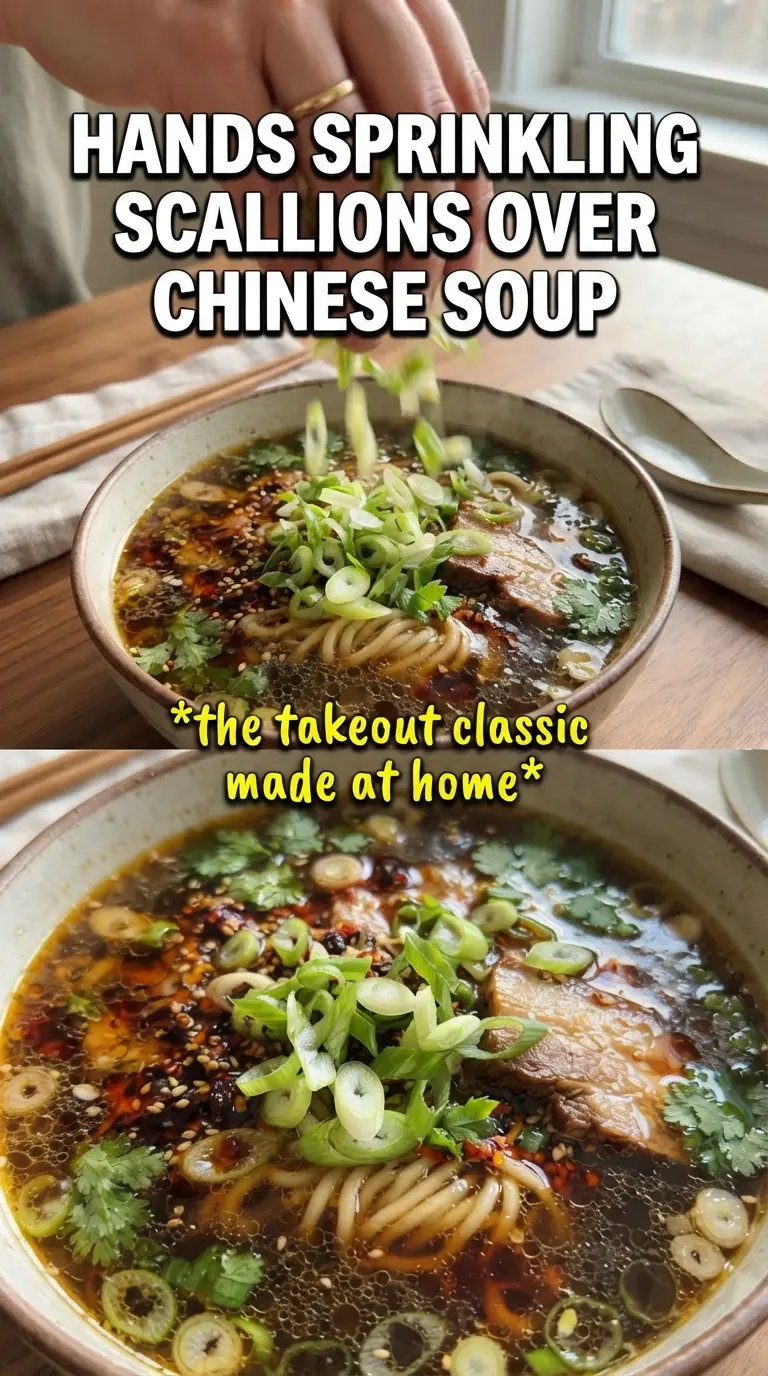
- Chicken breast — Thin slices cook quickly and stay tender in a simmering broth. If you cut them too thick, they’ll overcook before the center is done. Thighs work too and bring a little more richness, but breast keeps the soup lighter.
- Thin Chinese wheat noodles or rice noodles — These keep the bowl delicate and slurpable. Cook them separately so they don’t soak up all the broth and turn gummy. If you only have dried ramen-style noodles, discard the seasoning packet and cook them just until barely tender.
- Bok choy — This adds freshness and a little crunch at the edge of the leaves. Add it at the end so the stems stay crisp-tender and the greens stay bright. Napa cabbage is the closest swap if bok choy isn’t available.
- Shiitake mushrooms — They deepen the broth and give the soup a more complete savory note. Fresh shiitakes are best, but sliced cremini will still do the job if that’s what you have. Keep them in the simmer long enough to release flavor and soften.
- Sesame oil, rice vinegar, and white pepper — These are the finishing notes that make the soup taste finished instead of just salty. Sesame oil adds aroma, rice vinegar lifts the broth, and white pepper gives it warmth. Add them near the end so the flavor stays clean and pronounced.
The 20 Minutes That Actually Matter
Starting the Broth the Right Way
Bring the chicken broth to a steady simmer before you add the garlic and ginger. You want tiny bubbles, not a hard boil, so the aromatics infuse the broth instead of getting harsh. Let them cook for about 5 minutes until the broth smells rounded and noticeably more savory.
Cooking the Chicken Without Drying It Out
Add the sliced chicken and mushrooms next, then keep the heat gentle. A hard boil will tighten the chicken and cloud the broth. The chicken is done when the slices look opaque all the way through and the mushrooms are soft and darkened at the edges.
Keeping the Noodles and Greens Separate
Cook the noodles in a separate pot and drain them well before dividing them into bowls. If they sit in the soup too long, they’ll steal broth and turn soft. Add the bok choy to the pot only at the end and cook just until the stems turn bright and the leaves wilt.
Finishing the Bowl
Ladle the hot broth, chicken, mushrooms, and bok choy over the noodles, then finish with white pepper, salt, green onions, cilantro, and a small drizzle of chili oil. Taste the broth before serving because noodles always dull seasoning a little. The final bowl should taste clean and balanced, with enough heat and aroma to carry each bite.
How to Adapt This for What You’ve Got on Hand
Make It Gluten-Free
Use rice noodles and choose a gluten-free soy sauce or tamari. The broth stays just as fragrant, but the noodles will be a little softer than wheat noodles, so pull them as soon as they’re tender.
Use Chicken Thighs for a Richer Bowl
Boneless thighs bring more body to the broth and stay juicy a little longer if the soup sits on the stove. They take nearly the same cook time, but the finished soup tastes fuller and a bit more savory.
Go Vegetarian Without Losing the Broth Character
Swap in a good vegetable broth and use extra shiitake mushrooms for depth. You’ll lose some of the chicken backbone, but the ginger, garlic, sesame oil, and mushrooms still give you a bowl with plenty of personality.
Storage and Reheating
- Refrigerator: Store the broth, chicken, and vegetables separately from the noodles for up to 4 days. The bok choy softens a bit, but the flavor stays good.
- Freezer: Freeze the broth with chicken and mushrooms for up to 2 months. Don’t freeze the noodles; they turn mushy when thawed.
- Reheating: Warm the broth gently on the stove until steaming, then add fresh or separately stored noodles to the bowl. If you boil it hard, the chicken can turn stringy and the broth loses its clean taste.
Answers to the Questions Worth Asking
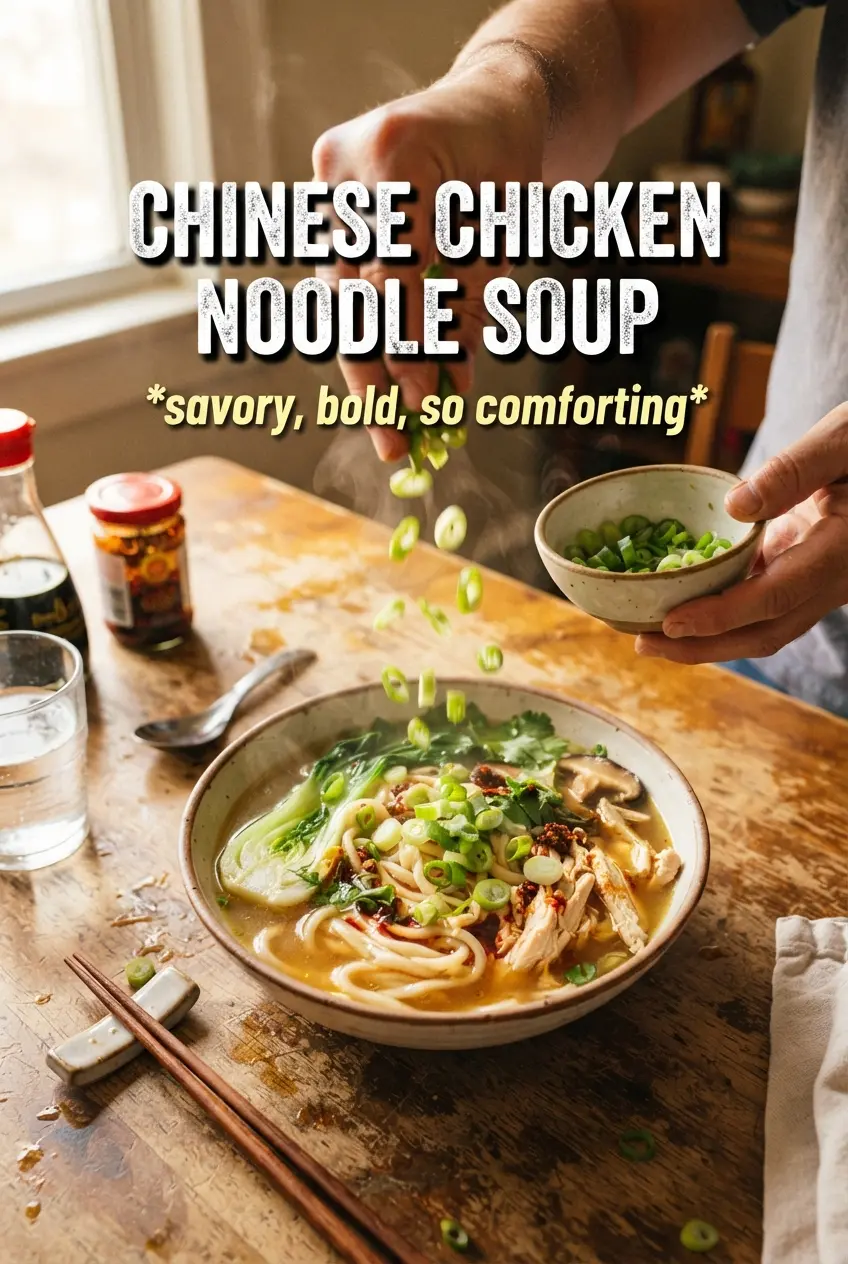
Chinese Chicken Noodle Soup
Ingredients
Equipment
Method
- Bring the chicken broth to a simmer in a large pot, then add the minced garlic and grated ginger. Cook at a gentle simmer for 5 minutes, stirring once to distribute the aromatics.
- Stir in the soy sauce, sesame oil, and rice vinegar. Taste and adjust the seasoning as needed before adding the chicken.
- Add the thinly sliced chicken and the sliced shiitake mushrooms to the simmering broth. Simmer for 10 to 12 minutes until the chicken is cooked through.
- Add the chopped bok choy and cook at a simmer for 3 minutes, until wilted. Keep the heat steady so the broth stays clear.
- Cook the noodles separately according to package directions, then drain them. Divide the noodles into 6 bowls so they’re ready for the hot broth.
- Ladle the hot soup over the noodles, letting the broth soak in. Season each bowl with white pepper and salt to taste.
- Finish with sliced green onions, chopped cilantro, and a drizzle of chili oil. Serve immediately while the noodles are springy and the broth is hot.