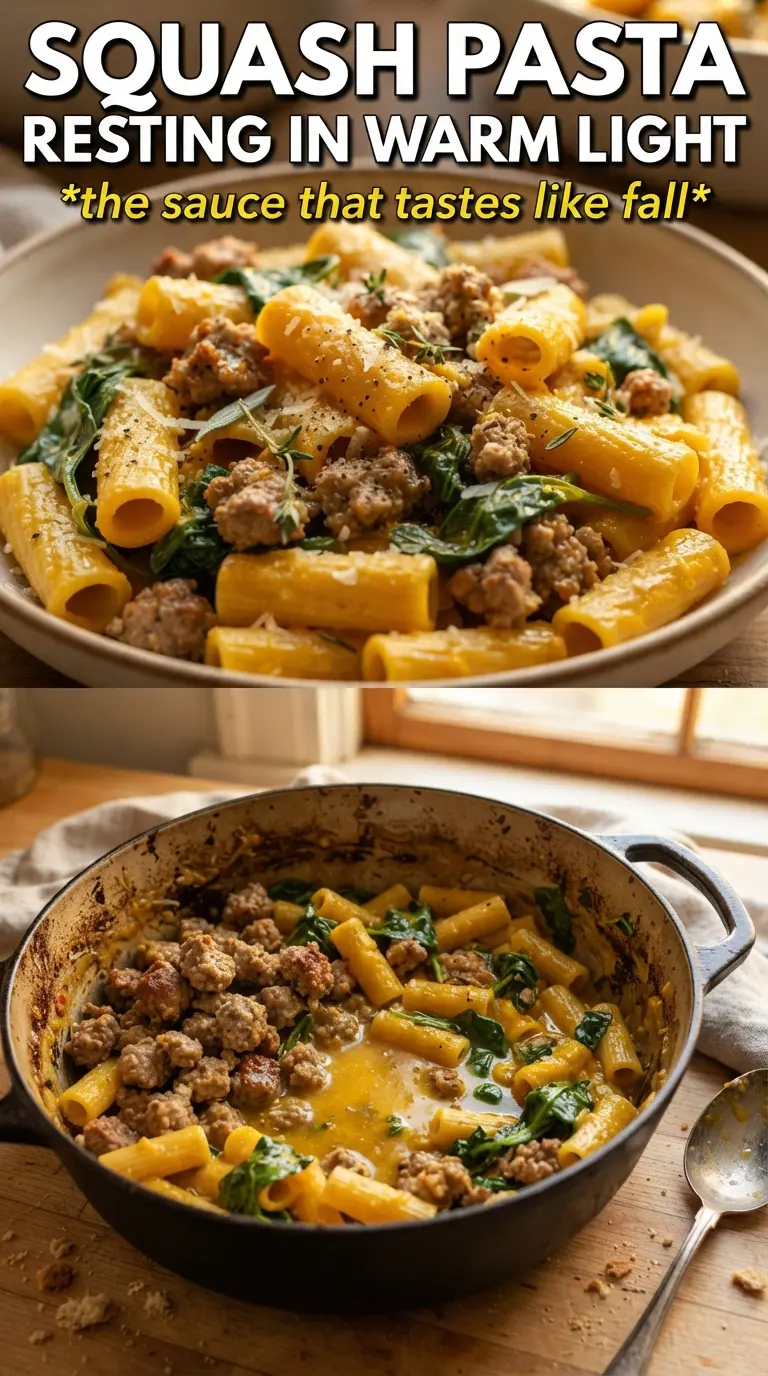
Silky butternut squash sauce clings to every ridge of the pasta, with savory sausage and wilted spinach turning it into a full dinner instead of a side dish. The sauce tastes rich and round without needing a long list of ingredients, and the squash gives it that deep orange color people notice the second it hits the table.
What makes this version work is the balance. The sausage seasons the pan from the start, so the onion and garlic pick up all that flavor instead of cooking in plain oil. Then the squash puree gets loosened with cream and pasta water, which keeps the sauce glossy and lets it coat the rigatoni instead of sitting heavy in the bowl. A little nutmeg helps the squash taste warmer, not sweeter, and the spinach folds in at the end so it stays tender instead of collapsing into nothing.
Below, I walk through the part that matters most: how to keep the sauce smooth, when to add the pasta water, and what to swap if you need a dairy-free or lighter version.
The sauce turned out glossy and stayed creamy after I tossed in the pasta water. I was worried the squash would taste flat, but the sausage and parmesan made it taste like a restaurant dinner, and the spinach wilted in perfectly at the end.
Creamy butternut squash pasta with sausage and spinach is the kind of dinner that looks fancy but comes together in one skillet after the pasta cooks.
The Trick to Keeping Butternut Squash Sauce Creamy Instead of Gluey
Butternut squash puree can turn dense fast if it gets heated like a jarred tomato sauce. The mistake is letting it simmer hard before the cream and pasta water go in. That pushes the sauce into a thick paste before it has a chance to loosen and coat the pasta.
The better move is to let the squash warm through with the cream, then use the reserved pasta water to bring it to the right texture. The starch in the pasta water helps the sauce cling, and the parmesan melts in more smoothly when the pan isn’t screaming hot. If your sauce ever looks too thick or grainy, it usually needs more liquid and less heat, not more stirring.
- Browned Italian sausage — This gives the whole dish its savory backbone. Hot Italian sausage brings enough seasoning on its own, but mild sausage works too if you want less heat. Pull it out of the skillet after browning so it doesn’t dry out while the sauce comes together.
- Butternut squash puree — This is the body of the sauce. Use plain puree, not pre-seasoned filling. If you’re starting from roasted squash instead of canned or packaged puree, blend it until completely smooth or you’ll get a slightly stringy sauce.
- Heavy cream — This softens the squash and gives it that silky finish. Half-and-half will work in a pinch, but the sauce will be a little thinner and less plush. Don’t swap in milk unless you’re also okay with a lighter, less stable sauce.
- Parmesan — Freshly grated parmesan melts cleanly and seasons the sauce at the same time. Pre-shredded cheese can leave the sauce a little grainy because of the anti-caking agents. If parmesan is what you’ve got, grate it finely so it disappears into the sauce faster.
- Rigatoni or penne — A tube-shaped pasta catches the sauce inside and gives you a better bite with the sausage. Long pasta works, but it won’t hold the sauce quite as well. Save at least half a cup of pasta water before draining; that starch is what helps everything come together.
What Each Ingredient Is Actually Doing in This Recipe
- Primary ingredient (the star) — Quality matters most. Choose the best you can find.
- Cooking medium (oil, butter, or broth) — This carries flavors and prevents dryness.
- Seasonings (salt, pepper, spices, herbs) — Layer flavors so nothing overpowers. Build depth gradually.
- Aromatics (garlic, onion, herbs) — Cook with fat to bloom flavors. Become the foundation.
- Supporting ingredients — Complement the main ingredient without overpowering it.
- Sauce or liquid (if applicable) — Brings flavors together. Balance richness with acid.
- Acid (lemon, vinegar, wine, or other) — Brightens and prevents flat-tasting results.
- Final finish (garnish, glaze, or sauce) — Prevents one-dimensional taste and adds visual appeal.
Building the Sauce in the Right Order
Cooking the Pasta First
Start the pasta in well-salted water and cook it until just al dente, because it’s going back into the skillet for a final toss. If you drain it too early, the noodles can taste underdone; if you overcook it, the pasta will go soft once it sits in the sauce. Before draining, scoop out the pasta water and keep it close by.
Rendering the Sausage and Starting the Base
Brown the sausage in a large skillet until you get real color on the edges, not just a pale gray crumble. That browning is where the flavor starts. Remove the sausage once it’s cooked through so the pan stays clean enough for the onion to soften without steaming in excess fat. If there’s a lot of grease left, pour off most of it, but leave a thin film behind for the vegetables.
Letting the Squash Finish the Job
Cook the onion until it turns translucent and the edges soften, then add the garlic and Italian seasoning for just a minute or two. Garlic burns fast, and burnt garlic will take over the whole pan. Stir in the squash puree and cream, then let it simmer gently until the sauce looks smooth and slightly thickened. Parmesan goes in after that, off aggressive heat, so it melts instead of clumping.
Bringing Everything Together
Add the pasta and splash in the reserved cooking water a little at a time until the sauce turns glossy and coats the noodles instead of pooling under them. Toss in the spinach at the end so it just wilts from the heat of the pan. Return the sausage, taste for salt and pepper, and stop cooking as soon as everything is combined. If it sits over heat too long at this stage, the pasta keeps absorbing sauce and the whole dish can turn dry.
How to Adapt This Pasta for Different Kitchens and Different Nights
Dairy-Free But Still Creamy
Swap the heavy cream for full-fat coconut milk and use a dairy-free parmesan-style cheese or skip the cheese and add a little more salt. The sauce will be slightly sweeter and a bit looser, but it still gets that velvety texture from the squash and pasta water.
A Lighter Version With Less Richness
Use half-and-half instead of heavy cream and choose turkey Italian sausage. You’ll lose a little of the deep, buttery finish, but the sauce still stays smooth and the sausage keeps the dish satisfying.
Vegetarian Version That Still Has Depth
Skip the sausage and sauté sliced mushrooms with the onion until they brown deeply. That gives you the savory base the sausage usually handles, and the dish still feels hearty because the squash sauce is already rich.
Storage and Reheating
- Refrigerator: Store leftovers in an airtight container for up to 4 days. The pasta will absorb some of the sauce, so expect it to thicken as it chills.
- Freezer: It freezes well for up to 2 months, but the cream sauce may look slightly separated after thawing. Stir well while reheating and add a splash of water or milk to bring it back.
- Reheating: Warm it slowly in a skillet over low heat with a spoonful of water, broth, or milk. Microwaving it hard and fast can make the sauce look broken and dry out the pasta before the center is hot.
Questions I Get Asked About This Recipe
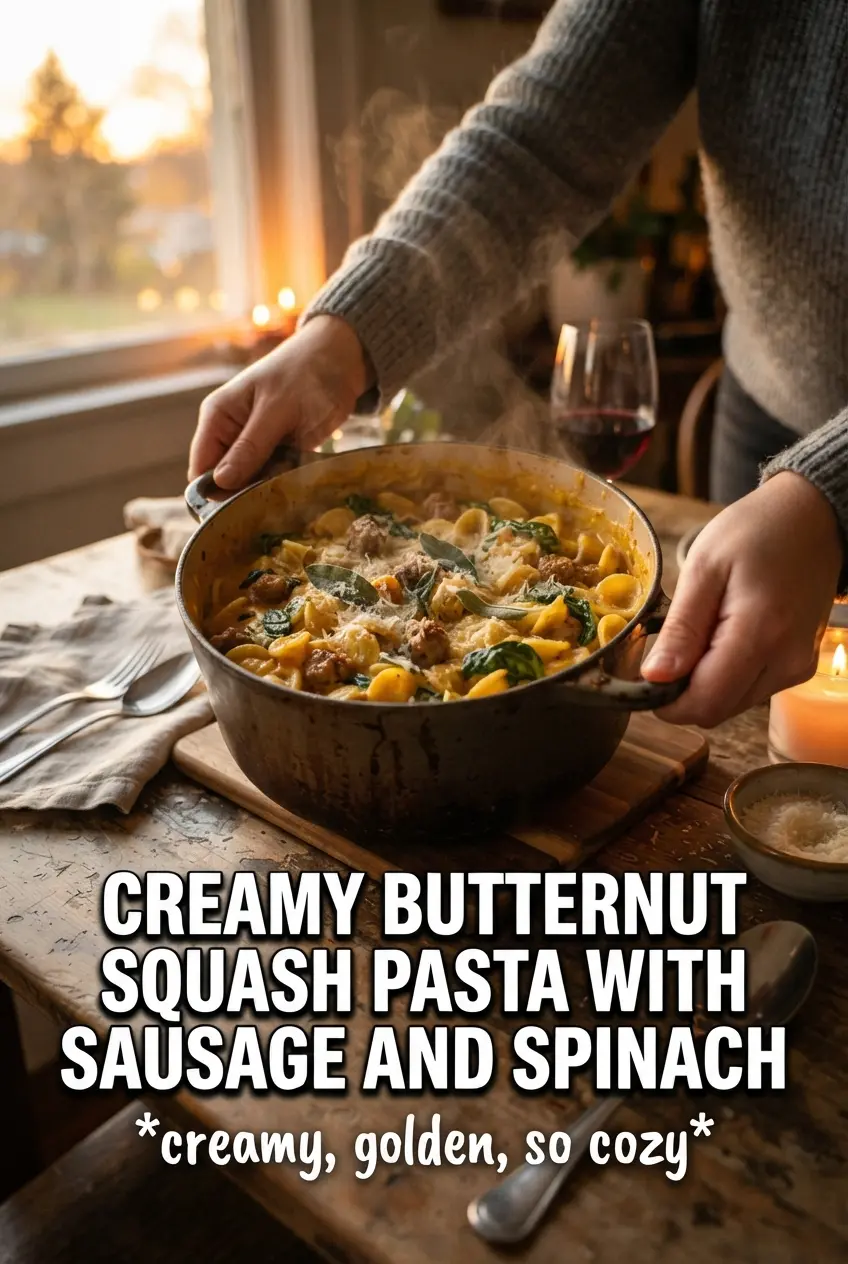
Creamy Butternut Squash Pasta With Sausage And Spinach
Ingredients
Equipment
Method
- Bring a large pot of salted water to a boil and cook rigatoni or penne until al dente, then reserve 1/2 cup pasta cooking water before draining. Keep the pasta warm while you cook the sauce.
- Heat a large skillet over medium-high heat and brown Italian sausage until cooked through, then drain the fat and set the sausage aside. Leave any browned bits in the pan for flavor.
- In the same skillet, sauté diced onion until softened, about 4 minutes. Add minced garlic and Italian seasoning and cook for 2 minutes, stirring until fragrant.
- Stir in butternut squash puree and heavy cream, then add nutmeg and red pepper flakes. Simmer for 5 minutes, stirring so the sauce thickens slightly.
- Reduce slightly and stir in grated parmesan until smooth and fully melted. The sauce should look glossy and cohesive.
- Add the cooked pasta and reserved pasta cooking water, then toss until the sauce coats evenly. Add baby spinach and toss just until wilted.
- Return the browned sausage to the pan and toss to combine. Season with salt and pepper to taste, then serve hot.