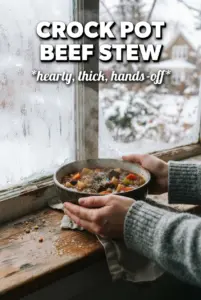
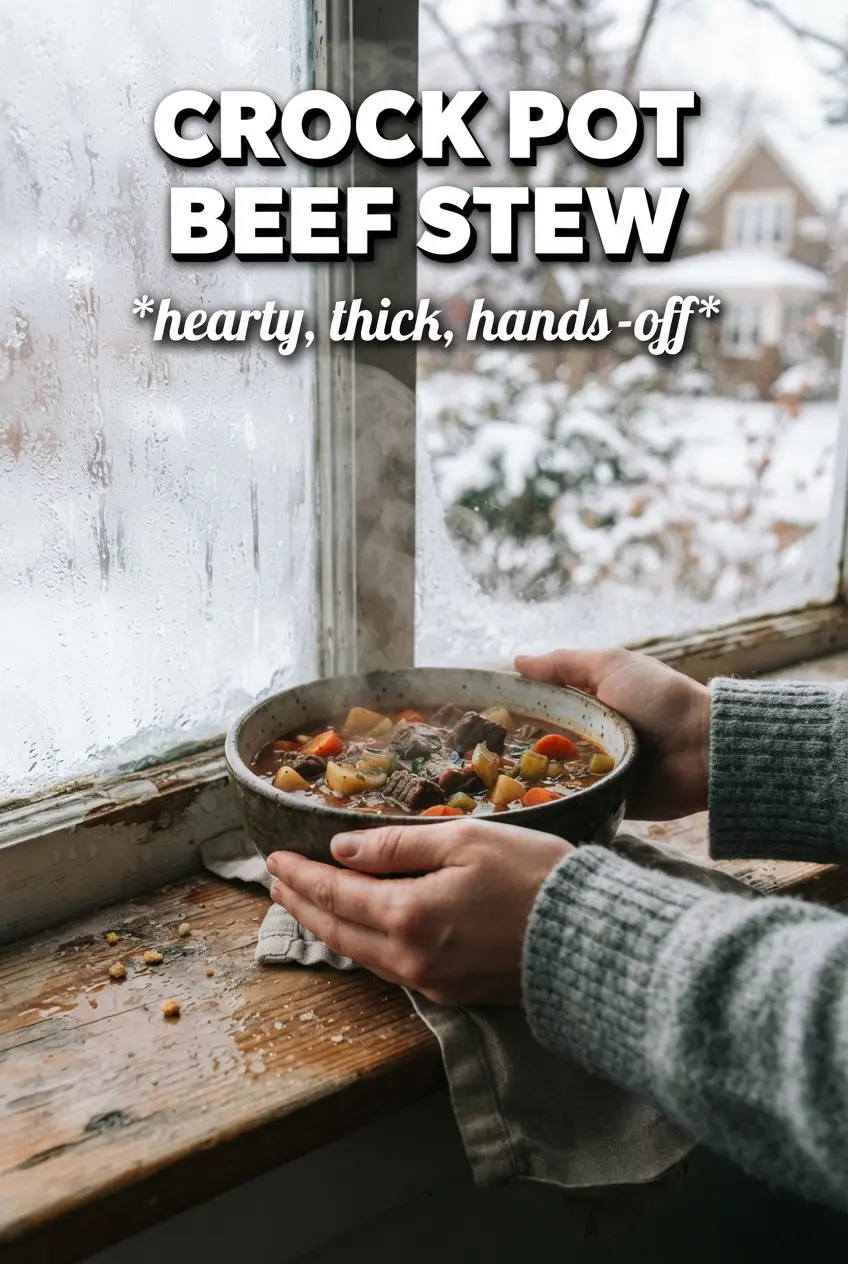
Deep, mahogany broth, fall-apart beef, and vegetables that still hold their shape are what make a good crock pot beef stew worth coming back to. This version gives you that classic slow-simmered comfort without turning the potatoes to mush or washing out the flavor. The wine, tomato paste, and Worcestershire build a broth that tastes richer than the short ingredient list suggests, and the slow cooker does the long, quiet work of turning a tough cut into something spoon-tender.
The trick is layering the vegetables under the beef so they sit in the liquid and soften evenly while the meat cooks above them. Chuck roast is the right cut here because it has enough fat and connective tissue to become silky after hours on low heat. I also like adding the cornstarch slurry at the end instead of starting with flour; it gives you control over the final thickness and keeps the broth glossy instead of muddy.
Below you’ll find the timing that keeps the beef tender, the one step that keeps the broth from tasting flat, and a few practical swaps for when you want to adjust the stew to what you have on hand.
The broth got rich and dark, and the beef was so tender it broke apart with a spoon. I loved that the potatoes held their shape even after all day in the slow cooker.
Save this Crock Pot Beef Stew for a low-effort dinner with rich broth, tender beef, and vegetables that don’t fall apart.
The Broth Needs Time to Get Dark Before It Ever Gets Thick
Beef stew gets flat when the liquid is treated like a background note. The tomatoes, Worcestershire, and tomato paste need time in the slow cooker to melt together into a broth that tastes layered instead of watery. If you rush the process or skip the tomato paste, you lose that deep color and the stew can taste more like boiled beef and vegetables than actual stew.
The other common mistake is thickening too early. Cornstarch added at the start breaks down during a long cook, which leaves you with a broth that still looks thin at the end. Stirring in the slurry during the last 20 to 30 minutes gives you a clean, glossy finish and lets you stop the second it reaches the texture you want.
What Each Ingredient Is Actually Doing in This Stew

- Beef chuck — This is the cut that turns tender after a long cook. Leaner beef dries out before the stew is done, so chuck is the right place to spend your money here.
- Baby potatoes — They hold their shape better than russets and give you small, creamy bites instead of disintegrating into the broth. Halving them helps them cook through without turning mealy.
- Carrots and celery — These give the stew sweetness and structure. Cut the carrots thick and the celery a little larger than you think so they don’t disappear after eight hours.
- Red wine or extra broth — Wine adds depth and a little acidity, which keeps the stew from tasting heavy. If you skip it, use more broth and add a small splash of vinegar at the end if the flavor needs brightness.
- Tomato paste and diced tomatoes — Tomato paste gives body and color; diced tomatoes bring a subtle tang that helps the broth taste cooked, not plain. Stir the paste in well so you don’t get little pockets of raw tomato flavor.
- Worcestershire, thyme, rosemary, and bay — These are the backbone of the stew’s savory flavor. Dried herbs work fine here because they have hours to rehydrate, but the bay leaves should come out before thickening so the broth stays smooth.
Building the Stew So the Vegetables Don’t Turn to Mush
Start with the vegetables
Put the potatoes, carrots, celery, and onion in the bottom of the slow cooker. They sit closest to the heat and the liquid, which helps them soften evenly instead of steaming on top of the meat. If you scatter them over the beef, they can cook unevenly and the potatoes on top often stay a little firm while the ones underneath go too far.
Season and nestle the beef
Season the beef generously with salt and pepper before it goes in. Then nestle the cubes on top of the vegetables rather than stirring everything together. You want the beef exposed to the broth so it braises, not buried so deep that it just boils.
Pour in the broth mixture
Add the garlic, broth, wine, tomatoes, tomato paste, Worcestershire, thyme, rosemary, and bay leaves. Give the tomato paste a quick stir so it disperses instead of sitting in one dense clump. The liquid should just come up around the ingredients; if the pot is overloaded, the stew can turn thin because the vegetables release more water than you expect.
Cook until the beef gives up without a fight
Cook on low for 8 to 10 hours, or on high for 4 to 5 hours if you need it faster. On low, the beef should pull apart with almost no pressure and the carrots should be tender but not collapsed. If the beef still feels tight or chewy, it needs more time; chuck only gets tender after the connective tissue has fully softened.
Thicken at the end, not the beginning
Remove the bay leaves, then stir in the cornstarch slurry. Let the stew cook on high for 20 to 30 minutes until the broth turns slightly glossy and coats a spoon. If you add the slurry and stop there, the cornstarch won’t fully activate, and the broth can stay loose instead of settling into that classic stew texture.
Make It Gluten-Free Without Losing Body
This stew is naturally close to gluten-free as written. Just check your Worcestershire sauce, since some brands contain malt vinegar or other gluten sources. The cornstarch slurry works well for thickening, so you don’t need flour at all.
Skip the Wine and Keep the Depth
Use an extra cup of beef broth if you don’t want to cook with wine. For a little brightness, add a teaspoon of red wine vinegar or apple cider vinegar after the stew finishes cooking. That small hit of acid helps replace the lift the wine would have brought.
Turn It Into a Bigger-Batch Dinner
You can stretch this stew with an extra pound of potatoes and another carrot or two, but don’t overfill the slow cooker past about two-thirds full. If the pot is packed too tightly, the vegetables steam instead of braise and the beef takes longer to soften.
Storage and Reheating
- Refrigerator: Store in an airtight container for up to 4 days. The broth thickens as it chills, and the potatoes soften a little more overnight.
- Freezer: It freezes well for up to 3 months, though the potatoes will be a little softer after thawing. Cool it completely first, then portion it into freezer-safe containers with some headspace.
- Reheating: Reheat gently on the stove over medium-low or in the microwave in short bursts, stirring between intervals. If the stew looks too thick, loosen it with a splash of broth or water; boiling it hard can make the beef stringy.
Questions I Get Asked About This Recipe
Crock Pot Beef Stew
Ingredients
Equipment
Method
- Season the beef chuck generously with salt and pepper so every cube is well coated. The beef should look evenly speckled with seasoning.
- Place the potatoes, carrots, celery, and onion in the bottom of the crock pot, then nestle the seasoned beef on top. Aim for an even layer so the meat cooks through consistently.
- Add the garlic, beef broth, red wine (or extra broth), diced tomatoes, tomato paste, Worcestershire sauce, dried thyme, dried rosemary, and bay leaves. Pour around the edges so the vegetables are surrounded by liquid.
- Cook on Low for 8-10 hours until the beef is fall-apart tender. Use a visible fork test—when you press a chunk, it should break easily.
- For faster cooking, switch to High and cook for 4-5 hours until the beef is fall-apart tender. The meat should shred with minimal pressure.
- Remove the bay leaves, then stir in the cornstarch slurry made from cornstarch and water. The stew should look slightly thinner right after adding the slurry.
- Cook on High for 20-30 minutes until the broth thickens. Watch for the surface to look glossy and the stew to cling to a spoon.
- Season with salt and pepper to taste. Taste and adjust so the flavors are balanced and the broth isn’t bland.