Ginger garlic chicken noodle soup lands with the kind of comfort that feels immediate: clear golden broth, tender shredded chicken, soft noodles, and just enough ginger heat to wake up your palate without turning the bowl sharp. It’s the kind of soup that tastes light but still eats like a full meal, and the sesame oil at the end gives it a round, savory finish that makes the whole pot feel complete.
What makes this version work is the layering. The onion, carrots, and celery go in first so they can soften and build a base, then the garlic and ginger bloom briefly before the broth goes in. That short step matters because ginger and garlic can taste flat if they never hit the pot with a little heat, but they can turn harsh if you cook them too long.
Below, I’ll walk through the part that keeps the broth clean and bright instead of muddy, plus the best way to add the noodles so they stay tender instead of turning swollen and soft.
The broth stayed clear and the ginger-garlic flavor came through without tasting bitter. I added the noodles at the end and they were still perfect after dinner, not mushy at all.
Like this ginger garlic chicken noodle soup? Save it to Pinterest for a clear, savory bowl that comes together fast and tastes even better than it looks.
The Broth Stays Clean When You Don’t Rush the Aromatics
Soup can taste thin even when the ingredient list looks strong, and the usual reason is that the vegetables never got a chance to soften before the broth went in. Here, the onion, carrot, and celery need those few minutes in the pot first. They give the broth a sweeter, fuller base and keep the finished soup from tasting like chicken water with add-ins.
The other place people lose this recipe is the ginger and garlic. They need just enough time to turn fragrant, not enough time to brown. If garlic gets too dark, the whole pot picks up a bitter edge that the broth can’t hide. Keep the heat at medium and move straight to the broth as soon as the kitchen smells warm and savory.
What Each Ingredient Is Actually Doing in This Bowl
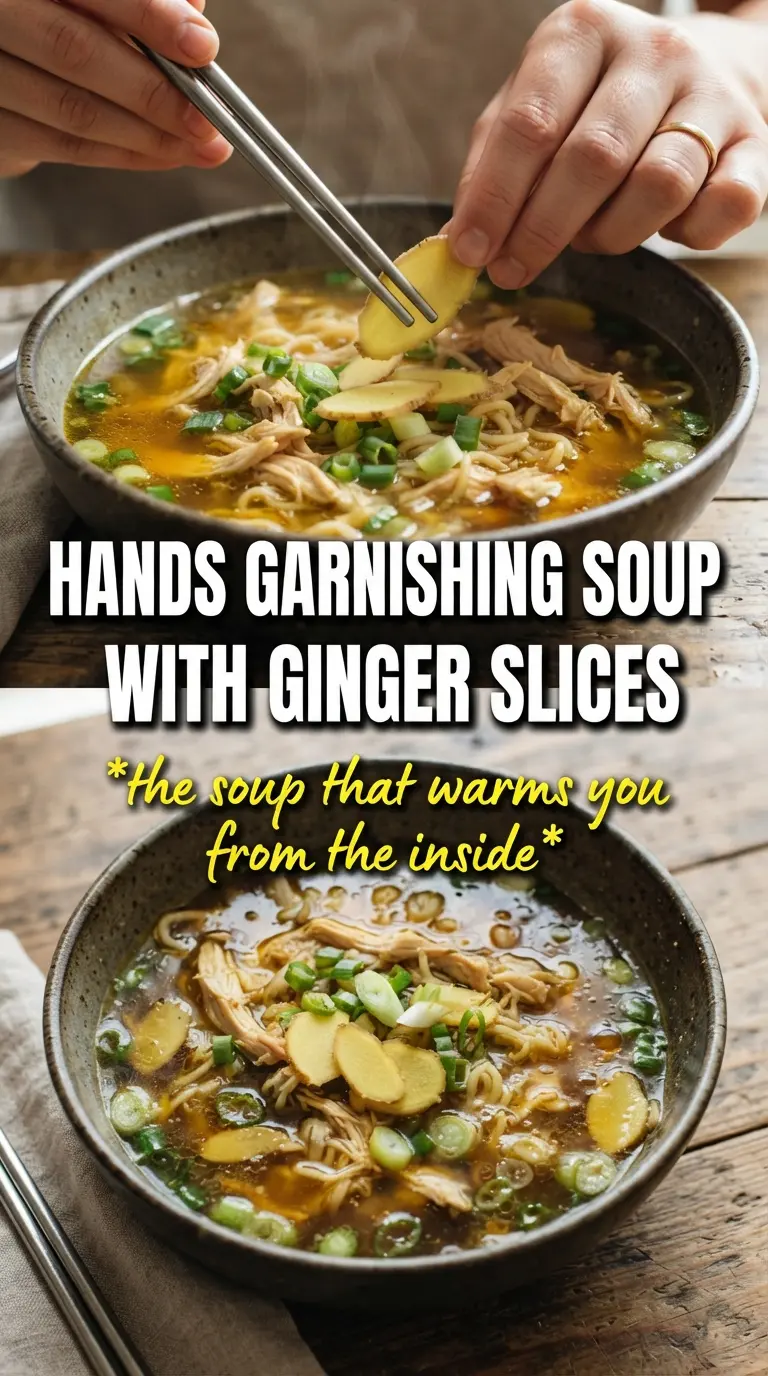
- Chicken breast or thighs — Thighs give you a little more richness and stay tender even if the soup simmers a bit longer. Breasts work well too, especially if you’re after a leaner bowl, but pull them as soon as they’re cooked through so they don’t turn stringy.
- Fresh ginger and garlic — These are the backbone of the soup’s flavor. Fresh matters here; dried ginger powder won’t give you the same bright, warming bite, and jarred garlic can taste flat in a broth this simple.
- Soy sauce — This seasons the broth from the inside out and gives it depth without making it taste overtly like soy sauce. If you need a gluten-free version, use tamari and keep the amount the same.
- Sesame oil — Add it at the end. It’s not a cooking oil in this soup; it’s a finishing flavor, and heating it hard can mute the nutty aroma that makes the bowl taste complete.
- Ramen noodles or egg noodles — Either works, but they behave differently. Ramen noodles soften faster, while egg noodles give you a slightly sturdier chew. Cook them in the broth only until tender, because they’ll keep softening as the soup sits.
The Short Simmer That Builds the Whole Bowl
Softening the Vegetables First
Start by heating the oil and cooking the onion, carrots, and celery until the onion looks translucent and the carrots begin to lose their raw edge. You’re not trying to brown them; you’re building sweetness and body. If you skip this step or rush it, the broth tastes flatter and the vegetables stay a little blunt in the finished soup.
Blooming the Garlic and Ginger
Add the garlic and ginger and stir for about 2 minutes, just until the pot smells sharp, warm, and deeply savory. The ginger should smell fresh, not grassy, and the garlic should stay pale. If either one browns, the soup can turn bitter, so keep the heat controlled and move on once the fragrance blooms.
Simmering the Chicken in the Broth
Pour in the broth, soy sauce, and chicken, then bring everything to a boil before lowering it to a steady simmer. The liquid should stay active with small bubbles, not a hard rolling boil, which can toughen the chicken. Cook until the chicken reaches done and shreds easily with a fork; if it resists, give it a few more minutes instead of forcing it.
Finishing With Noodles and Brightness
Pull the chicken out, shred it, and return it to the pot before adding the noodles. Cook the noodles just until tender, because they’ll keep absorbing broth after the heat goes off. Stir in the sesame oil and rice vinegar at the end so the soup finishes with aroma and a little lift instead of tasting heavy.
How to Adapt This for Different Kitchens and Different Bowls
Gluten-Free Without Losing the Savory Edge
Swap the soy sauce for tamari and use rice noodles or a certified gluten-free noodle. The broth will stay just as savory, and the texture stays light. Check the noodle package closely, because some gluten-free noodles break down faster than wheat noodles and can soften quickly in the hot broth.
Thighs for a Richer Soup, Breasts for a Leaner One
Use chicken thighs if you want a deeper, more forgiving bowl; they stay juicy and give the broth a little more body. Chicken breast keeps things lighter, but it needs closer timing so it doesn’t dry out. Either way, shred the chicken after cooking and return it to the pot only after it’s fully cooked.
Vegetarian Version With Real Depth
Use vegetable broth and add mushrooms or tofu for substance. You’ll lose the chicken’s richness, so a splash of extra soy sauce and a little more ginger helps the broth keep its backbone. The soup still works, but it tastes lighter and a bit more aromatic rather than meaty.
Storage and Reheating
- Refrigerator: 3 to 4 days. The noodles will absorb broth as it sits, so expect the soup to thicken a bit.
- Freezer: Freeze the broth and chicken without the noodles for the best texture. Noodles turn soft after thawing, so cook a fresh batch when you reheat.
- Reheating: Warm gently on the stove over medium-low heat until steaming. If the broth has reduced, add a splash of water or extra broth. Don’t boil it hard or the chicken can dry out and the noodles can go mushy.
Questions I Get Asked About This Recipe
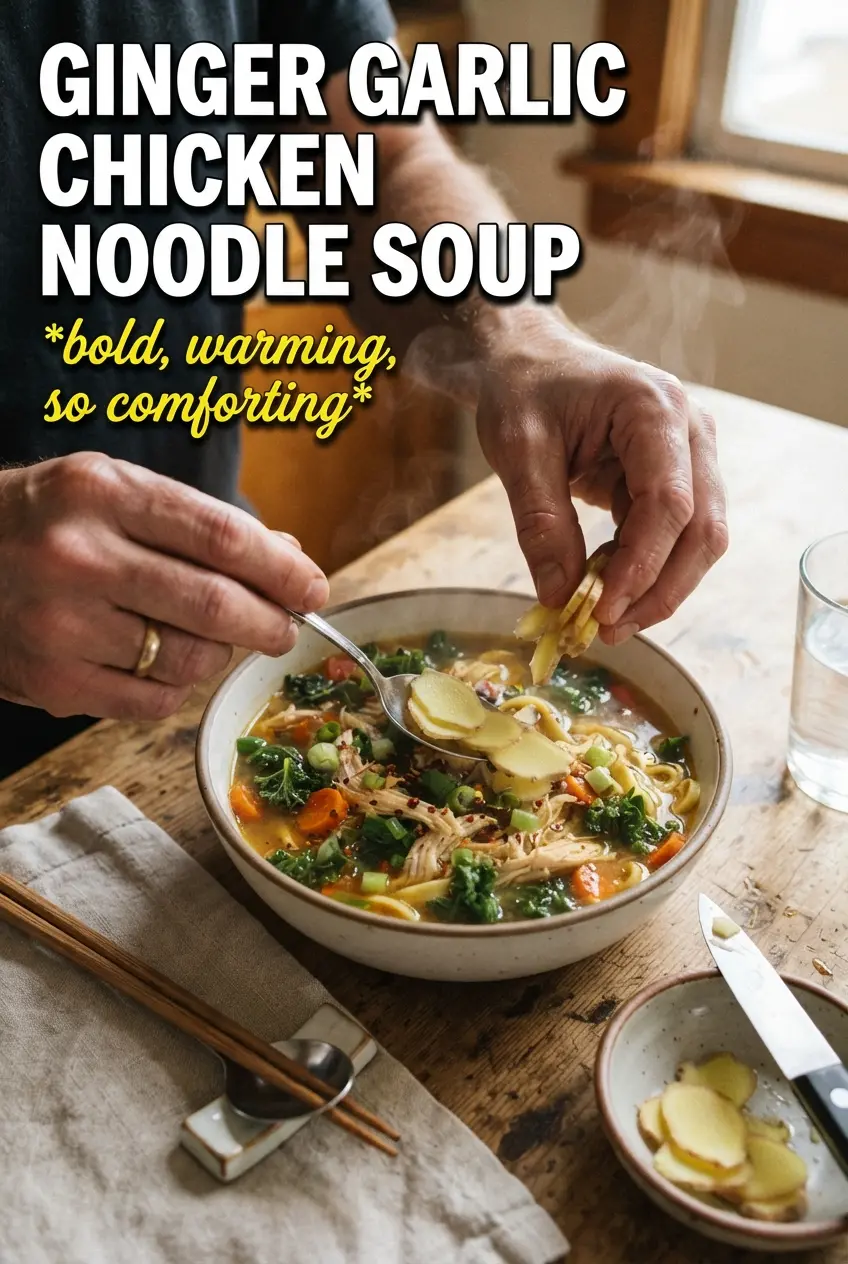
Ginger Garlic Chicken Noodle Soup
Ingredients
Equipment
Method
- Heat 1 tablespoon oil in a large pot over medium heat, then sauté the onion, carrots, and celery for 4 minutes until they begin to soften and look glossy.
- Add the garlic and ginger and cook for 2 minutes, stirring constantly, until very fragrant.
- Add the chicken broth, soy sauce, and chicken to the pot and bring to a boil.
- Reduce to a gentle simmer and cook for 20 minutes until the chicken is cooked through.
- Remove the chicken from the pot and shred it, then return the shredded chicken back into the broth.
- Add the ramen noodles or egg noodles and cook for 3-5 minutes until tender.
- Stir in the sesame oil and rice vinegar, then season with salt and pepper to taste.
- Top each bowl with green onions, fresh cilantro, and sesame seeds for a bright finish and visible garnish.