Lasagna soup gives you the same cozy, layered comfort as a baked pan of lasagna, but it lands in a bowl with a lot less work and a lot less waiting. The broth turns rich and tomatoey, the sausage adds depth, and the broken noodles pick up all that flavor while still keeping a little bite. The best part is the cheese on top: a spoonful of ricotta, mozzarella, and parmesan melts into the hot soup just enough to make every spoonful creamy without turning the whole pot heavy.
What makes this version work is the order. Browning the sausage first builds a savory base, and cooking the onion in the same pot pulls up all those browned bits instead of leaving flavor behind. The noodle timing matters too. If they go in too early, they swell and go soft before the soup is ready; if they go in too late, the broth never tastes like the noodles had time to season it. A jar of marinara does the heavy lifting here, but a good one still pays off because it carries the whole pot.
Below, I’m walking through the small details that keep the broth balanced and the noodles just tender. There’s also a quick note on how to keep the cheese dollop thick, plus a few easy swaps if you want to change the sausage or make it a little lighter.
The noodles stayed perfectly tender and the ricotta-mozzarella topping melted into the soup instead of disappearing. I was worried the broth would taste thin, but it had that slow-simmered lasagna flavor in half an hour.
Save this 30-minute lasagna soup for nights when you want lasagna flavor without the layering, baking, or long simmer.
The Trick to Keeping the Noodles Tender Instead of Mushy
Lasagna soup goes wrong when the noodles spend too long in the pot. Broken lasagna sheets cook faster than most pasta shapes, and they keep absorbing broth after the heat is off. That means the line between tender and overcooked is short. Pulling the soup as soon as the noodles are just soft keeps the texture closer to a proper lasagna bite instead of turning the pot thick and starchy.
The broth should look loose when the noodles go in. It will tighten as they cook. If it seems too thick halfway through, add a splash of broth or water and keep stirring. The pasta needs movement or it sticks to the bottom and clumps together, especially in the first few minutes.
What Each Ingredient Is Doing in This Dish

- Italian sausage — This is the main source of savory depth. Mild or hot both work; hot sausage gives you more background heat, while mild keeps the soup centered on tomato and cheese. If you use turkey sausage, add a little olive oil because lean sausage won’t leave as much fat behind for the onions.
- Marinara sauce — A good jarred marinara saves time and gives the soup its tomato base instantly. Pick one that tastes balanced on its own, since bland sauce stays bland in the pot. If your sauce is very thick, loosen it with a little extra broth so the noodles can cook evenly.
- Chicken broth — This keeps the soup from eating like plain pasta in tomato sauce. It also stretches the marinara into something brothier and lighter. Homemade stock works, but boxed broth is absolutely fine here because the sausage and cheese do plenty of the heavy lifting.
- Ricotta, mozzarella, and parmesan — This combo gives you the lasagna effect without needing a separate béchamel. Ricotta brings the creamy scoop, mozzarella gives melt, and parmesan adds salt and edge. Stir them together right before serving so the mixture stays thick enough to mound on top of the soup.
- Lasagna noodles — Broken noodles are what make this feel like lasagna soup instead of just tomato pasta. Break them into rough pieces, not tiny shards, so they hold their shape in the bowl. Oven-ready noodles are not the best swap here because they can turn gummy in broth.
Building the Pot in the Right Order
Browning the Sausage First
Start with the sausage in a hot pot and let it brown before anything else goes in. You want some dark edges and a little fond stuck to the bottom, because that is where the soup gets its deeper, cooked-all-day taste. If the pot looks dry, that is fine; sausage usually gives off enough fat on its own. Drain excess grease if the pot looks greasy, but leave the browned bits behind.
Softening the Onion in the Same Pan
Add the onion straight into the same pot and cook it until it turns translucent and loses its sharp smell. It will pick up the sausage flavor as it softens. Garlic goes in last and only needs about a minute. Any longer and it can burn, which gives the whole soup a bitter edge that even the marinara cannot hide.
Letting the Broth Come Together Before the Pasta
Pour in the marinara, broth, seasoning, and red pepper flakes, then bring everything to a boil before the noodles go in. This step matters because the broth needs to taste complete before the pasta starts absorbing it. If the liquid tastes flat here, salt is your answer, not more noodles or more cheese. Once the soup is boiling, add the broken lasagna pieces and stir right away so they do not sink together in one dense clump.
Finishing at the Exact Right Bite
Cook the noodles until they are just tender, usually 10 to 12 minutes. Stir often, especially around the corners of the pot, where pasta likes to settle and stick. The soup should still look brothy when you turn off the heat. Ladle it into bowls right away and top each one with the cheese dollop and basil so the cheese softens at the surface instead of dissolving into the pot.
Three Ways to Make It Fit What You Have
Use turkey sausage for a lighter bowl
Turkey sausage works well, but it brings less fat and less natural browning than pork sausage. Add a tablespoon of olive oil at the start if the pot looks dry, and let the sausage take on a little color before adding the onion. The flavor stays hearty, just a touch leaner.
Make it dairy-free without losing the creamy finish
Skip the ricotta-mozzarella-parmesan dollop and top each bowl with a spoonful of dairy-free ricotta or a cashew cream instead. The soup itself stays rich from the sausage and tomato base, so the topping mainly gives you contrast and creaminess. You lose the classic lasagna-style melt, but you keep the comfort.
Add vegetables without watering it down
Spinach, chopped zucchini, or finely diced mushrooms all fit here. Add mushrooms with the onion so they can cook off their moisture, and stir spinach in during the last minute so it wilts instead of disappearing. Bigger vegetable chunks need a little extra simmer time, but keep the noodles for the end so they do not overcook.
Swap in gluten-free pasta carefully
Gluten-free lasagna noodles can work, but they usually need a little less time and a little more attention. Start checking early and stop cooking when they still have a slight bite, because they soften fast once they hit the hot broth. If they absorb more liquid than expected, loosen the soup with a splash of broth before serving.
Storage and Reheating
- Refrigerator: 3 to 4 days. The noodles will keep soaking up broth, so the soup gets thicker by day two.
- Freezer: Freeze the broth and sausage base without the noodles for best results. Cook fresh noodles when you reheat, or the pasta turns soft and bloated after thawing.
- Reheating: Warm gently on the stove over medium-low heat with a splash of broth or water. Don’t boil it hard, or the noodles can break down and the cheese topping will lose its texture.
Answers to the Questions Worth Asking
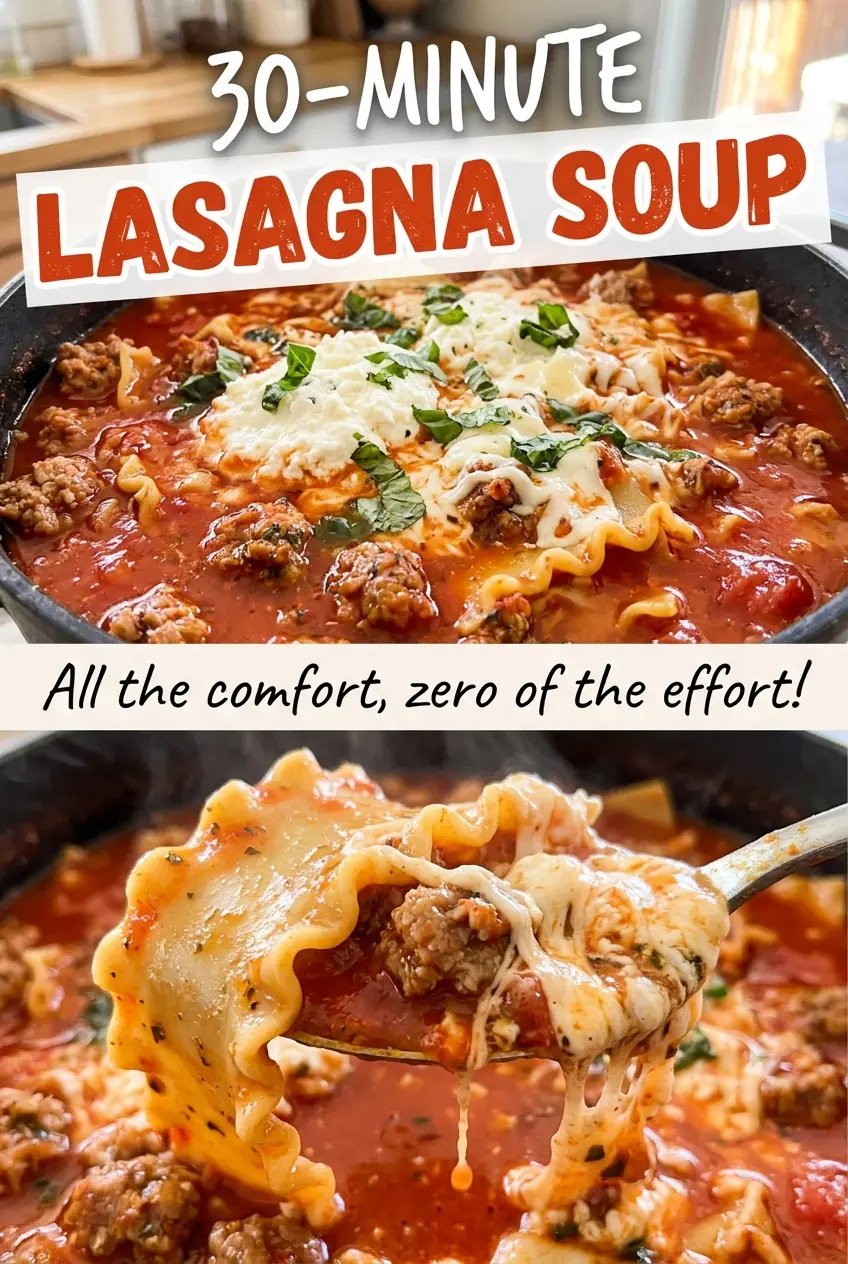
30-Minute Lasagna Soup
Ingredients
Equipment
Method
- Brown the Italian sausage in a large pot over high heat, breaking it up as needed, then drain off excess fat.
- Add the diced onion to the same pot and cook for 3 minutes, stirring occasionally.
- Add the minced garlic and cook for 1 minute, just until fragrant.
- Pour in the marinara sauce and chicken broth, then add Italian seasoning and red pepper flakes.
- Bring the mixture to a boil over high heat.
- Add the broken lasagna noodles and return to a boil over high heat.
- Boil for 10-12 minutes, stirring occasionally, until the noodles are just tender.
- Season with salt and pepper to taste.
- Mix the ricotta, shredded mozzarella, and parmesan quickly until combined.
- Ladle the soup into bowls, top each with a large spoonful of the cheese mixture, and finish with fresh basil.