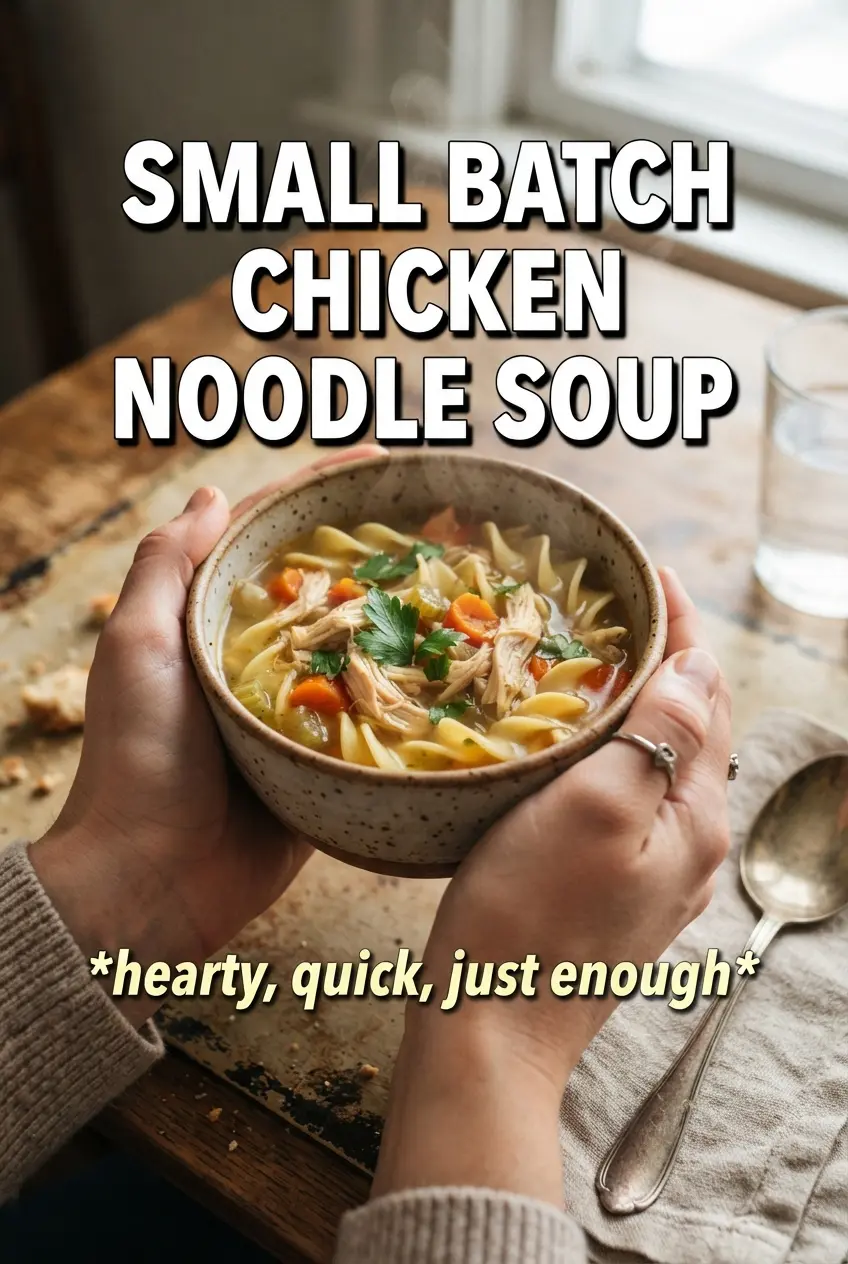
Golden broth, tender shreds of chicken, and just enough noodles to make the bowl feel complete without turning the pot into starch soup. This small batch chicken noodle soup lands in that sweet spot where the broth stays clear, the vegetables still have a little bite, and the lemon at the end wakes everything up. It tastes like the version you hope for when you’re feeling under the weather, but it’s just as good on an ordinary night when you want something warm and steady.
The trick is keeping the pot modest from the start. Four cups of broth is enough for two generous bowls, and the single chicken breast cooks gently in the simmering liquid so it stays moist instead of stringy. The noodles go in near the end, after the chicken comes back shredded, which keeps them from soaking up too much broth before you sit down to eat. A small squeeze of lemon at the finish matters more than it sounds like it should; it sharpens the broth and keeps the soup from tasting flat.
Below, I’ll walk through the few points that matter most: how to keep the vegetables from going soft too soon, when to pull the chicken so it shreds cleanly, and how to adjust the broth if you want a little more body in the bowl.
The broth stayed clear, the chicken shredded beautifully, and the noodles were just right after 6 minutes. I added a little extra lemon at the end and it tasted like something from a good diner, not a can.
Save this small batch chicken noodle soup for nights when you want a clean, lemony broth and a bowl that’s sized just right for two.
The Small-Batch Mistake That Turns Chicken Noodle Soup Into Mush
Chicken noodle soup seems simple until the pot is too big for the amount of liquid, the noodles soak up half the broth, and the vegetables turn soft before the chicken is even done. This version avoids that by keeping the ratios tight. The chicken simmers whole in the broth so it stays juicy, and the noodles go in only after the meat comes back shredded. That keeps the broth clean and the texture balanced from the first spoonful to the last.
The other thing that matters here is the order of the aromatics. Onion, carrot, and celery need a short head start in the oil so they soften and sweeten before the broth goes in. If you dump everything in at once, the soup still tastes fine, but it loses that gentle built-in depth that makes homemade chicken noodle soup taste rounded instead of thin.
- Chicken breast — A single 8-ounce breast is enough here, and cooking it whole in the broth keeps it from drying out. If you only have chicken thighs, use one boneless thigh for a richer, slightly fattier broth.
- Egg noodles — These give the soup the right soft chew and help it feel like a full meal. Wide or extra-wide noodles work, but dried pasta shapes will need a little more watching because they can overcook fast in a small batch.
- Lemon juice — This is the ingredient that keeps the broth lively. Don’t skip it unless you want a flatter, heavier soup; even a small squeeze right at the end changes how the whole bowl tastes.
- Chicken broth — Use a broth you’d actually drink on its own. A low-quality broth makes this soup taste watery, while a decent boxed broth gives you a head start before the chicken even goes in.
What Each Ingredient Is Actually Doing in This Recipe

- Primary ingredient (the star) — Quality matters most. Choose the best you can find.
- Cooking medium (oil, butter, or broth) — This carries flavors and prevents dryness.
- Seasonings (salt, pepper, spices, herbs) — Layer flavors so nothing overpowers. Build depth gradually.
- Aromatics (garlic, onion, herbs) — Cook with fat to bloom flavors. Become the foundation.
- Supporting ingredients — Complement the main ingredient without overpowering it.
- Sauce or liquid (if applicable) — Brings flavors together. Balance richness with acid.
- Acid (lemon, vinegar, wine, or other) — Brightens and prevents flat-tasting results.
- Final finish (garnish, glaze, or sauce) — Prevents one-dimensional taste and adds visual appeal.
Building the Broth Without Overcooking the Noodles
Softening the Vegetables First
Warm the olive oil over medium heat, then add the onion, carrots, and celery. Four minutes is enough to take the raw edge off and start drawing out sweetness without browning them. If the vegetables start sticking, the heat is too high; you want a gentle sizzle, not color. Once the onion looks translucent and the carrots are a little glossy, add the garlic and cook just long enough for it to smell fragrant.
Cooking the Chicken Gently in the Broth
Pour in the broth, add the thyme and parsley, then nestle the chicken breast into the pot whole. Keep the soup at a steady simmer, not a hard boil, so the chicken cooks through without turning tough at the edges. After about 18 to 20 minutes, the center should be cooked through and the juices should run clear. Pull it out right away; if you leave it in while the noodles cook, the chicken can start to dry out.
Finishing With Noodles and Lemon
Shred the chicken into bite-size pieces and return it to the pot, then add the noodles. Cook just until tender, usually 6 to 7 minutes, because they keep softening in the hot broth even after the heat is off. Stir in the lemon juice at the very end and taste before salting; broth brands vary a lot, and you may need less salt than you think. The soup is ready when the noodles are tender, the broth tastes bright, and the vegetables still hold their shape.
How to Adapt This for the Pot You Have
Make it heartier with extra chicken
Use two smaller chicken breasts or one large breast if you want the soup to eat more like a full dinner. You’ll need a splash more broth if the pot starts looking crowded, but the method stays the same. More chicken gives you a meatier bowl and slightly less broth in each serving.
Gluten-free version
Swap the egg noodles for a gluten-free noodle that holds up in broth, and cook it just to tender. Some gluten-free pastas absorb more liquid than others, so keep an eye on the broth level and add a little extra hot stock if needed. The texture changes a bit, but the soup still tastes clean and comforting.
Dairy-free and naturally light
This soup is already dairy-free as written, and it doesn’t need cream to feel complete. If you want a little more richness without dairy, simmer the chicken with a pinch more thyme and let the onions cook until fully softened before the broth goes in. That gives the broth more body without changing the ingredients.
Storage and Reheating
- Refrigerator: Store in an airtight container for up to 4 days. The noodles will keep drinking broth, so expect the soup to thicken a bit.
- Freezer: Freeze the soup without the noodles for the best texture. Noodles turn soft and grainy after thawing, so add fresh cooked noodles when you reheat.
- Reheating: Warm it gently on the stove over medium-low heat until hot, adding a splash of broth or water if it looks too thick. A hard boil will overcook the noodles and make the chicken stringy.
Answers to the Questions Worth Asking
Small Batch Chicken Noodle Soup
Ingredients
Equipment
Method
- Heat the olive oil in a medium saucepan over medium heat, then sauté the onion, carrots, and celery for 4 minutes until slightly softened and fragrant.
- Add the garlic and cook for 1 minute, stirring constantly to avoid browning.
- Pour in the chicken broth and add the dried thyme and dried parsley, stirring to combine.
- Add the chicken breast whole and simmer for 18–20 minutes until cooked through and no longer pink in the center.
- Remove the chicken from the pot and shred it, then return the shredded chicken to the soup.
- Add the egg noodles and cook for 6–7 minutes until tender, keeping the soup at a gentle simmer.
- Squeeze in the lemon juice, then season with salt and pepper to taste.
- Garnish with fresh parsley and serve hot.