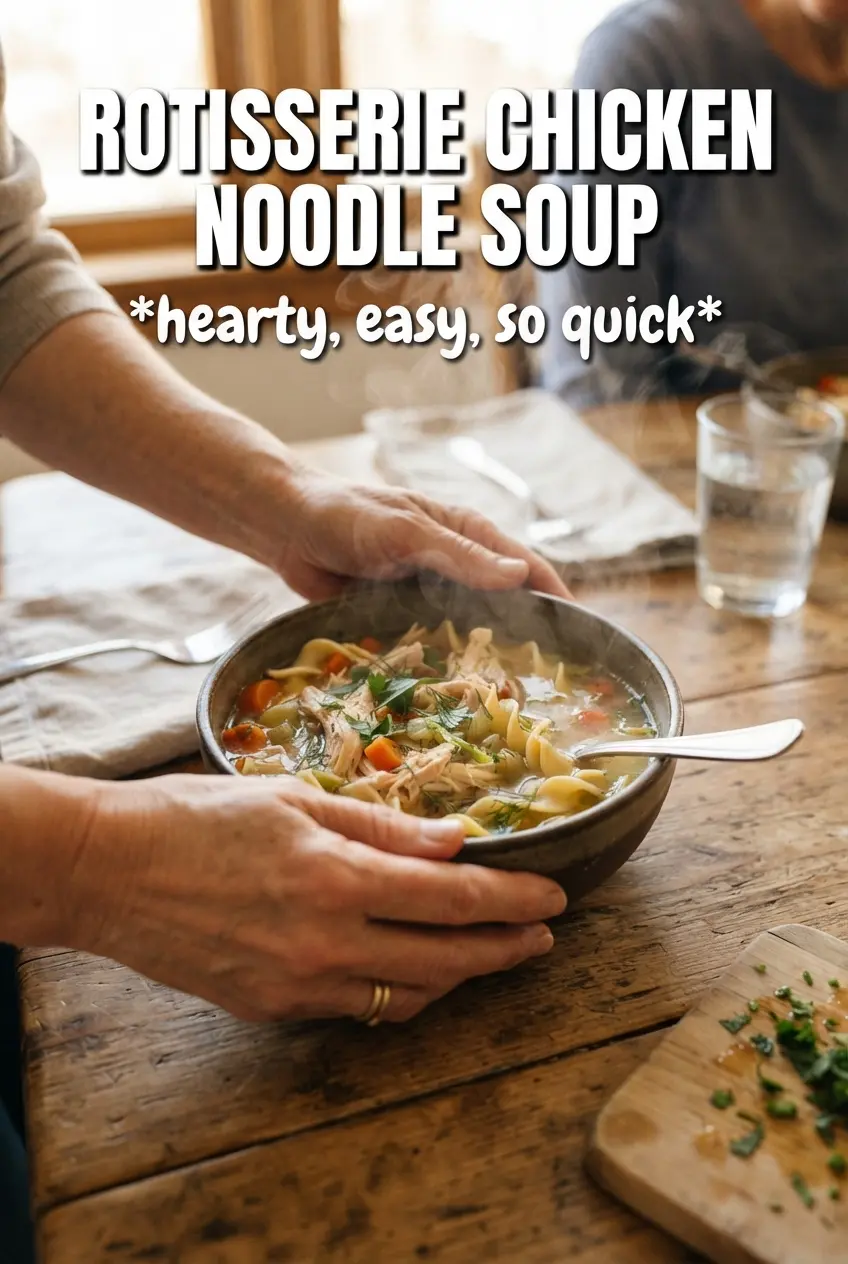
Rotisserie chicken noodle soup tastes like you cooked all afternoon, but it lands on the table in under 40 minutes. The broth picks up a deeper, more savory backbone from the chicken, while the shredded meat stays tender instead of drying out like it can in a long simmer. Egg noodles and soft vegetables round it out into the kind of bowl that works when you want something warm, filling, and straightforward.
The shortcut here is smart, not lazy. A good rotisserie chicken already gives you seasoned meat, and because it’s added near the end, it stays juicy. I also like building the base with onion, carrot, celery, and garlic before the broth goes in, because those few minutes in the pot give the soup a more homemade taste than just dumping everything together.
Below, I’ll walk through the little things that matter most: when to add the noodles so they don’t go mushy, how to season the broth so it tastes rounded instead of flat, and what to change if you want to stretch one chicken into an even bigger pot.
The broth tasted like it had simmered all day, and the egg noodles stayed perfectly tender instead of turning mushy. My kids went back for seconds, which never happens with soup.
Save this rotisserie chicken noodle soup for the nights when you want a fast, brothy bowl with tender chicken and noodles that still have a little bite.
The Broth Needs a Head Start Before the Noodles Go In
The biggest mistake with noodle soup is tossing everything into the pot at once. Egg noodles release starch fast, and if they sit in the broth too long they go soft, swollen, and a little gummy. That’s why the vegetables and broth need time to come together first, before the noodles are added near the end.
Rotisserie chicken works best here because it’s already cooked. If you let it boil hard for too long, the meat dries out and the broth can turn cloudy in a heavy way that tastes flat instead of clean and savory. Gentle simmering keeps the texture light and the soup clear enough to still look like soup, not stew.
- Rotisserie chicken — Pull the meat into bite-size shreds and skip the skin. The chicken skin adds greasiness here, not flavor you’ll notice after the soup simmers.
- Chicken broth — This carries the whole bowl, so use a broth you’d drink on its own. If yours tastes thin, a pinch more salt at the end does more than extra herbs.
- Egg noodles — These cook quickly and give the soup its classic comfort-food texture. If you swap in a different pasta, watch the pot closely because many shapes need a different timing.
- Carrots, celery, and onion — This is the base that makes the soup taste cooked instead of assembled. Dice the onion small so it melts into the broth and doesn’t stay sharp.
- Thyme and parsley — Thyme gives the broth that familiar savory depth, while parsley keeps it from tasting dull. Dried herbs work fine here because the soup doesn’t cook long enough to need fresh herbs in the pot.
What Each Ingredient Is Actually Doing in This Recipe

- Primary ingredient (the star) — Quality matters most. Choose the best you can find.
- Cooking medium (oil, butter, or broth) — This carries flavors and prevents dryness.
- Seasonings (salt, pepper, spices, herbs) — Layer flavors so nothing overpowers. Build depth gradually.
- Aromatics (garlic, onion, herbs) — Cook with fat to bloom flavors. Become the foundation.
- Supporting ingredients — Complement the main ingredient without overpowering it.
- Sauce or liquid (if applicable) — Brings flavors together. Balance richness with acid.
- Acid (lemon, vinegar, wine, or other) — Brightens and prevents flat-tasting results.
- Final finish (garnish, glaze, or sauce) — Prevents one-dimensional taste and adds visual appeal.
Building the Soup in the Right Order
Softening the Vegetables
Heat the oil or butter in a large pot, then add the onion, carrots, and celery. Cook them until the onion turns translucent and the carrots just start to soften at the edges. This step builds the soup’s base flavor, so don’t rush it by cranking the heat high; high heat browns the outside before the vegetables have a chance to sweeten.
Adding the Broth and Chicken
Stir in the garlic for just a minute, then pour in the broth with the thyme, parsley, and garlic powder. Once it comes up to a boil, add the shredded chicken and drop the heat to a steady simmer. If the pot keeps boiling hard, the chicken can turn stringy and the broth loses that clean, homemade finish.
Cooking the Noodles Last
Add the egg noodles after the chicken has had a few minutes to warm through. Cook just until the noodles are tender, which usually takes 6 to 8 minutes depending on the brand. Pull the pot from the heat as soon as the noodles are done, because they keep softening in the hot broth even after the burner is off.
Seasoning Before Serving
Taste the soup at the end and season generously with salt and pepper. This is the point where the broth wakes up, especially if your chicken broth was mild to begin with. Finish with fresh parsley for a little brightness and a cleaner-looking bowl.
How to Adjust This Soup for Different Kitchens and Schedules
Make it gluten-free without losing the comfort
Swap the egg noodles for a gluten-free pasta that cooks in roughly the same time, but keep an eye on it because some versions soften fast in hot broth. Rice noodles also work if you want a lighter texture, though they don’t hold up as well for leftovers.
Use what you have for the vegetables
If you’re short on celery or carrots, add more onion and a handful of frozen peas near the end. The soup will still taste balanced, but the sweetness and texture shift a little, so it won’t have quite the same classic deli-style feel.
Stretch one chicken into a bigger pot
Add an extra cup or two of broth and a few more noodles if you need to feed more people, but season more assertively at the end. A bigger pot of soup always tastes flatter at first because the broth is diluted, and salt is what brings the chicken flavor back forward.
Storage and Reheating
- Refrigerator: Store in an airtight container for up to 4 days. The noodles will keep absorbing broth, so the soup gets thicker by day two.
- Freezer: Freeze without the noodles if you can. Egg noodles turn soft after freezing, so the best version is broth, vegetables, and chicken frozen separately, then finished with fresh noodles later.
- Reheating: Warm it gently on the stove over medium-low heat until steamy, not boiling. If it got thick in the fridge, splash in a little broth or water before reheating so the noodles don’t overcook.
Questions I Get Asked About This Recipe
Rotisserie Chicken Noodle Soup
Ingredients
Equipment
Method
- Heat the olive oil or butter in a large pot over medium heat, then sauté the onion, carrots, and celery for 5 minutes until slightly softened and glossy.
- Add the minced garlic and cook for 1 minute, stirring constantly until fragrant and light golden.
- Add the chicken broth, dried thyme, dried parsley, and garlic powder, then bring the mixture to a boil.
- Stir in the shredded rotisserie chicken and keep the soup at a gentle boil for a moment to heat the chicken through.
- Simmer for 10 minutes so the flavors meld.
- Add the egg noodles and cook for 6-8 minutes, stirring occasionally, until tender but not mushy.
- Season generously with salt and pepper to taste, adjusting to your preference for saltiness and pepper heat.
- Garnish with fresh parsley and serve hot.