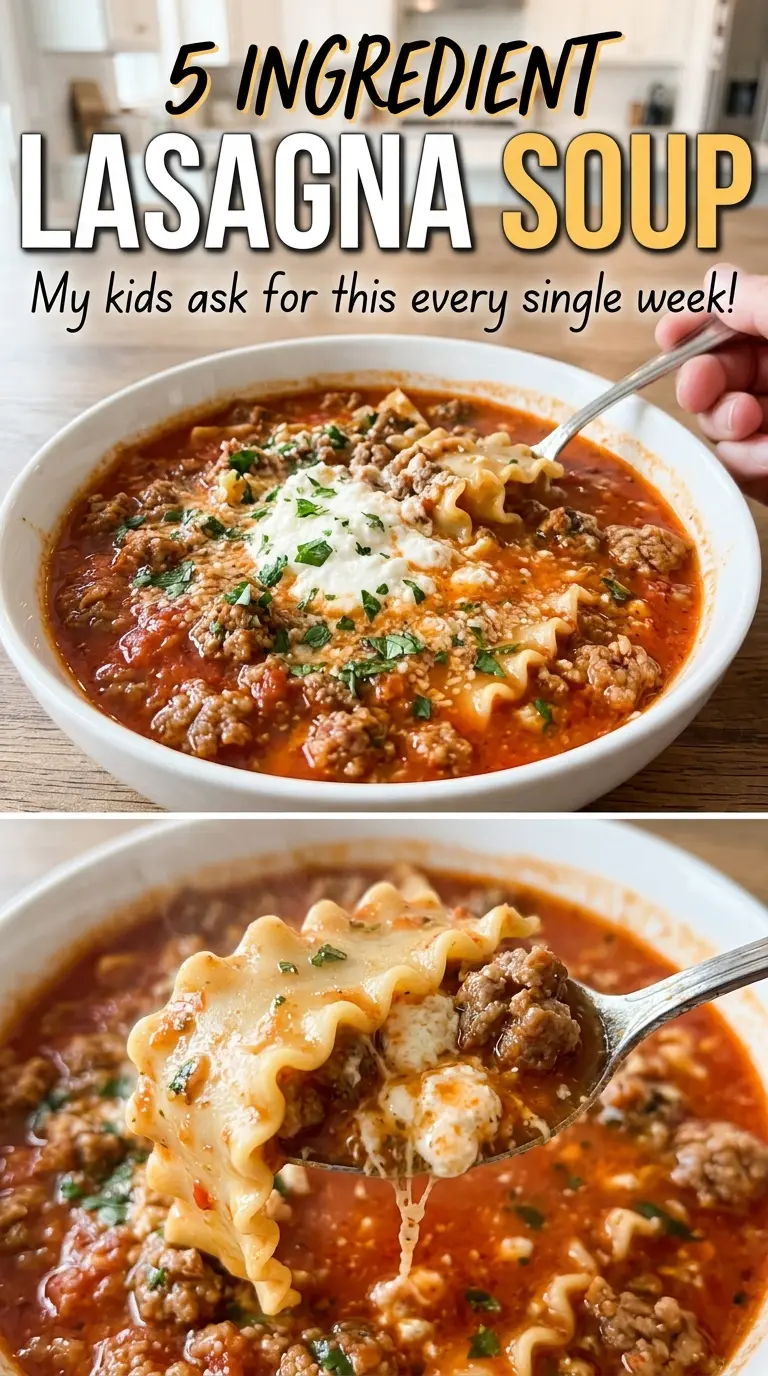
Lasagna soup delivers the same cozy, layered comfort as the baked version, but it gets there in one pot and without the usual fuss. The broth turns tomato-rich and savory, the noodles soften just enough to feel substantial, and the ricotta on top melts into creamy pockets that make every spoonful taste finished. It’s the kind of dinner that feels a lot bigger than the ingredient list.
This version works because it leans on a few smart shortcuts instead of trying to mimic every layer of lasagna. Italian sausage seasons the whole pot from the start, jarred marinara gives you body and garlic without extra chopping, and chicken broth keeps the soup loose enough to eat like soup instead of sauce. Broken lasagna noodles give you the right texture without needing a second pan or any careful stacking.
Below, I’ll show you how to keep the noodles from going soft too fast, how to adjust the thickness to your liking, and the small finishing move that makes a bowl taste like you spent much longer on it.
The noodles stayed tender without turning mushy, and the ricotta on top made it taste like lasagna without all the layering. I added a little mozzarella at the end and the broth was thick and rich, not watery at all.
This one-pot lasagna soup is the kind of dinner that disappears fast, with rich sausage broth and ricotta on top.
The Trick to Keeping Lasagna Soup Brothy, Not Muddy
The biggest mistake with lasagna soup is cooking it like pasta night in a pot. If the noodles simmer too long, they release starch, swell past the point of tenderness, and turn the broth heavy and gluey. The fix is simple: bring the soup to a boil, add the noodles, and cook just until they’re tender at the center with a little bite left in the thickest pieces.
That timing matters even more if you plan to hold the soup warm before serving. The noodles keep absorbing broth off the heat, so pulling the pot a minute early gives you a better texture at the table. If you want a thicker soup, add less broth from the start. If you want it looser, add a splash more hot broth at the end instead of overcooking the noodles.
What Each Ingredient Is Actually Doing in This Bowl
- Italian sausage — This is the backbone of the soup. It seasons the broth as it browns, which means you get depth fast without needing onions, garlic, or a long simmer. Hot or mild both work; use hot if you want more lift in the finished bowl.
- Jarred marinara sauce — This gives you tomato flavor, salt, garlic, and herbs in one move. A good jar matters here because the sauce is carrying much of the flavor load, but you don’t need a pricey one. Look for a sauce that tastes balanced, not sweet.
- Chicken broth — Broth turns the sauce into soup instead of pasta sauce. Use low-sodium if possible so you can control the final seasoning, especially because the sausage and marinara already bring salt. Vegetable broth works in a pinch, but chicken broth gives a rounder, meatier base.
- Lasagna noodles — Broken noodles give you the lasagna experience without any layering or baking. Break them into irregular pieces so each spoonful has a mix of lengths and shapes. Regular lasagna noodles work best; no-boil noodles can cook unevenly in soup.
- Ricotta cheese — The ricotta is the finishing move. It softens into creamy swirls and gives the bowl that lasagna feel. If yours is watery, stir it before serving so it dollops cleanly. Whole-milk ricotta tastes richer, but part-skim works fine.
How to Build the Pot in the Right Order
Browning the Sausage
Cook the sausage over medium-high heat until it loses its pink color and develops browned bits on the bottom of the pot. Those browned bits matter because they season the broth later. If the sausage is steaming instead of browning, the heat is too low or the pot is overcrowded. Drain off excess fat once it’s cooked so the soup doesn’t feel greasy.
Turning the Sauce Into Soup
Stir in the marinara and broth and bring the pot to a boil. This is where the soup starts to come together, and it should look loose and rustic, not thick like spaghetti sauce. Scrape the bottom of the pot as you stir so none of the browned sausage sticks and burns. If the mixture looks too dense at this point, add a splash more broth before the noodles go in.
Cooking the Noodles to the Sweet Spot
Add the broken noodles and cook until they’re tender, usually 10 to 12 minutes. Stir them occasionally so they don’t clump together or glue themselves to the bottom. The best cue is texture: the noodles should be fully cooked but still hold their shape when you lift a spoon through the pot. Pull it from the heat before they turn overly soft, because they’ll keep cooking in the hot broth.
Finishing With Ricotta
Ladle the soup into bowls first, then top each serving with a generous spoonful of ricotta. The ricotta stays creamier that way and gives each person their own little swirl instead of disappearing into the whole pot. Add mozzarella or basil if you want, but don’t bury the bowl under toppings. The soup should still taste like soup, just with a richer finish.
How to Adapt This for Different Eaters and Different Nights
Make It Lighter Without Losing the Body
Use turkey Italian sausage instead of pork sausage. You’ll get a leaner soup with a slightly less rich broth, but the marinara and ricotta still carry the flavor. If you go this route, don’t skip the browning step, because the extra caramelization helps replace some of the richness you lose.
Gluten-Free Lasagna Soup
Swap in a sturdy gluten-free lasagna noodle and cook it a little more carefully, since some gluten-free pastas soften faster and can break apart if they’re stirred too hard. Check the package for timing, then start tasting early. The soup itself is naturally gluten-free as long as your marinara and broth are certified GF.
Dairy-Free Finish
Skip the ricotta and finish the bowls with a spoonful of dairy-free cashew cream or a drizzle of olive oil. You’ll lose the classic lasagna-style creaminess, but the soup will still taste full and savory. Add basil at the end for freshness so the bowls still feel finished.
Storage and Reheating
- Refrigerator: Store for up to 4 days. The noodles will keep soaking up broth, so expect a thicker soup the next day.
- Freezer: It freezes well if you freeze the soup without the ricotta and, ideally, with slightly undercooked noodles. If you know you’ll freeze it, pull it off the heat a minute early.
- Reheating: Warm gently on the stove over medium-low heat with a splash of broth to loosen it. Don’t boil it hard, or the noodles can turn soft and the sausage can get grainy.
Questions I Get Asked About This Recipe

5 Ingredient Lasagna Soup
Ingredients
Equipment
Method
- Brown Italian sausage in a large pot over medium-high heat, breaking it up as it cooks until browned. Drain the fat if needed, leaving a small amount for flavor.
- Pour in marinara sauce and chicken broth, then stir to combine until the sauce loosens into the broth. Bring to a boil over high heat.
- Add broken lasagna noodles to the boiling soup and cook for 10-12 minutes, stirring occasionally, until the noodles are tender. Keep the liquid at a steady boil so the noodles soften evenly.
- Season with salt and pepper if needed, tasting once the noodles are tender. Ladle into bowls and top each serving with a generous spoonful of ricotta.
- Optionally top with shredded mozzarella and fresh basil right before serving so the cheese starts to melt. Sprinkle parmesan over the top if desired.