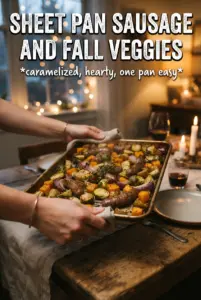
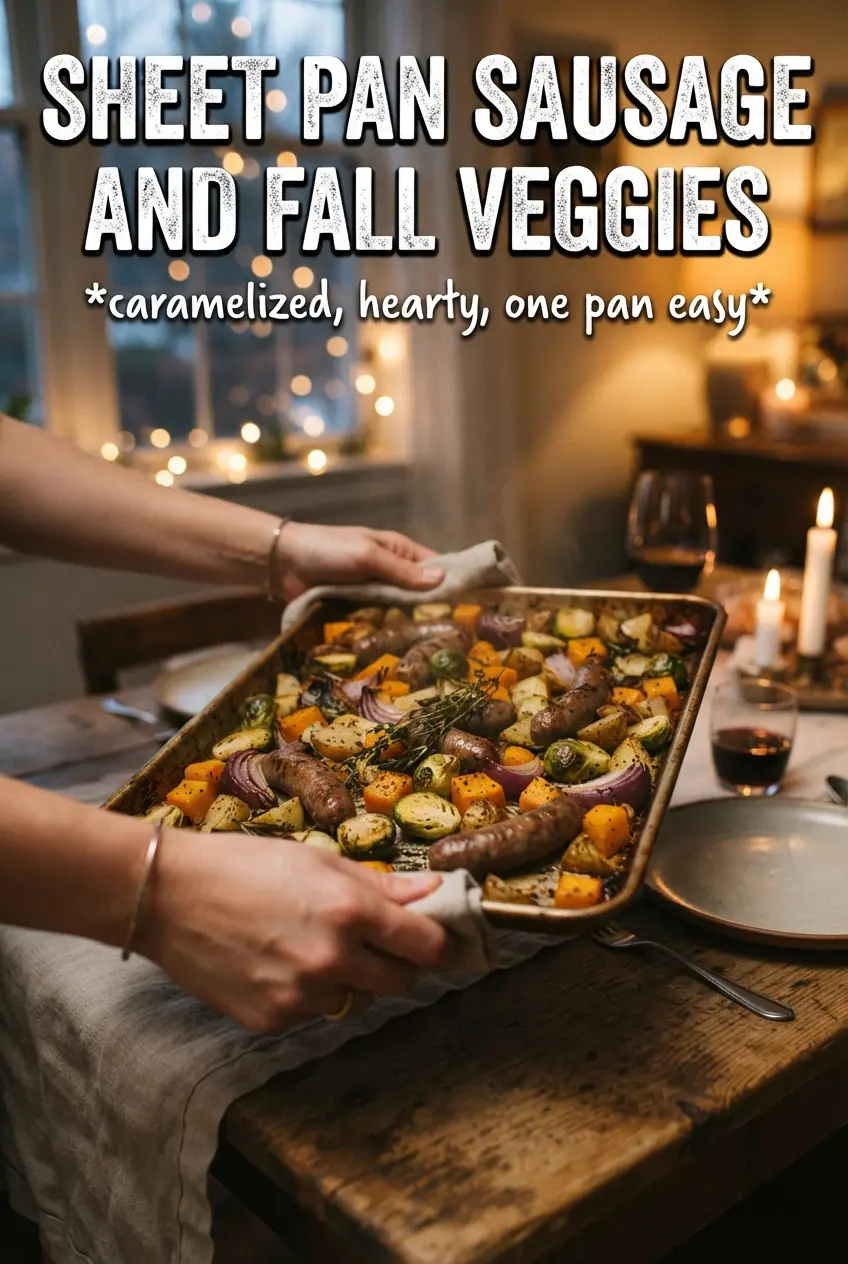
Caramelized sausage, tender-roasted squash, and Brussels sprouts with browned edges land on the pan at the same time, which is the whole trick here. The apple softens just enough to turn sweet and glossy without disappearing, and the balsamic-maple glaze ties everything together with a savory-sweet finish that tastes like it took far more effort than it did.
What makes this sheet pan dinner work is the way the ingredients are cut to roast at roughly the same pace. The squash goes into small cubes so it doesn’t stay hard in the center, the Brussels sprouts are halved so the cut sides can brown, and the sausage gets sliced into rounds so every piece gets plenty of surface area for caramelization. A hot oven does the heavy lifting, but the glaze matters too — it goes on before roasting so it can reduce into a sticky coating instead of sitting on top like salad dressing.
Below you’ll find the small details that keep this dinner from turning soggy, plus a few smart swaps if you want to change up the vegetables or adapt it for what you already have on hand.
The glaze got sticky and the veggies browned instead of steaming, which never happens for me on a sheet pan. I used sweet Italian sausage and the apple and rosemary were perfect together.
Save this sheet pan sausage and fall veggies dinner for nights when you want one pan, crisp edges, and a sweet-savory glaze without a lot of cleanup.
The Key to Roasting Everything on One Pan Without Softening the Veggies
The mistake that ruins a lot of sheet pan dinners is crowding the pan and expecting the oven to fix it. When the vegetables sit too close together, they steam in their own moisture instead of browning, and you end up with limp squash and pale Brussels sprouts. Give everything a real single layer and use a large rimmed pan so the hot air can move around each piece.
The second trap is cutting ingredients at wildly different sizes. The sausage rounds, squash cubes, and pepper chunks should all be in the same general range so they finish together. If your squash pieces are big, they’ll still be firm when the sausage is done. If the Brussels sprouts are tiny, they’ll scorch before the center gets tender.
That quick broil at the end is worth it here. It doesn’t cook the dinner through; it just deepens the browned edges and gives the glaze a little extra stickiness right before serving.
What Each Ingredient Is Actually Doing in This Dish
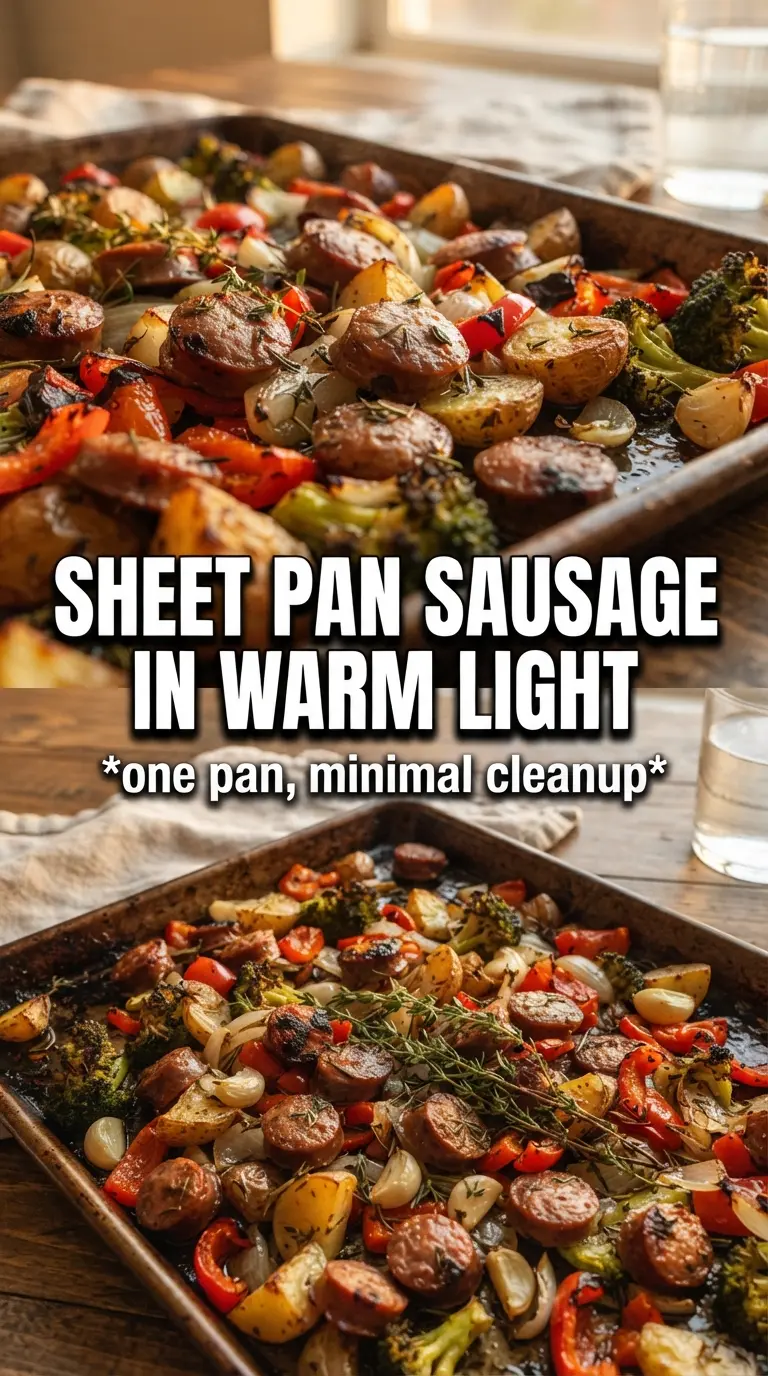
- Italian sausage links — These bring the built-in seasoning and enough fat to help the vegetables brown. Slice them before roasting so the cut edges can caramelize. Mild or hot both work, but if you use fully cooked sausage, cut the roast time back a few minutes and watch for browning instead of assuming it needs the full time.
- Butternut squash — This is the vegetable that needs the most time, so keep the cubes small and even. Bigger pieces stay hard in the center while everything else overcooks. If you want a swap, sweet potato behaves almost the same way, just with a slightly firmer bite.
- Brussels sprouts — Halving them exposes the cut side to the pan, which is how you get those deep brown edges. Leave them whole and they tend to steam. Trim off any loose outer leaves, since they can burn before the sprouts are tender.
- Apple — The apple adds sweetness and a little juicy contrast against the savory sausage. Use a firm variety like Honeycrisp, Fuji, or Pink Lady so it softens without turning mushy. A mealy apple will break down too fast.
- Balsamic, maple syrup, and Dijon — This is the glaze that keeps the whole pan from tasting flat. The mustard sharpens the sweetness, the maple helps it brown, and the balsamic adds acidity so the final dish tastes balanced instead of sugary.
Roasting, Glazing, and Finishing the Pan at the Right Moment
Whisk the glaze first
Mix the olive oil, balsamic vinegar, maple syrup, Dijon, garlic, rosemary, Italian seasoning, salt, and pepper before anything hits the pan. That way the glaze coats evenly instead of clumping in one spot. It should look loose and glossy, not thick like a marinade paste.
Spread everything in a single layer
Lay the sausage and vegetables out on the parchment-lined pan with a little space between pieces. If the pan looks packed, split it between two pans rather than forcing it onto one. Overcrowding is the fastest way to lose browning and end up with soft vegetables.
Roast until the edges darken
Put the pan in a 425°F oven and stir once halfway through so the bottom sides get a chance to color. You’re looking for browned sausage, tender squash, and Brussels sprouts with crisped edges and a little char where they touched the pan. If the vegetables are tender but pale, they need more time; pale and tender isn’t the same as roasted.
Broil for the last bit of color
Turn on the broiler for 2 to 3 minutes at the end and watch it closely. The glaze will go from shiny to sticky fast, and the edges can cross from caramelized to burnt in less than a minute. Pull the pan as soon as the vegetables look deeply golden and a few spots are just starting to char.
Three Ways to Make This Sheet Pan Dinner Fit What You Have
Dairy-Free and Gluten-Free Without Changing the Method
This recipe already fits both of those needs as written, as long as your sausage and Dijon are labeled gluten-free. The flavor and texture stay the same, so this is one of those rare dinners where the adjustment is mostly about checking the package rather than changing the cooking.
Use Chicken or Turkey Sausage for a Lighter Pan
Chicken or turkey sausage works well here, but it browns a little less aggressively than pork sausage. The pan will taste a touch leaner and less rich, so don’t skip the broil at the end. That last blast of heat helps make up for the missing fat.
Swap the Vegetables Based on What Roasts Like the Same Thing
You can swap in carrots, red potatoes, or chunks of sweet potato for part of the squash, as long as you keep the pieces small enough to cook through in about 35 minutes. Avoid watery vegetables like zucchini or mushrooms in this version unless you want a softer pan and less browning. This recipe works best with sturdy vegetables that caramelize instead of collapse.
Make It a Little More Savory and Less Sweet
If you want the glaze to lean more savory, reduce the maple syrup to 2 teaspoons and add a little extra Dijon. The pan will still caramelize, but the apple and squash will stand out more than the glaze. That version tastes especially good if your sausage is already on the sweet side.
Storage and Reheating
- Refrigerator: Store leftovers in an airtight container for up to 4 days. The vegetables soften a little, but the flavor stays good.
- Freezer: You can freeze it, but the squash and peppers will soften more after thawing. Freeze in portions for up to 2 months if you don’t mind a less crisp texture.
- Reheating: Reheat on a sheet pan in a 375°F oven until hot, about 10 to 15 minutes. The microwave works in a pinch, but it softens the vegetables and dulls the browned edges.
Questions I Get Asked About This Recipe
Sheet Pan Sausage And Fall Veggies
Ingredients
Equipment
Method
- Preheat the oven to 425F and line a large rimmed baking sheet with parchment for easy cleanup.
- Whisk olive oil, balsamic vinegar, maple syrup, Dijon mustard, garlic, rosemary, Italian seasoning, salt, and pepper until the glaze looks smooth and evenly blended.
- Arrange the sausage, butternut squash, Brussels sprouts, red onion, bell peppers, and apple in an even layer on the sheet pan.
- Drizzle the glaze over everything, then toss gently just until coated so the vegetables and sausage look shiny.
- Roast at 425F for 30-35 minutes, stirring once halfway, until vegetables are caramelized and the sausage is cooked through.
- Broil for 2-3 minutes for extra caramelization, watching closely until browned edges appear.