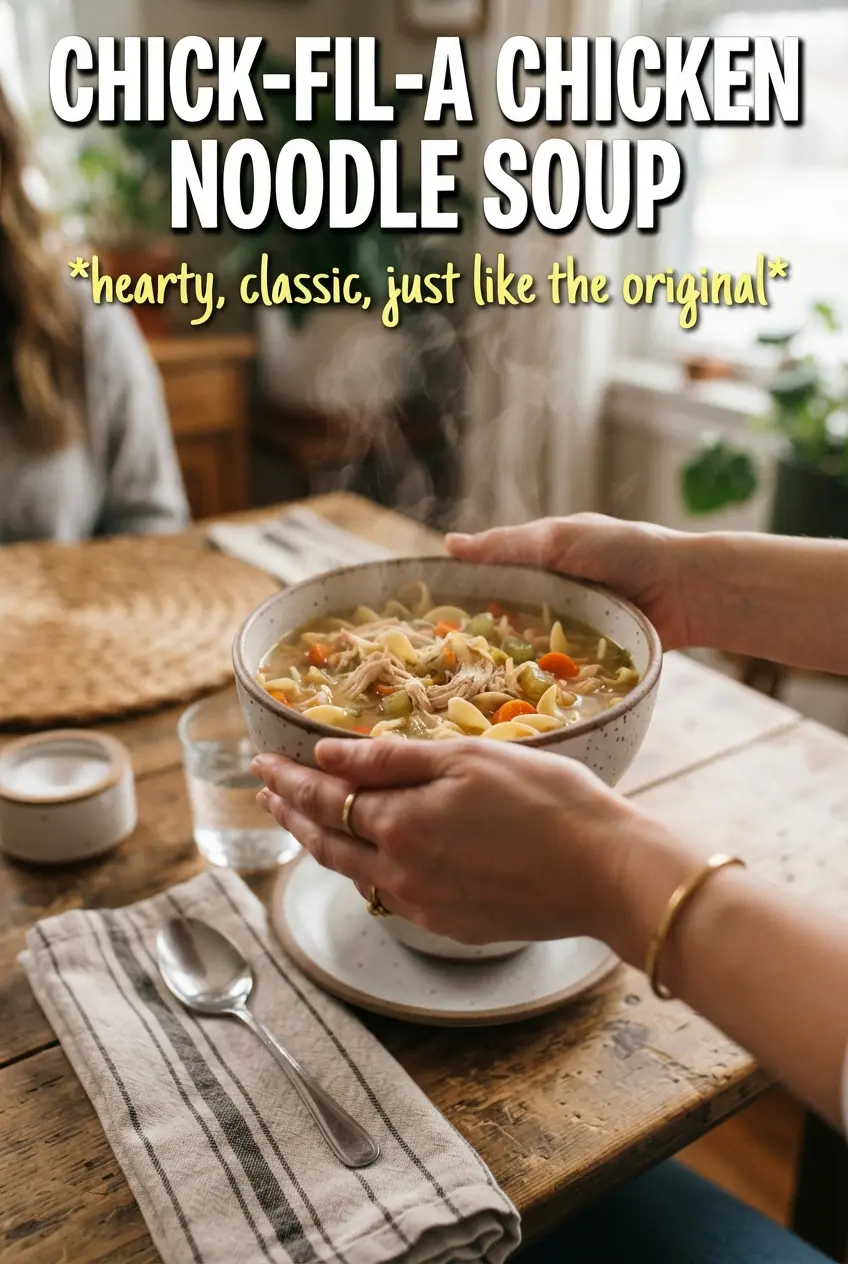
Clear, golden broth and tiny fork-tender noodles make this copycat Chick-Fil-A chicken noodle soup the kind of bowl you reach for when you want something gentle but not bland. The chicken stays in small, neat pieces instead of drifting apart in shreds, and that small detail changes the whole texture. Every spoonful feels tidy, light, and comforting in the same way the restaurant version does.
What makes this version work is restraint. The broth stays clean because the vegetables simmer just long enough to soften without turning muddy, and the seasonings are kept simple so the chicken and vegetables stay front and center. Dicing the chicken finely matters more than people expect here; it lets the meat blend into the soup without taking over the spoonfuls.
Below, I’ll walk you through the little choices that matter, from the order you add the vegetables to the best noodle shape if you don’t have egg noodles on hand. A few small adjustments are what keep this soup tasting fresh instead of heavy.
The broth stayed clear, the noodles cooked up tender, and the diced chicken tasted just like the soup I get at Chick-fil-A. My kids finished their bowls without picking out the vegetables, which never happens.
Save this Chick-fil-A chicken noodle soup for the next time you want a light, clean broth with tender noodles and that signature finely diced chicken.
The Small Dice That Keeps This Soup Tasting Like the Restaurant Version
The biggest mistake in chicken noodle soup is treating it like a place to throw in leftover chicken and call it done. For this copycat, the chicken needs to be finely diced so it stays suspended in the broth instead of clumping into stringy bites. That texture is part of what makes the soup feel familiar right away.
The other thing that matters is keeping the broth clean. A hard boil after the vegetables go in can cloud the soup and make the carrots and celery fall apart too fast. A steady simmer keeps the broth clear and gives the onions, celery, and carrots time to soften without losing their shape.
If the soup ever tastes flat, it usually means it needed salt at the end, not more herbs. The broth, noodles, and chicken all absorb seasoning differently, so the final adjustment is where the flavor comes into focus.
What Each Ingredient Is Actually Doing in This Soup

- Cooked chicken breast — Use plain, cooked chicken that you can dice by hand. Finely diced chicken blends into the soup better than shredded chicken, which can make the texture look ragged and soak up too much broth. Rotisserie chicken works if you trim and dice it small, but avoid heavily seasoned chicken that fights the clean broth.
- Chicken broth — This is the backbone of the soup, so use one you’d actually taste on its own. A good boxed broth is fine here because the other ingredients are simple, but a weak broth will make the whole pot taste thin. If yours is salty, hold back on extra salt until the end.
- Carrots, celery, and onion — These give the soup its classic base without turning it into a heavy stew. Dicing them small helps them soften in the short cooking time and keeps the spoonfuls balanced. If your dice is too big, the vegetables will still feel raw when the noodles are done.
- Corn kernels — Corn adds the subtle sweetness that makes this copycat feel closer to the restaurant version. Frozen corn is perfect here because it holds its shape and doesn’t need thawing. Fresh corn works too, but canned corn can turn soft and a little flat if you simmer it too long.
- Egg noodles — These give you the right soft, familiar bite. Small pasta shapes can work, but egg noodles cook quickly and fit the style of the soup best. Add them near the end so they stay tender instead of bloating and stealing broth from the pot.
- Dried parsley and thyme — These herbs keep the soup tasting savory without making it taste herbal or heavy. Dried herbs work well because the broth has enough time to pull them into the soup. Fresh herbs can be used, but they need a lighter hand or they can take over.
Building the Broth Before the Noodles Go In
Starting With the Liquid Base
Bring the broth and water to a boil first so the vegetables start cooking immediately when they hit the pot. That initial heat matters because it jump-starts the flavor extraction from the onion, carrot, and celery. If you start with a weak simmer, the vegetables soften unevenly and the soup tastes less defined.
Softening the Vegetables Without Losing the Broth
Add the carrots, celery, onion, garlic, parsley, thyme, and garlic powder, then drop the heat to a steady simmer. You want the vegetables tender but still holding their shape, not collapsing into the broth. If the liquid is boiling hard, the garlic can taste sharp and the vegetables can turn mushy before the soup has a chance to build flavor.
Finishing With Chicken, Corn, and Noodles
Stir in the diced chicken and corn first, then let them warm through before adding the noodles. The chicken just needs enough time to heat and absorb a little broth; it doesn’t need a long cook since it’s already done. Add the noodles last and cook them until they’re tender with a little bite left in the center, because they’ll keep softening as the soup sits.
How to Adapt This for Different Diets and Different Kitchens
Gluten-Free Version With the Same Comforting Texture
Swap the egg noodles for your favorite gluten-free small pasta. Cook it just until tender, then stop there, because many gluten-free noodles soften fast and can break apart if they sit in the broth too long. The broth and vegetable base stay the same, so the soup still tastes like the original.
Using Rotisserie Chicken Without Losing the Texture
Rotisserie chicken saves time, but dice it very small instead of pulling it into shreds. That keeps the soup from looking stringy and helps the chicken blend into the broth the way the restaurant version does. Trim away any heavily seasoned skin if you want a cleaner-tasting soup.
Making It a Little Heartier
Add a second half cup of noodles or an extra cup of chicken if you want the soup to eat more like a full meal. That makes the broth less light and more filling, but it also means you may need a touch more broth at the end. Add the extra liquid hot, not cold, so you don’t cool the soup down and throw off the noodle timing.
Storage and Reheating
- Refrigerator: Store in an airtight container for up to 4 days. The noodles will keep absorbing broth, so the soup gets thicker as it sits.
- Freezer: It freezes best without the noodles. Freeze the broth, vegetables, and chicken, then cook fresh noodles when you reheat it for the cleanest texture.
- Reheating: Warm it gently on the stove over medium-low heat until steaming. If it boils hard, the noodles can split and the chicken can turn dry, so low heat is the safer move.
Answers to the Questions Worth Asking
Chick-Fil-A Chicken Noodle Soup
Ingredients
Equipment
Method
- Bring the chicken broth and water to a boil in a large pot, bubbling actively around the edges.
- Add the carrots, celery, onion, garlic, parsley, thyme, and garlic powder, then return to a gentle simmer and cook for 10 minutes until the vegetables are just tender.
- Add the finely diced chicken and corn kernels, then simmer for 5 minutes so the chicken warms through and the broth turns consistently golden.
- Add the egg noodles and cook 6-8 minutes at a steady simmer until tender, watching for the noodles to soften without becoming mushy.
- Season with salt and pepper to taste, keeping the key texture from finely diced (not shredded) chicken for a clean, spoonable broth.