Big bowls of chicken noodle soup only hit the mark when the broth tastes like it had time to become something, the vegetables stay tender instead of collapsing, and the noodles hold their shape without turning the pot starchy. Wide egg noodles make a difference here. They grab the broth, stay pleasantly chewy, and give the soup that old-school comfort you want from a homemade bowl.
The trick is building the flavor before the broth goes in. Sautéing the onion, carrots, and celery first gives the soup a deeper base, and adding the chicken while the broth simmers keeps the meat juicy instead of stringy. The noodles go in at the end for a reason: if they cook too early, they soak up liquid and blur the whole soup into something heavy.
Below, I walk through the part that matters most, which is getting the noodles tender without losing that clear, golden broth. I also included a few swaps and storage notes, because this is the kind of soup people tend to make again as soon as the first pot disappears.
The broth had so much more flavor than the usual canned-soup version, and the egg noodles stayed perfect when I added them at the end. My husband went back for seconds before I even sat down.
Love how the wide egg noodles and fresh dill finish this chicken noodle soup? Save it to Pinterest for the next time you want a cozy bowl with clear broth and tender chicken.
Why the Noodles Go In After the Chicken Comes Out
The easiest way to ruin chicken noodle soup is to let the noodles cook too early. They keep drinking broth as they sit, and by the time you serve the soup, the broth turns thick, the noodles go soft, and everything tastes muted. Pulling the chicken out first gives it a chance to rest and shred cleanly, and adding the noodles only after the chicken is done keeps the texture under control.
This matters even more with wide egg noodles because they’re sturdy enough to hold up, but they’ll still swell fast in hot broth. Cook them just until tender with a little bite left in the center. They’ll keep softening as the soup sits, so stopping early is what keeps the bowl from turning gummy.
What Each Ingredient Is Doing in This Bowl
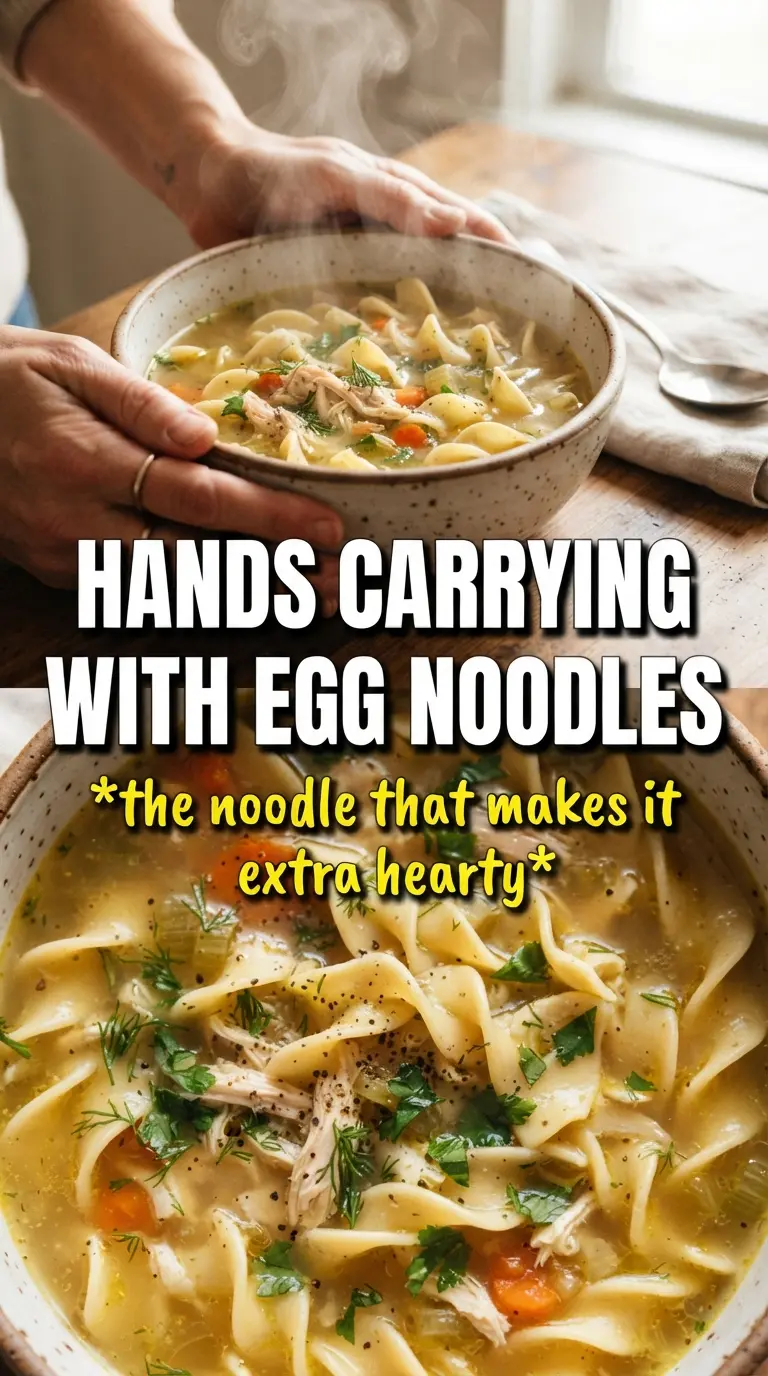
- Chicken breast — Simmering the chicken in the broth keeps it tender and gives the soup a fuller chicken flavor than pre-cooked meat would. If you want a richer result, boneless thighs work too and stay a little more forgiving if the soup simmers a few minutes longer.
- Wide egg noodles — These are the backbone of the soup. They hold their shape better than thin noodles and give the broth a more satisfying body without needing flour or cream. If you substitute another noodle, use one with similar thickness and cook it separately if you plan to store leftovers.
- Carrots, celery, and onion — This is the classic soup base, and sautéing them first matters. That quick cook softens the raw edges and brings out sweetness, which gives the broth a rounder taste before the chicken even goes in.
- Fresh dill — Dill wakes the whole pot up at the end. Dried dill won’t give the same bright finish, so if you only have dried, use a small pinch and add it early with the thyme instead of expecting the same fresh result.
- Chicken broth — Use a broth you’d actually drink. If it tastes flat from the carton, the soup will taste flat in the bowl. Low-sodium broth gives you room to season properly at the end, which matters because the noodles and chicken both absorb salt.
The Order That Keeps the Broth Clear and the Noodles Tender
Softening the Vegetables First
Heat the olive oil in a large pot and cook the onion, carrots, and celery until the onion looks translucent and the carrots start to lose their raw crunch. You’re not browning them hard here; you’re building sweetness and a clean vegetable base. If the pot looks dry before the vegetables soften, lower the heat and give them another minute. Garlic goes in only for the last minute so it doesn’t burn and turn bitter.
Simmering the Chicken Gently
Once the broth, thyme, parsley, garlic powder, and chicken go in, bring the pot just to a boil, then lower it to a steady simmer. A hard boil will tighten the chicken and cloud the broth. You want the surface moving gently, with a few bubbles breaking around the edges, until the chicken is cooked through and easy to shred.
Shredding and Returning the Meat
Lift the chicken out as soon as it’s cooked and let it cool just enough to handle. Shred it into bite-size pieces, then slide it back into the pot so it can soak up the broth again. If the chicken looks dry when you shred it, it usually simmered too hard; the fix is gentler heat next time, not extra cooking.
Cooking the Noodles at the End
Bring the soup back to a boil before adding the egg noodles so they cook evenly and don’t clump. Stir once or twice while they cook to keep them from sticking to the bottom of the pot. Stop when they’re tender but still hold their shape, because they’ll continue to soften after you turn off the heat.
Finishing With Dill and Seasoning
Stir in the fresh dill after the noodles are done. That keeps its flavor bright instead of flat and cooked-out. Taste the soup at the end and season generously with salt and pepper. Broth, chicken, and noodles all need more salt than most people expect.
How to Adapt This for a Lighter Pot, a Richer Pot, or Leftovers That Still Taste Good
Use chicken thighs for a richer broth
Swap the chicken breast for boneless, skinless thighs if you want deeper flavor and a softer shred. Thighs stay moist a little longer, which makes them more forgiving if the soup simmers past the exact minute. The broth will taste a touch fuller and less lean.
Make it gluten-free with the right noodle
Use a gluten-free wide noodle made for soup, but cook it separately if you plan to save leftovers. Gluten-free noodles tend to break down faster in hot broth, so keeping them apart is the difference between a clean bowl and a cloudy, mushy one the next day.
Add extra vegetables without changing the method
Mushrooms, peas, or chopped spinach all work well here. Add sturdy vegetables with the carrots and celery, then stir delicate ones in near the end so they keep their color and don’t disappear into the broth.
Storage and Reheating
- Refrigerator: Store in an airtight container for up to 4 days. The noodles will keep absorbing broth, so the soup gets thicker as it sits.
- Freezer: Freeze the soup without the noodles for the best texture. Egg noodles turn soft after freezing, so add fresh-cooked noodles when you reheat.
- Reheating: Warm gently on the stove over medium-low heat until hot. If the soup thickened in the fridge, add a splash of broth or water to loosen it. Don’t boil it hard or the chicken will tighten up and the noodles will go past tender.
Questions I Get Asked About This Recipe
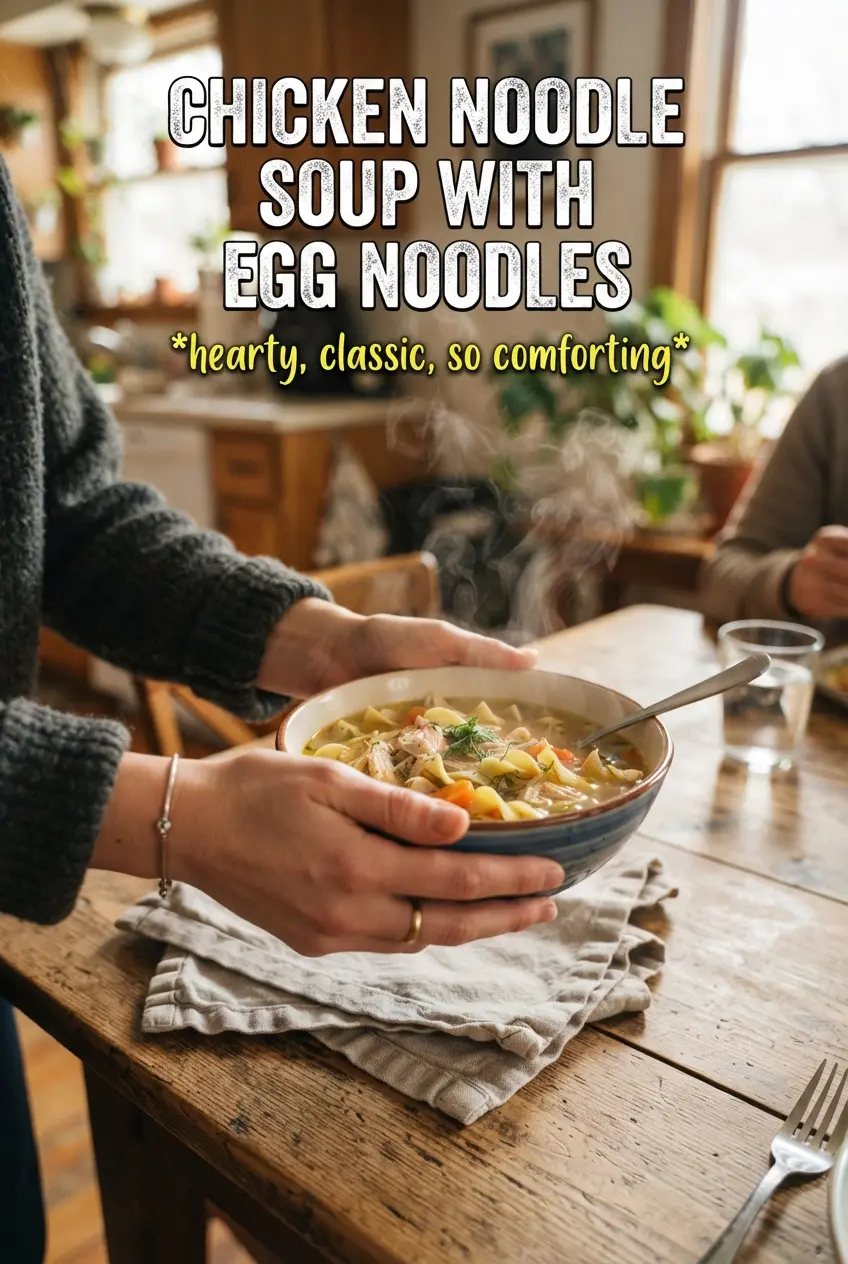
Chicken Noodle Soup With Egg Noodles
Ingredients
Equipment
Method
- Heat the olive oil in a large pot over medium heat, then add the onion, carrots, and celery. Sauté for 5 minutes, stirring occasionally until the vegetables begin to soften.
- Add the garlic and cook for 1 minute. Stir constantly so the garlic becomes fragrant without browning.
- Pour in the chicken broth and stir in the dried thyme, dried parsley, garlic powder, and chicken breast. Bring to a boil over high heat.
- Reduce heat to low and keep the soup at a gentle simmer. Simmer for 18-20 minutes, until the chicken is cooked through.
- Remove the chicken from the pot and shred it. Return the shredded chicken to the soup.
- Bring the soup back to a boil. Add the wide egg noodles and cook for 7-8 minutes until tender but not mushy.
- Stir in the fresh dill and turn off the heat. Season generously with salt and pepper to taste.