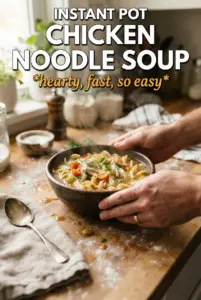
Rich, buttery chicken noodle soup like this earns its place because the broth tastes like it simmered all afternoon, even though the method is straightforward. The chicken cooks right in the pot, which gives you tender meat and a broth that picks up every bit of flavor from the onion, garlic, celery, carrots, and peppercorns. Wide egg noodles soak up all that goodness without turning the soup into mush.
The little trick that makes this version stand out is the butter stirred into the strained broth before the noodles go in. It rounds out the stock and gives the soup that farmhouse, golden finish people expect from a proper bowl of chicken noodle soup. Seasoning at the end matters too, because homemade broth can taste flat until it gets enough salt to wake everything up.
Below, you’ll find the exact timing for keeping the chicken tender, how to keep the noodles from going soft, and a few swaps that still keep the soup hearty and comforting.
The broth came out clear and rich, and the wide noodles held their shape even after reheating the next day. I loved how the butter made it taste like it had cooked much longer than it did.
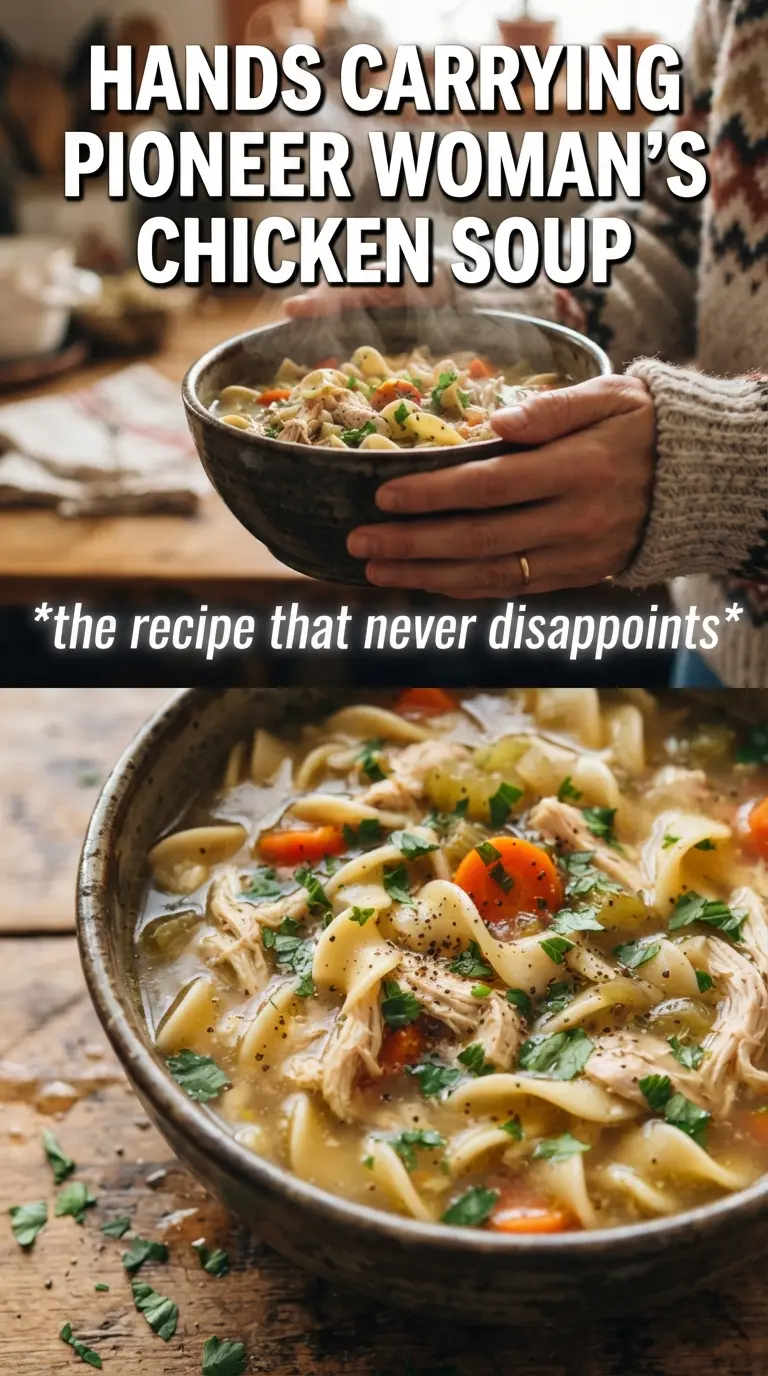
Creamy-looking broth, tender chicken, and those wide egg noodles make this Pioneer Woman chicken noodle soup worth pinning for cold nights and easy leftovers.
The Broth Needs a Long Simmer, Not a Hard Boil
The biggest mistake with chicken noodle soup is rushing the broth. A hard boil turns the chicken stringy and clouds the liquid with tiny proteins that never settle back down. A steady simmer pulls flavor from the bones, vegetables, and peppercorns without beating the soup into something thin and dull.
Skimming the foam early matters. That gray foam is what keeps a homemade broth from tasting clean. Once the chicken is tender, strain the broth before you move on so the finished soup stays clear and golden instead of muddy.
What Each Ingredient Is Actually Doing in This Pot
- Whole chicken — This is the backbone of the soup. A whole bird gives you both meat and a broth with body, and you can’t fully fake that with boneless chicken breast alone.
- Carrots, celery, onion, and garlic — These build the base flavor and give the broth its classic poultry-soup sweetness. The first round cooks with the chicken, then the second round stays bright and tender in the finished bowl.
- Bay leaves and peppercorns — Bay leaves bring a quiet herbal depth, while peppercorns give the broth warmth without turning it sharp. Ground pepper added too early will make the broth look cloudy, so whole peppercorns are the better move here.
- Butter — The butter is what gives this soup that Pioneer Woman style richness. It softens the edges of the broth and adds a silky finish, so don’t skip it unless you’re intentionally keeping the soup leaner.
- Wide egg noodles — These hold up better than thinner noodles and give the soup its proper hearty texture. If you use a different noodle, cook it separately if you want leftovers that don’t turn soft.
- Fresh parsley — It goes in at the end for freshness. Dried parsley won’t give the same clean finish, so this is one place where the fresh herb is worth it.
Building the Soup So the Noodles Stay Tender
Starting the Chicken Cold
Set the whole chicken in the pot with the water, aromatics, and peppercorns, then bring it up to a boil before dropping it to a steady simmer. Starting cold helps the broth develop gradually instead of tightening the chicken too fast. If the liquid is roaring, the meat will still cook, but it will lose that tender, shreddable texture that makes the soup feel homemade.
Turning the Broth Into the Main Event
Once the chicken is tender, pull it out and strain the broth before anything else goes back in. That step gives you a clean base and keeps bits of onion skin, foam, and overcooked herbs out of the finished soup. Stir in the butter while the broth is hot so it melts in completely and gives the liquid a richer mouthfeel.
Cooking the Vegetables and Noodles at the End
Add the fresh carrots and celery after the broth is ready, not before. They should be tender but still have a little bite, and the noodles only need 6 to 8 minutes or they’ll swell and go pasty. If you’re planning on leftovers, undercook the noodles by a minute and let the bowl finish in the hot broth.
Finishing With Chicken and Parsley
Return the shredded chicken to the pot near the end so it stays juicy. Stir in the parsley off the heat or right before serving so it keeps its bright color and fresh taste. Season generously with salt and pepper at the very end, because homemade broth usually needs more seasoning than people expect.
How to Adapt This for a Bigger Batch, a Lighter Bowl, or Gluten-Free Needs
Gluten-Free Chicken Noodle Soup
Swap the egg noodles for a gluten-free noodle that holds shape well, and cook it separately if possible. Gluten-free noodles can break down faster in hot broth, so keeping them apart until serving gives you the best texture.
Using Boneless Chicken Instead of a Whole Bird
Chicken thighs work better than breasts here because they stay tender and bring more flavor to the broth. You’ll lose some of the depth that comes from simmering a whole chicken, so add a little extra salt and don’t skip the butter.
Making It Ahead for Easy Leftovers
For the best texture, store the noodles separately from the broth and chicken if you can. The soup itself holds up well for meal prep, but noodles keep soaking up liquid and can turn soft overnight.
Storage and Reheating
- Refrigerator: 4 days. The noodles will continue to absorb broth, so expect the soup to thicken.
- Freezer: Freeze the broth, chicken, and vegetables without the noodles for the best result. Add freshly cooked noodles after thawing.
- Reheating: Warm gently on the stove over medium-low heat until steaming. High heat can toughen the chicken and make the noodles split apart.
Answers to the Questions Worth Asking

Pioneer Woman Chicken Noodle Soup
Ingredients
Equipment
Method
- Place the whole chicken in a large pot with the water, onion, 2 carrots, 2 celery stalks, garlic, bay leaves, and black peppercorns, then heat until boiling. Visual cue: you should see active bubbling across the surface.
- Skim off the foam, reduce the heat, and simmer at a gentle bubbling for 1 hour until the chicken is very tender. Visual cue: the chicken should pull easily with a fork.
- Remove the chicken, strain and reserve the broth, and shred all chicken meat. Visual cue: the shredded chicken should be fibrous and separate into strands.
- Return the broth to the pot, add the unsalted butter, and bring it to a simmer. Visual cue: a light steam rises and small bubbles collect around the edges.
- Add the remaining sliced carrots and celery and cook at a simmer for 10 minutes until tender. Visual cue: carrot coins should be easy to pierce.
- Add the wide egg noodles and cook for 6 to 8 minutes until tender. Visual cue: noodles will soften and become slightly thicker in the broth.
- Stir in the shredded chicken and fresh parsley. Visual cue: chicken strands distribute evenly and parsley speckles the surface.
- Season very generously with salt and pepper to taste. Visual cue: taste and adjust until the broth is well-balanced and flavorful.